



Don’t Miss the Full Video Story Below
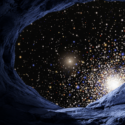
Something enormous is on its way to our cosmic neighborhood. The Milky Way, along with our closest major neighbor the Andromeda galaxy, is moving toward a future collision. These are not small systems either.
They are vast collections of hundreds of billions to trillions of stars, slowly drawn together by gravity over billions of years. From a human perspective it sounds like science fiction, but in galactic time, it is an unavoidable event already set in motion.
A Collision Already Underway
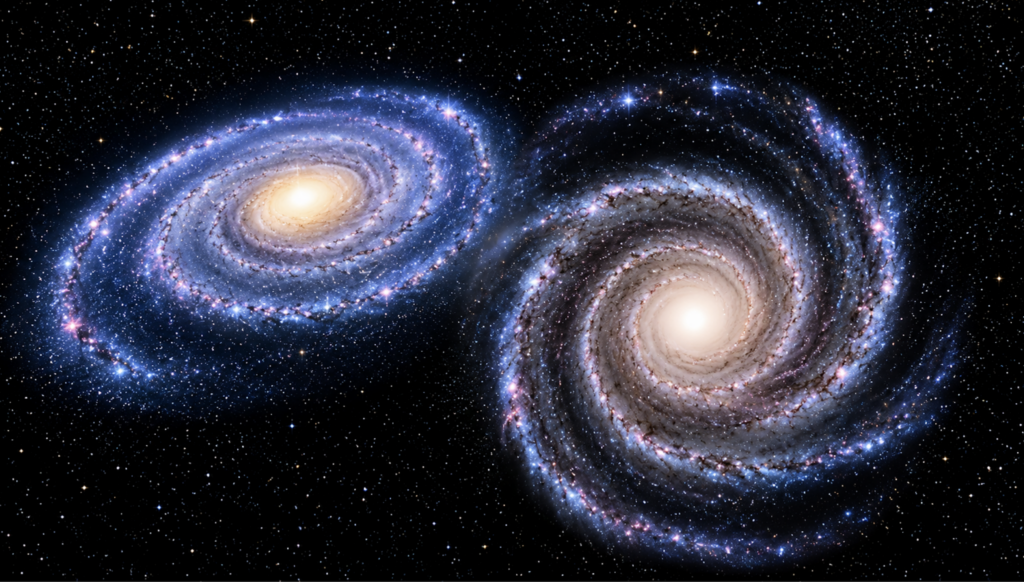
The Andromeda galaxy and the Milky Way are approaching each other at extreme speed, roughly hundreds of thousands of kilometers per hour. Yet this motion is not something you can feel. Even now, Earth is moving far faster than most people realize.
Our planet rotates at over 1,000 km/h, orbits the Sun at about 100,000 km/h, and the Solar System itself races through the galaxy at even higher speeds. All of this motion stacks together, carrying us toward a future where two galaxies will eventually merge.
Not a Crash, But a Slow Cosmic Dance
Despite the dramatic description of a “collision,” most stars will not actually crash into one another. Space is overwhelmingly empty. The average distance between stars is about 5 light years, meaning even in a galactic merger, direct star collisions are extremely unlikely.
Instead, the two galaxies will pass through each other, their shapes distorted by gravity. Over time they will swing apart and then fall back together repeatedly, gradually merging into a single new galaxy over billions of years.
The First Changes Would Begin Far Away
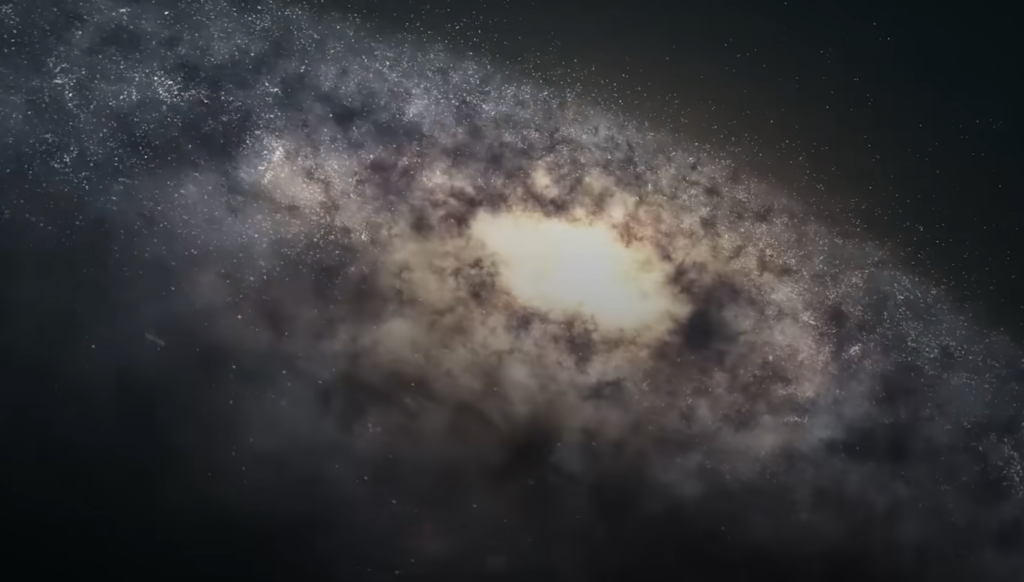
Long before anything visible happens in our sky, the outer regions of our Solar System would feel the effects. The Oort Cloud, a vast shell of icy objects surrounding the Solar System, would be the first area disturbed. Passing stars from Andromeda could disrupt this region, sending comets toward the inner Solar System.
Far beyond Neptune, the Kuiper Belt would also be reshaped by shifting gravity, altering the orbits of distant icy worlds and dwarf planets.
Inner Planet Stability Could Be Disturbed
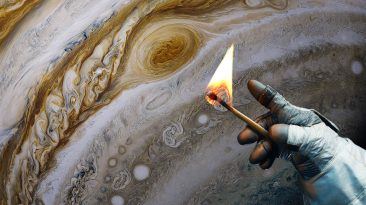
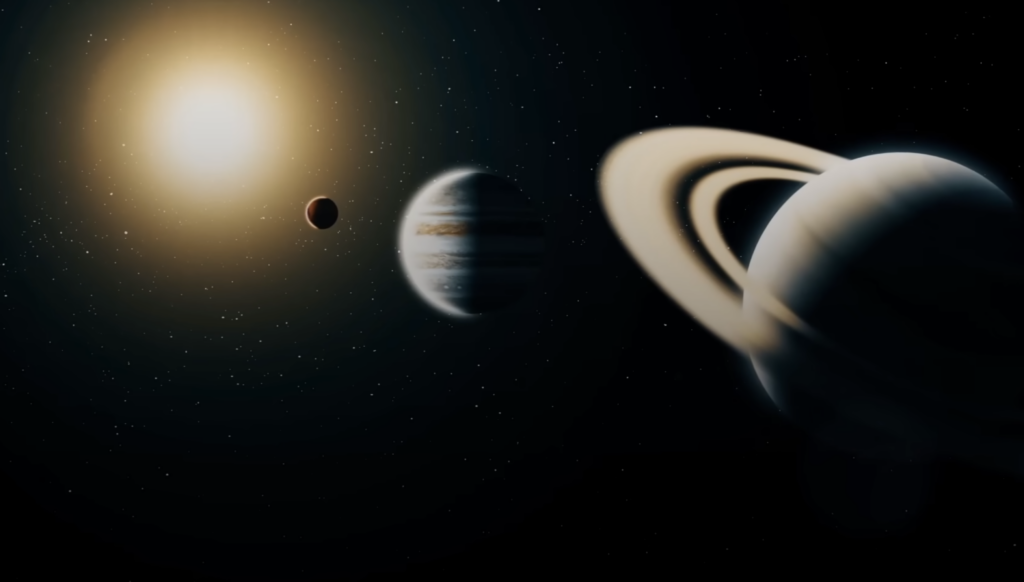
If a star system passed close enough, the effects could eventually reach the planets themselves. Gas giants like Jupiter and Saturn would be the first to show orbital changes, slightly altering their paths and influencing the stability of the entire Solar System.
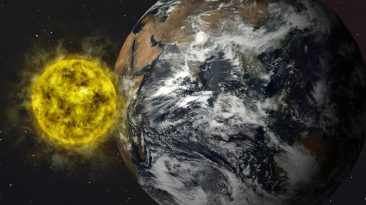
Earth’s orbit could shift in response to these changes, affecting climate patterns, seasons, and long term habitability. Even small changes in distance from the Sun could have serious consequences for life as we know it.
A Worst Case Scenario for Earth
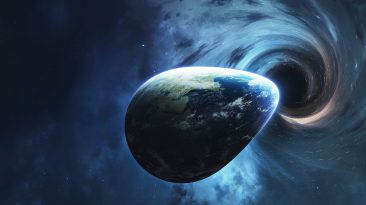
In an extreme case, a passing star system or rogue planet could come dangerously close to Earth. Tidal forces could stretch our planet, causing massive earthquakes, volcanic eruptions, and extreme ocean tides. If the gravitational interaction were strong enough, Earth could even be thrown out of its orbit entirely.
In that scenario, it would drift into deep space as a rogue planet, slowly freezing as sunlight disappeared and temperatures dropped far below survivable levels.
The Possibility of Direct Impacts
Even more dramatic would be a direct collision with another planet or large body. While extremely unlikely, such an event would release unimaginable energy, enough to melt and vaporize entire worlds.
The debris could later form a new planetary body, similar to how scientists believe Earth’s Moon formed after a giant impact billions of years ago. In such a scenario, Earth as we know it would be destroyed and reformed in an entirely different state.
The Role of Massive Black Holes
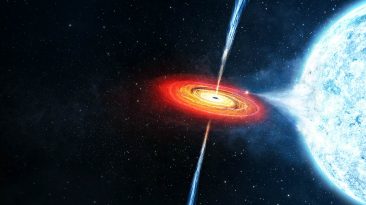
At the centers of galaxies like Andromeda and the Milky Way lie supermassive black holes. These objects contain the mass of millions to billions of Suns and play a key role in galactic structure.
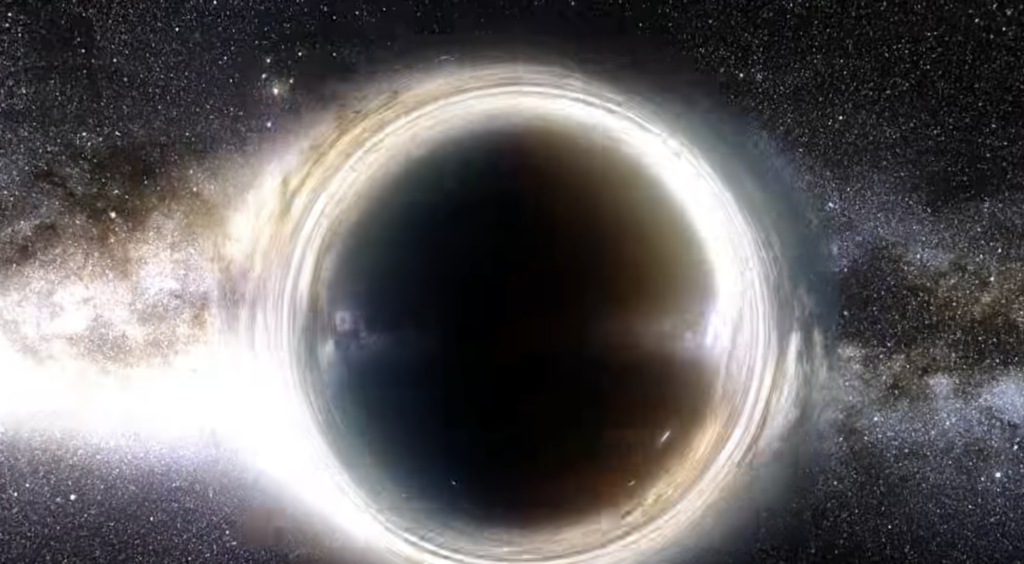
During a merger, they too may eventually interact. If a Solar System were unlucky enough to come too close, it could be torn apart by extreme gravitational forces and absorbed without a trace. However, such direct encounters remain extremely unlikely.
What Will Actually Happen to Us
For all the dramatic possibilities, the most likely outcome is far less violent. The Solar System will probably continue to exist, drifting into a new orbit within the merged galaxy. The Milky Way and Andromeda will gradually form a single massive galaxy sometimes called “Milkdromeda.”
Over billions of years, the night sky would change completely, filled with new star patterns and brighter cosmic scenery, but life on Earth would likely never witness any sudden chaos.
A Quiet Ending to a Massive Event
From a cosmic perspective, the collision of galaxies is not an explosion but a slow transformation. Stars are so far apart that most will pass by without interaction. Instead of destruction, it is more of a reshaping of structure on the largest scale imaginable. While the idea sounds catastrophic, the reality is more subtle, almost peaceful in astronomical terms.
The universe continues its evolution, and we are simply part of its long, slow story.