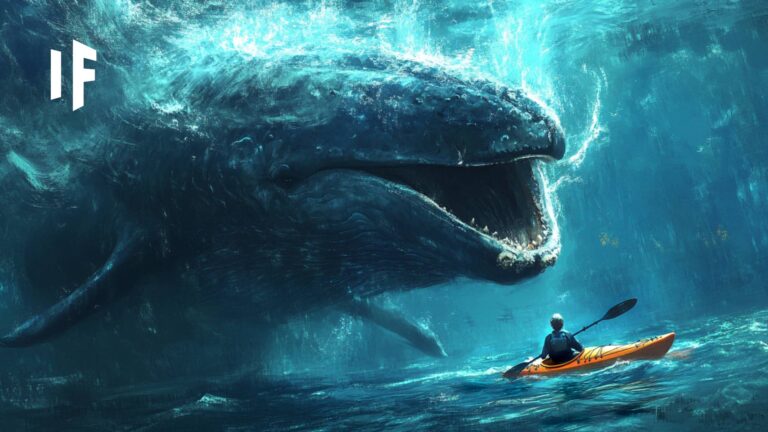
The thought of being swallowed by a whale sounds like something from an ancient legend rather than a real possibility. Tales of people disappearing into enormous sea creatures have existed for centuries, most famously through the story of Jonah, and similar claims have occasionally appeared in modern times.
But suppose you somehow ended up inside a whale’s mouth. Would the animal actually be able to swallow you, and if it did, could you survive the experience? The answer depends greatly on which species you encountered.
The blue whale is the largest animal ever known to have existed, and its enormous mouth can hold an astonishing amount of water. However, its impressive size does not make it capable of swallowing an adult human. Blue whales mainly feed by filtering enormous quantities of seawater to collect tiny shrimp like animals called krill.
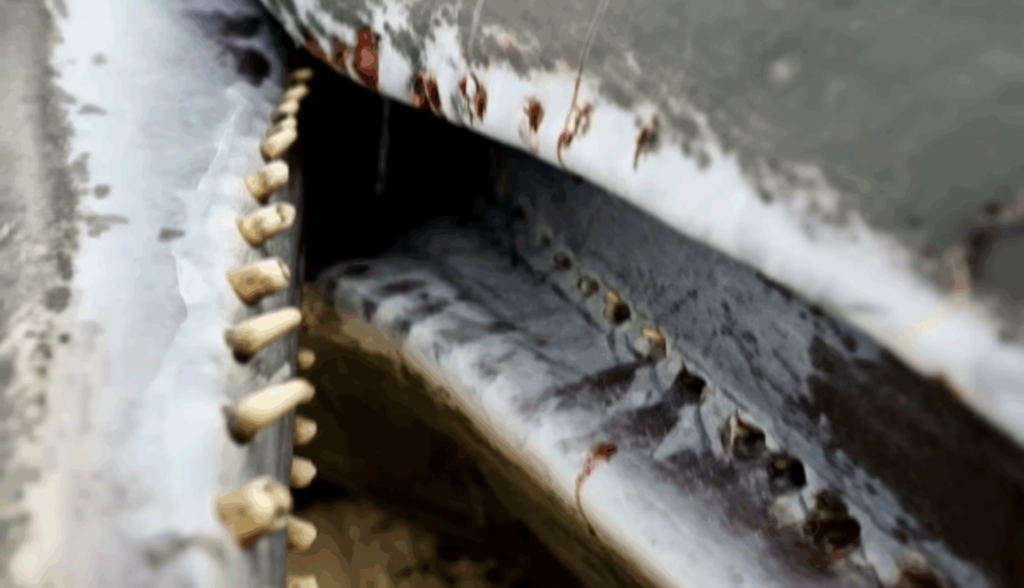
Although a blue whale’s mouth is enormous, the passage leading toward its digestive system is much narrower. An adult person would be far too large to pass through it. You could potentially be caught in the mouth during an unusual encounter, but being swallowed whole would be extremely unlikely.
A sperm whale would present a much more serious possibility. Unlike filter feeding whales, sperm whales actively pursue substantial prey in the deep ocean. Their diet includes large squid, and their powerful jaws are equipped with rows of sizeable teeth.
That is why an old story involving a sailor named James Bartley has remained popular. According to the account, Bartley disappeared while working during a whale hunt in the nineteenth century. The following day, the crew supposedly opened the captured whale and discovered him alive inside its stomach.

The story became even more dramatic because it claimed that Bartley’s skin had turned extremely pale after exposure to the contents of the whale’s stomach. It also suggested that he suffered lasting physical effects from the experience.
There is, however, a major problem with the famous tale. Researchers and historians have found little reliable evidence confirming that it happened as described. Several details have also been questioned because they do not fit comfortably with what scientists know about sperm whales and their digestive systems.
Even if we imagine that a person somehow survived entering the whale’s mouth, the first few seconds would be incredibly dangerous. Sperm whales have powerful jaws and large teeth that can reach roughly 20 centimeters in length. Being caught among them could result in severe injuries before the person ever reached the digestive tract.

Getting beyond the mouth would not solve the problem. Muscular contractions would move swallowed material deeper into the whale, while the surrounding environment would become completely dark. There would also be very little breathable air available, making oxygen deprivation one of the most immediate threats.
Inside a sperm whale is a complicated digestive system containing several stomach sections. Food passes through these compartments as it is processed, and the environment can contain partially digested remains from previous meals. For someone trapped there, it would be an extremely hostile place with almost no opportunity to escape.
Some of the prey found inside a sperm whale could even include deep ocean squid and other unusual creatures. Certain deep sea animals produce light through bioluminescence, so it is possible to imagine faint flashes appearing in the darkness. In reality, however, such a sight would offer no meaningful protection.
The lack of oxygen would probably become fatal long before the digestive process could be completed. A person trapped inside would have only a limited supply of usable air, while heat, moisture, pressure, and the surrounding digestive material would make the conditions increasingly dangerous.
At the same time, stomach fluids would begin damaging exposed tissue. These chemicals are designed to help break down food, meaning prolonged contact with them would be extremely harmful to human skin and internal tissues. The longer someone remained trapped, the lower the chances of survival would become.
Eventually, the whale’s digestive system would continue processing the swallowed material and moving it through the remaining sections of the digestive tract. The idea of being swallowed by a whale and later emerging alive makes for an unforgettable story, but real whale biology offers almost no support for such an outcome.