Wake up in London, teleport to your office in Tokyo, meet friends for lunch in Mexico City, catch an opera in Rome that evening.
It sounds like a film. What makes it interesting is that one piece of the science behind it already exists, working in laboratories right now.
Humans are nowhere near stepping into a teleportation booth. But the concept has quietly stopped being impossible.
The version scientists actually study looks nothing like the movies, though. Nobody is moving objects through space. They’re moving information.
That process is called quantum teleportation, and it has already been demonstrated. Scaling it up to something as large and complicated as a person is where it becomes one of the hardest problems anyone has ever considered.
Underneath it sits a genuinely strange phenomenon called quantum entanglement.
When two particles become entangled, they stay linked no matter how far apart they end up. Measure the state of one and you instantly determine the state of the other, as though the distance between them doesn’t apply.
There’s a simple way to picture it. Put a red card and a blue card into two sealed envelopes, then send one envelope abroad and keep the other. Until somebody opens one, nobody knows which card is where.
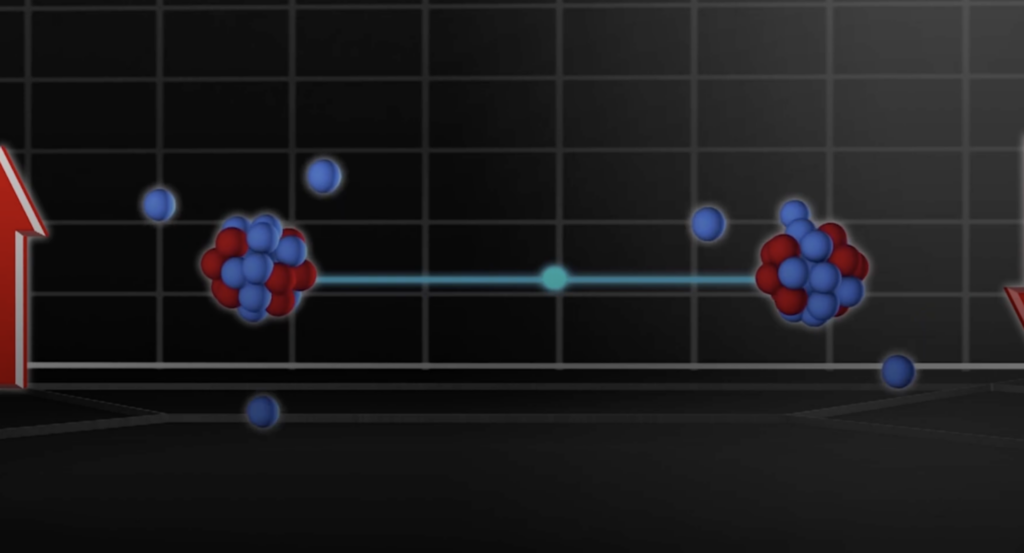
Open yours, see red, and you immediately know the other envelope holds blue.
Entanglement is far stranger than that, but the analogy captures the essential weirdness of two linked things sharing information across any distance.
And researchers have already put it to work. Scientists have teleported the quantum state of particles over serious distances, including one experiment that sent quantum information between Earth and a satellite orbiting hundreds of kilometers overhead.
So this isn’t theoretical. It’s a real physical process, currently limited to tiny particles under tightly controlled conditions.
Which leads directly to the obvious question. If information can move this way, why not people?
Every person is a collection of atoms, each with its own position, energy level, and quantum properties. Together those details make up the structure that makes you specifically you.
Record all of it, transmit it somewhere else, rebuild it perfectly, and in theory a version of that person appears at the destination.
The first problem is scale. A human body contains roughly seven octillion atoms, and capturing the complete quantum state of each one would need technology that doesn’t remotely exist. Simply storing that much data would flatten the most powerful computers we have.
The second problem is worse.
Based on current theory, measuring every quantum property of a body accurately would destroy the original in the process. Building the blueprint means taking the person apart.
Which turns a physics problem into a philosophical one very quickly.
Would the person who steps out at the other end actually be you? Or a perfect copy carrying your memories, while the original simply stopped existing back where you started?
Scientists and philosophers still argue about whether that counts as travel at all, or as something closer to death followed by duplication.
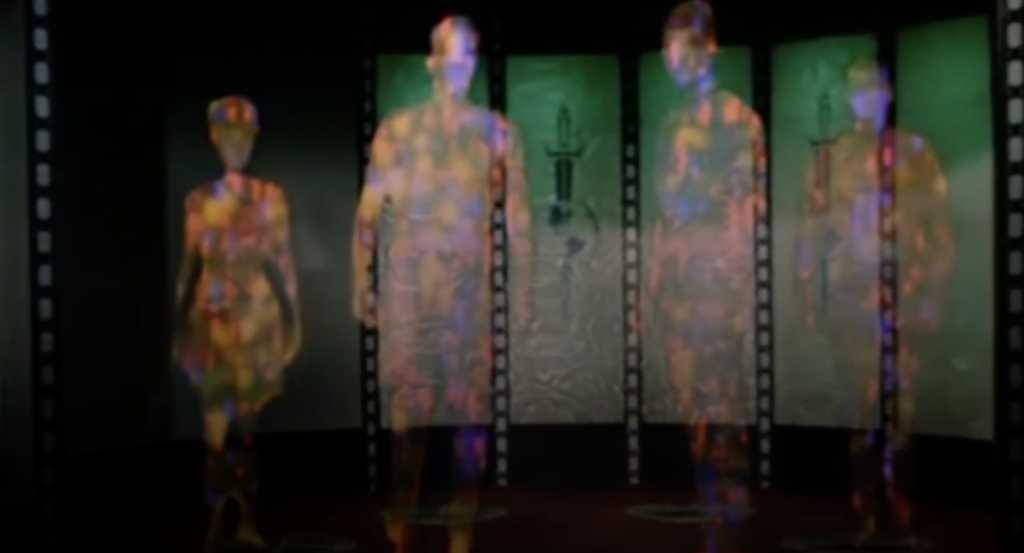
Meanwhile, the research is producing things that matter regardless of whether anyone ever teleports.
Quantum teleportation could underpin communication networks that are effectively unhackable, and future quantum computers may use the same principles to handle information in ways today’s machines simply cannot.
So how close are we to beaming people across the planet? Not close at all. The engineering is staggering and plenty of basic scientific questions remain open.
What has changed is that the underlying science is no longer speculation. Researchers have done it with particles, and every experiment sharpens the picture a little further.
You won’t be commuting to Tokyo this way anytime soon. But teleportation has quietly moved out of science fiction and into the category of problems people are actively working on.