For decades, the idea of growing human tissue inside another species sounded like something that belonged in a science fiction movie. Today, laboratories are exploring a far more practical version of that concept. The goal is not to create creatures that combine human and animal features, but to discover whether living animals could eventually help produce organs needed by human patients.
Scientists are studying special biological organisms called chimeras, in which cells from different species exist within the same developing organism. This research could eventually address one of transplantation medicine’s biggest problems: there are simply not enough donated organs for everyone who needs one.
Researchers have already demonstrated that human cells can survive and develop inside animals including mice, rats, and pigs. A major development came in 2019, when Japanese scientist Hiromitsu Nakauchi received approval from the Japanese government to conduct research involving human cells inside animal embryos.
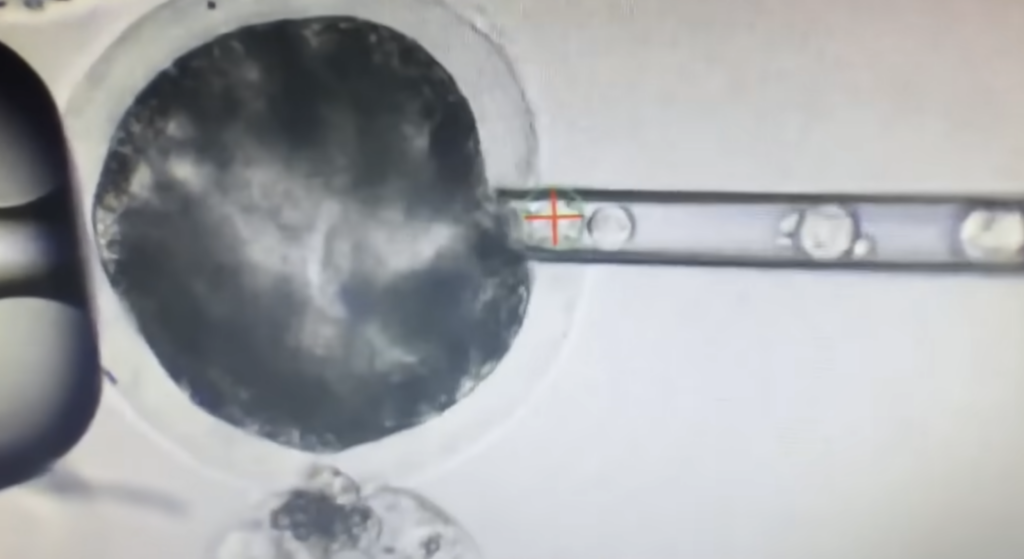
The research is connected to a much larger medical ambition: finding a dependable way to produce organs for transplantation. This field, known as xenotransplantation, explores whether organs from animals or organs grown within animals could eventually be used to treat human patients.
One proposed method begins by altering an animal embryo so that it cannot naturally develop a particular organ. Researchers can then introduce human stem cells into that embryo. In theory, the human cells could occupy the missing biological role and develop into an organ that is more compatible with the human body.
The potential medical impact is enormous. Around 100,000 people in the United States are waiting for organ transplants at any given time, while many others never receive the surgery they need because a suitable donor cannot be found. If scientists could reliably produce replacement organs, the shortage could become far less severe.
Yet producing a usable organ is only one part of the challenge. Scientists also have to determine exactly where the human cells develop inside the animal. One major concern is preventing those cells from becoming part of the animal’s brain or nervous system in significant numbers.
The reason for this precaution is obvious. Researchers are attempting to create useful biological tissue, not animals with substantially altered mental abilities. If human cells contributed heavily to an animal’s brain, questions about consciousness, moral status, treatment, and legal protections could become extremely complicated.
These experiments also raise questions about how far the technology should eventually be allowed to progress. Modern research is focused on medical applications, but future advances could make it possible to influence biological characteristics in increasingly sophisticated ways. That possibility has encouraged scientists and ethicists to examine the boundaries before the technology becomes more powerful.
The idea of humans gaining characteristics associated with animals remains speculative. There is currently no established technology capable of giving people abilities such as the physical strength of another species, the sensory systems of predators, or the ability to fly. The real research is much more focused on using cells to solve specific medical problems.
Another concern involves the possibility of these technologies being used beyond medicine. If scientists eventually learned how to introduce useful biological traits into humans, governments or military organizations could potentially become interested in the applications. Changes involving strength, endurance, speed, or other physical characteristics would create serious ethical and security questions.
For now, however, researchers are nowhere near producing the fictional human animal hybrids often imagined in movies and books. The work being conducted today has a much more practical objective: understanding how cells from different species interact and determining whether that knowledge can help patients who desperately need replacement organs.
In the longer term, scientists may find a solution that avoids animals altogether. Advances in stem cells, tissue engineering, and laboratory grown organs could eventually make it possible to create fully functional human organs outside the body. If that becomes possible, transplantation could change dramatically while many of the ethical concerns surrounding animal based organ production would disappear.