
You’ve probably seen thrill seekers jumping off cliffs and bridges. But their idea of extreme doesn’t come close to what we’re about to propose.
Bungee jumping usually means that you’re attached to an elastic rope. You’re also secured by a harness and protected from colliding with the bungee cord by soft padding. But what if you removed the rope and replaced it with a couple of massive magnets?
Could it work?

Theoretically, this could be possible. Magnets have north and south poles, and they produce magnetic fields around them. Opposite poles are attracted to each other, while similar poles produce a force of repulsion.
For a wireless bungee jump, you’d need a magnet strapped to your harness, with its south pole facing downwards. You’d need another magnet on the ground, with its south pole facing upwards. The two magnets would repel each other, potentially stopping your fall without the need for a rope.
Now that you’re all geared up, you’re ready to take the jump. But there’s one important problem you should think about before agreeing to do this. We wouldn’t recommend trying it at home.
The reason bungee jumpers aren’t splashed all over the ground after a jump is that the elastic rope slows them down to a stop and then pulls them back up. It continues moving them down and up until all the energy from the jump is spent. With magnets, it’s a little trickier.

When you’re in free fall, gravity pulls you down and increases your speed by 9.8 m/s (32 ft/s) every second that you fall. After just 3 seconds of free fall, you’d reach a speed of almost 30 m/s (98 ft/s). Only you wouldn’t have a stretchy rope to soften your fall.
Here’s the thing about magnets. When they’re far apart, their repulsive force is close to zero. But as they get closer together, the repulsive force increases very rapidly.
As you jumped down, the magnets would stop you just a few centimeters from the ground. Sounds like a successful landing, right? Not quite. Because of the forces involved in stopping you so quickly, you’d feel as if your body had been smashed by a truck.
You might avoid getting splashed against the ground, but that doesn’t mean you’d escape unharmed. Instead, you’d be crushed by the enormous repulsive force between the two magnets.
And if you’re wondering whether this could get any worse, it definitely could.
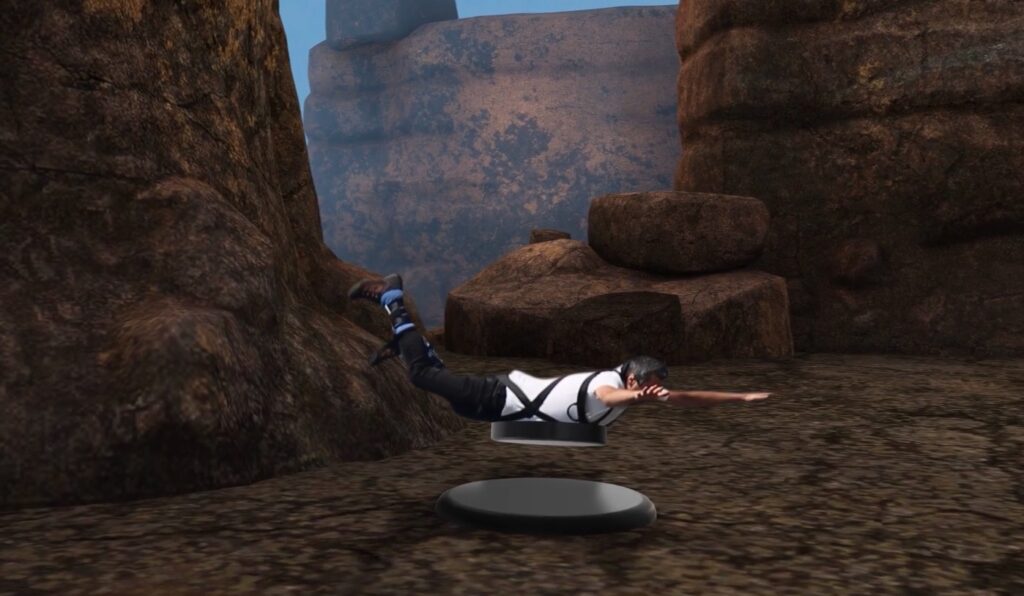
If you moved slightly out of alignment during your fall, you’d risk flipping together with the magnet attached to your harness. Instead of facing opposite poles toward each other, the magnets would end up facing the same poles. And what do magnets do when similar poles face each other? They attract.
Nothing would stop the magnets from touching, not even your body caught in between them.
So, the idea of replacing a bungee cord with two massive magnets sounds exciting in theory, but the jump would be a terrible idea. Looks like falling from an airplane could actually be safer under the right conditions.