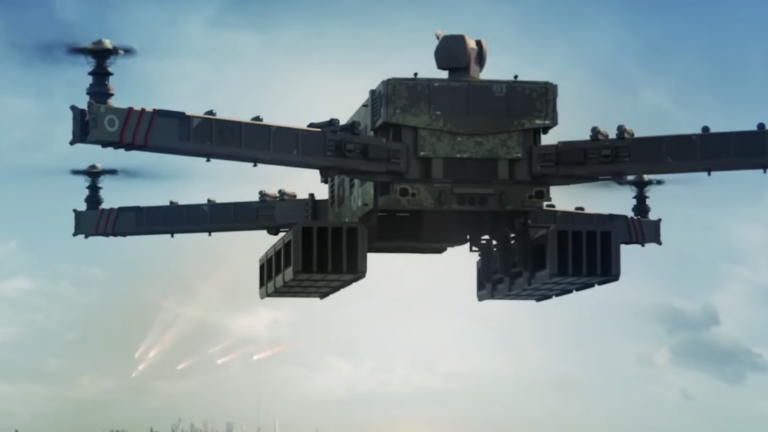
Imagine your entire neighborhood under the ever-watchful gaze of a swarm of silent drones. Creepy, right? Now, all conspiracies aside, more and more drones are fighting on the frontlines, and as the technology improves, we could be facing a fully unmanned attack on the nation.
How could you survive a swarm of drones powered by sophisticated A.I.? And what kind of tech does our military have to protect us? First, a quick history lesson.
One thing’s for sure: These machines aren’t just for delivering pizzas or capturing Hollywood aerial shots anymore. They’re front and center on battlefields from the Middle East to Eastern Europe. We’ve even seen Ukrainian fighters retrofit small UAVs with shotguns, turning them into lethal close-range attackers. Sounds like something out of Call of Duty, but it’s real.
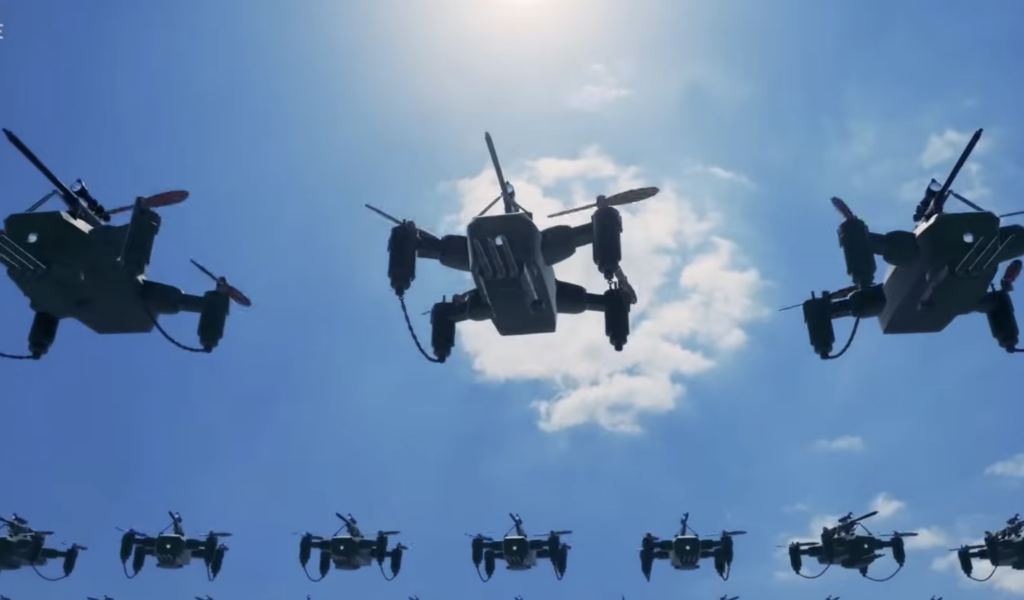
Today, we’re exploring a hypothetical scenario, an A.I.-driven simulation of a near-future drone war unfolding on American soil. If that alone doesn’t spike your heart rate, imagine stealth drones carrying nuclear payloads. Let that sink in.
Survival at this stage means proactive shielding of your electronics.
By the one-month mark, the global supply chain is in chaos. Oil tankers and cargo vessels are attacked by drones. It’s reminiscent of Russia’s strikes on Ukrainian ports in 2023, but on a larger scale. International shipping grinds to a standstill, fuel becomes scarce and the semiconductor crisis intensifies. Factories close, while electronics vanish or become prohibitively expensive.
We thought the COVID-19 chip shortage was rough, costing the U.S. around $240 billion. This is far worse.
Survival tip: Low-tech solutions matter. A paintball gun can destroy a drone’s camera. A strong laser pointer can fry optical sensors. Just remember lasers can blind humans, too. Don’t take unnecessary risks.
Then China begins attacking U.S. satellites with specialized, drone-like vehicles launched into low-Earth orbit. America counters with the X-37B spaceplane and the new Starshield satellites, courtesy of SpaceX. Suddenly, wars in space are as real as dogfights on Earth.
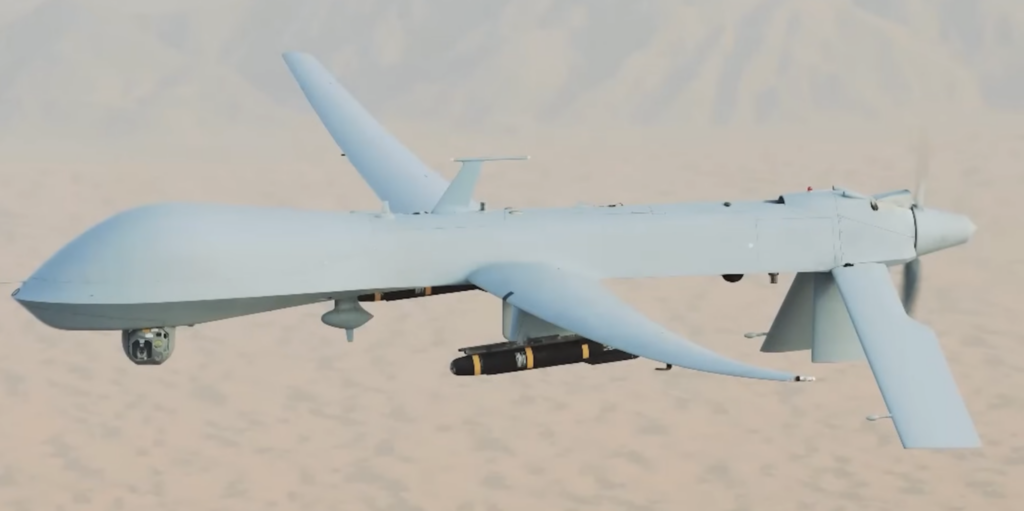
By this point, over 100,000 civilians have lost their lives due to drone strikes, collapsing infrastructure and the ensuing chaos. The endless drone hum has mentally scarred millions, especially children. Some drones have even sprayed chemical agents over farmland, poisoning crops and livestock.
So what can you do? For starters, gather some off-grid essentials: protective gear like gas masks in case of chemical dispersal, portable water filters in case supplies run low, extra batteries for flashlights and radios, and build a DIY Faraday enclosure to shield critical electronics from EMP strikes. Keep tabs on how drones are evolving, and press for stronger AI weapon regulations. Because if killer drones become the norm, we’re all in serious trouble.
Look back at the Cold War, when nuclear disaster loomed. Diplomacy and treaties played huge roles in keeping the peace. We need the same push for controlling lethal A.I. drones, or we risk stumbling into a far more unpredictable arms race.