Every six years in Japan, thousands of people gather in the Suwa region to witness one of the world’s most dangerous religious festivals. Massive logs thunder down steep mountainsides as men cling to the wood for dear life, risking broken bones, crushing injuries, and even death for the honor of participating.
This is the Onbashira Festival, a 1,200-year-old tradition tied to the Shinto faith that continues to attract thrill-seekers, worshippers, and spectators from around the world.
Held near the Suwa Grand Shrine about 200 kilometers from Tokyo, the festival’s purpose is to renew the sacred shrines by replacing enormous wooden pillars known as Onbashira. But transporting and raising these gigantic trees is anything but safe.
Participants willingly place themselves in the path of enormous moving logs weighing several tons, and the consequences can be deadly.
The festival begins deep in the mountains surrounding the shrine complex.
Only massive fir trees that meet strict requirements are chosen. The trees must be at least 150 years old and taller than 17 meters. Once selected, they are cut down, stripped of their branches and bark, and left to dry before the main events begin.
In total, 16 giant logs are prepared for transport to the shrine.
The first stage of the celebration is known as Yamadashi. During this phase, the sacred trees are moved from the forest toward the town below. Hundreds of participants pull the massive trunks by hand using ropes while crowds cheer them on.
But the real danger begins during the second phase: Kiotoshi.
This is the part of the festival that has made Onbashira famous worldwide.
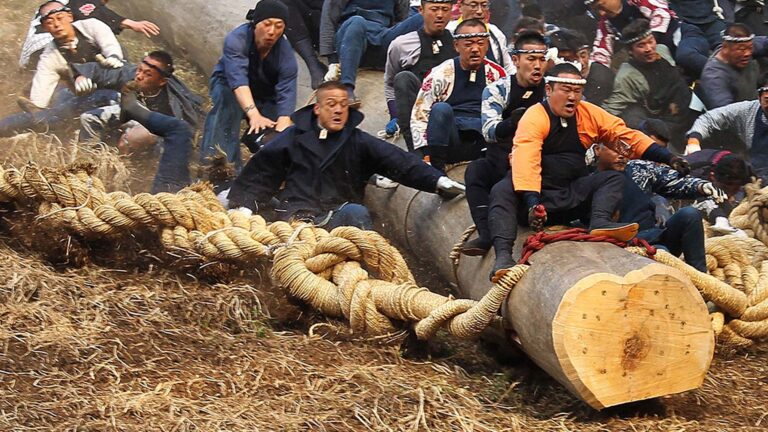
At Kiotoshi, the logs are dragged to the top of a steep hill before being sent crashing downward. Participants ride on top of the giant trunks as they accelerate downhill through mud, rocks, and chaos. Some logs continue directly through freezing rivers at the bottom.
The sight is both thrilling and terrifying.
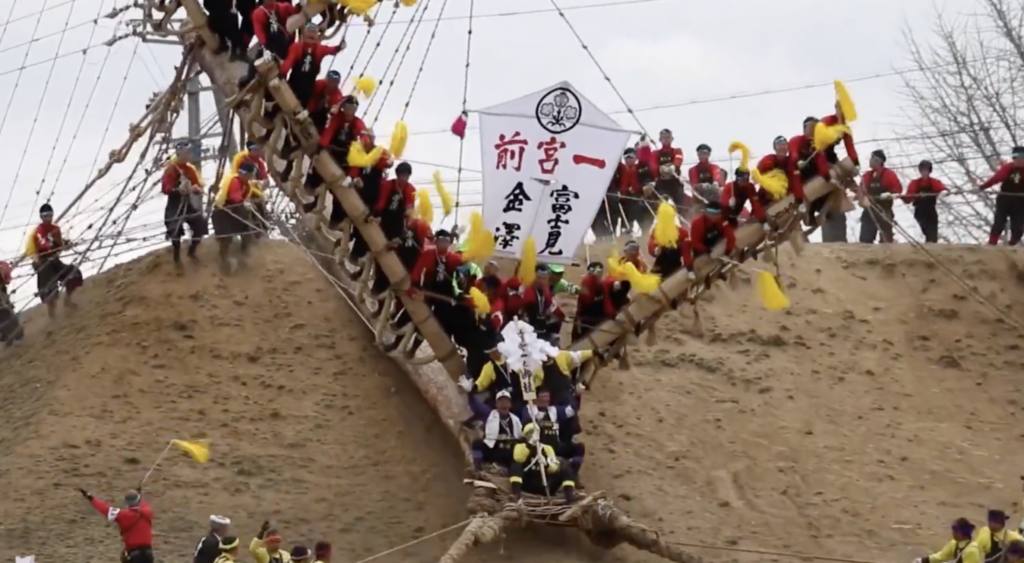
People hanging onto the logs bounce violently as the trunks twist and spin unpredictably. Riders can easily lose their grip and fall beneath the moving timber. Others are thrown into nearby crowds or slammed against the ground at high speed.
Deaths are tragically common during the festival. Reports indicate that people have died in seven of the last ten Onbashira celebrations. Serious injuries are also frequent, ranging from broken limbs to head trauma.
Despite the risks, riding the logs is considered a tremendous honor, especially among followers of Shinto traditions. Preparation is critical for anyone brave enough to participate.
Community elders evaluate riders before allowing them to join, often selecting participants based on physical fitness and experience. Survival during the ride depends largely on grip strength, balance, and body positioning. Holding onto the log may sound simple, but when several tons of wood begin sliding downhill, the forces involved become extreme. Participants often wear heavy-duty work gloves to protect their hands and improve grip.
Leg strength is equally important.
Experienced riders recommend squeezing the log tightly between the legs while keeping the feet planted slightly forward. Small grooves or imperfections in the wood can help riders stabilize themselves during the violent descent.
Leaning forward is another important technique because it shifts pressure away from the lower back and forces the legs to absorb more of the movement. Losing balance for even a moment can have disastrous consequences.
One of the deadliest positions on the log is near the front.
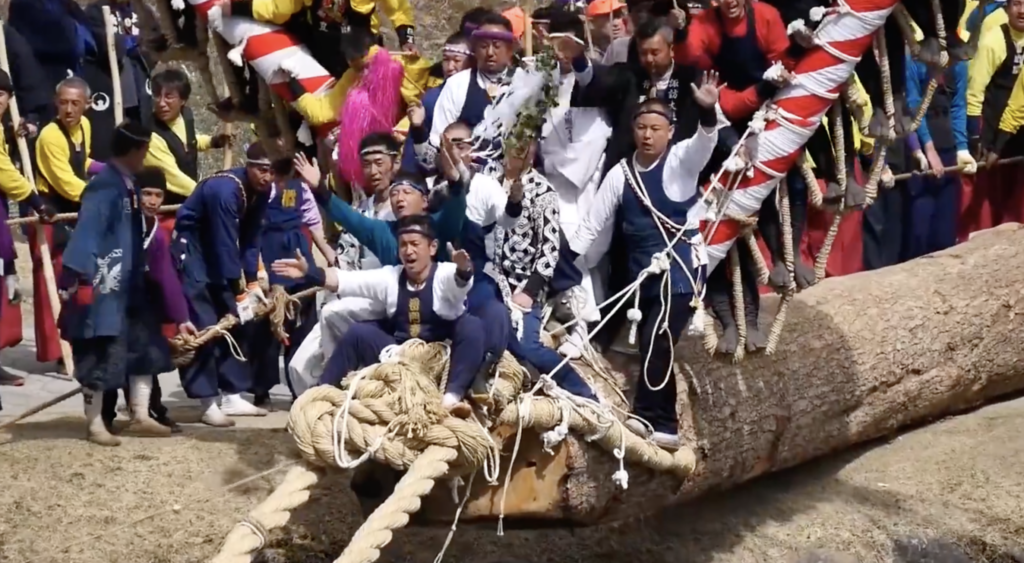
If the trunk suddenly digs into the ground or changes direction, riders near the front may be thrown directly into its path. A single mistake can lead to crushing injuries or worse. And if the log begins to roll, survival experts say riders should immediately push themselves clear.
In those terrifying seconds, knowing how to fall properly can make the difference between life and death. Participants are encouraged to tuck and roll away from the path of the moving log rather than attempting to break their fall with their arms.
Anyone who lands awkwardly risks broken bones or being pulled back under the trunk.
Still, even surviving the downhill ride does not mean the danger is over.
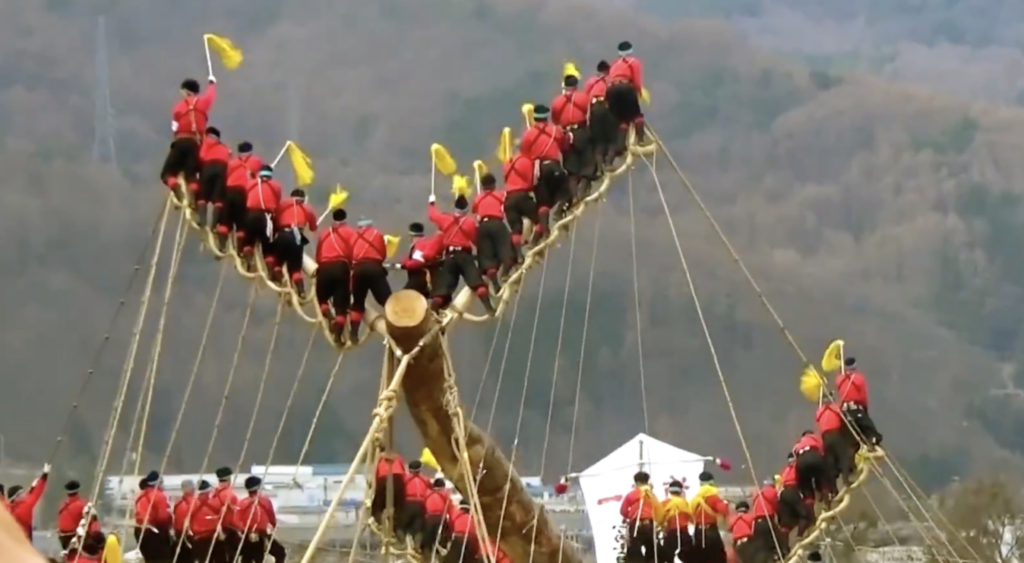
The third and final phase of the festival is called Satobiki. During this stage, the giant logs are raised upright at the shrine complex using ropes and manpower alone. As the pillars slowly rise into the air, selected participants remain perched on top.
This stage has also proven deadly over the years.
In 2016, one man died after falling from the top of a raised pillar. In another tragic accident during the 2010 festival, two people were killed when a guide wire snapped while workers attempted to lift one of the enormous logs into place.
The higher the pillars rise, the greater the danger becomes.
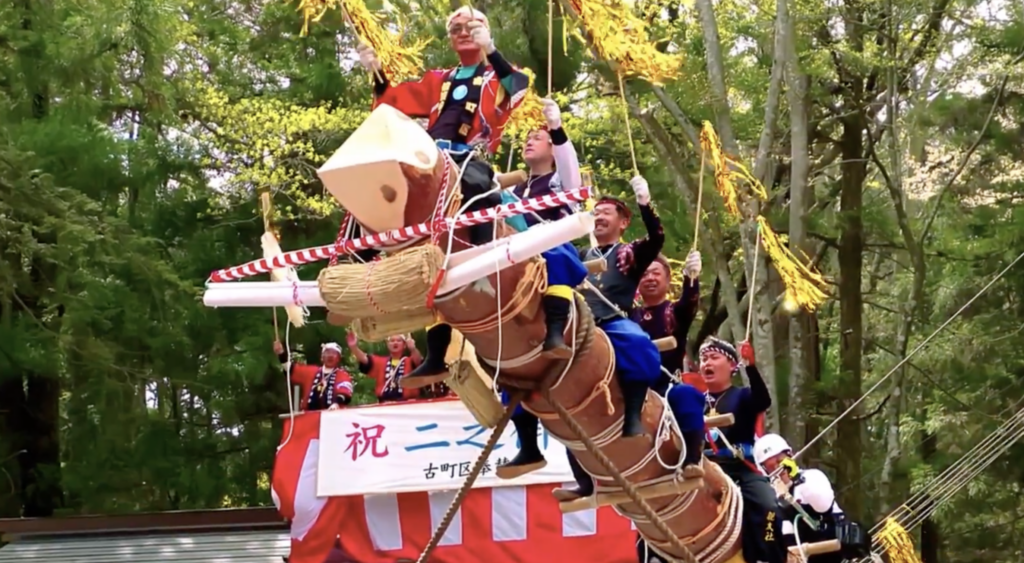
Experts say that if someone begins losing their grip during the raising ceremony, letting go early may actually improve their chances of survival. Falling from a shorter height dramatically reduces the risk of fatal injuries. Yet despite the deaths and constant danger, the festival remains deeply respected throughout Japan.
For many participants, Onbashira is not about recklessness. It is about tradition, faith, courage, and community. Families pass stories of the festival from generation to generation, and some participants spend years waiting for the opportunity to ride the sacred logs.
The event also draws enormous crowds, creating another layer of danger. Thousands of excited spectators push toward the action, trying to get the best view possible. Combined with the unpredictable movement of the logs, the dense crowds can quickly become chaotic.
Still, every six years, the people return.
The thunder of giant trees crashing down mountainsides has echoed through the Suwa region for over a millennium. And despite the risks, the Onbashira Festival continues to stand as one of the world’s most extreme and dangerous religious traditions.