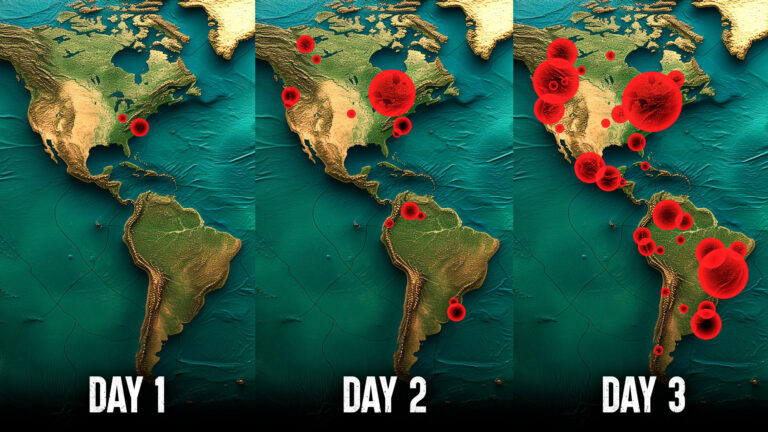
Today, we’re mapping out a realistic simulation of a zombie apocalypse. Let’s see if you’ve got what it takes to survive the end of civilization.
What’s the most realistic cause of a zombie outbreak? And which countries would be the first to fall in this scenario?
Days 1-3
On day one, police receive calls to check on some people exhibiting extreme aggression, attacking others with primitive, cannibalistic ferocity.
What’s even stranger is that it seems to be affecting people who are on the brink of death. Authorities are baffled. They initially dismiss the attacks as drug-induced episodes or severe psychotic breaks. Meanwhile, the media picks up on these stories, spreading a mix of concern and intrigue across the globe.
As the panic spreads, you’d be smart to stock up on essentials quickly before stores get overrun with people. Start thinking about weapons, even makeshift ones. You may need to use them soon.
Days 4-7
On day four, the attacks spread beyond cities to suburban and rural areas. Countries with dense populations and limited access to healthcare will be hit the hardest. But more on that later. This mindless aggression appears to be contagious.
Medical professionals and law enforcement notice an emerging pattern. They suspect a pathogen to be responsible for the rapid spread of violent behavior. The public’s fear escalates, fueled by unending streams of social media and news reports.

The word “zombie” is everywhere.
It’s time to fortify your home, develop evacuation plans, and ensure you’ve got a way to stay connected with your loved ones.
Day 8-14
The World Health Organization issues a pandemic alert.
Scientists attribute the attacks to a new virus that spreads through bodily fluids, turning those who are infected into aggressive, blood-thirsty “zombies.’

Borders close, travel restrictions are imposed, and police forces are mobilized in an attempt to slow down the outbreak. But it’s a race against time as the virus outpaces the efforts to contain it.
Don’t try to be a hero and go it alone. At this point, you need to find a group of people that you can cooperate and share responsibilities with. They could save your life.
Keep stocking up on food, water, and medical supplies.
Week 2-4
After two weeks, military forces are deployed across affected regions to enforce the quarantine and to maintain order. While the presence of armed forces might be reassuring to some people, it also introduces an element of martial law that can be unsettling.

Mix that with panic and mass hysteria, and you get violent clashes between communities and authorities. Self-organized groups become vigilantes attempting to enforce their own rules for protection.
If you see anyone carrying a gun, stay out of their way. They are on edge as much as you. Maybe more. Now, while having a reliable group of people is crucial, if certain people in your community are transforming into warlords, it might be time to leave.
Week 4-8
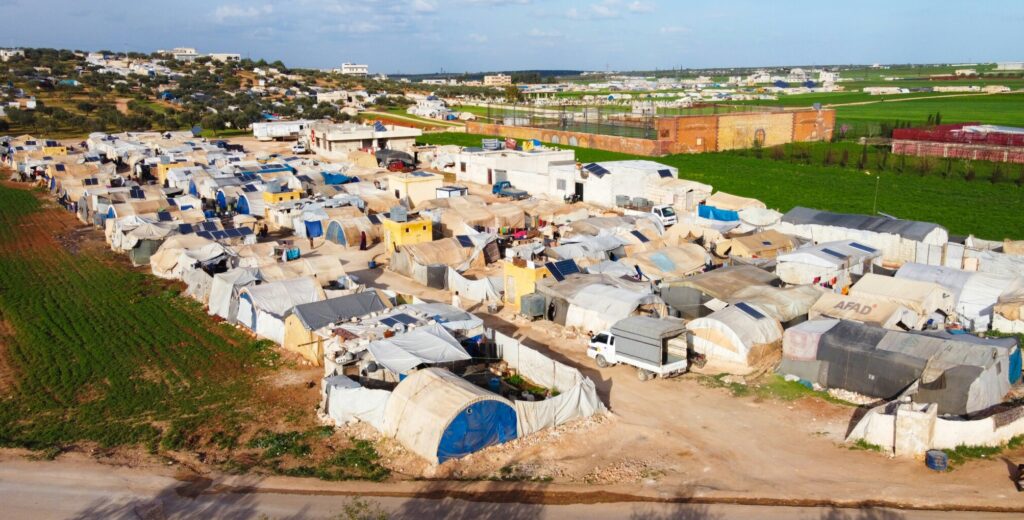
By week four, the number of displaced people is overwhelming the refugee shelters and camps. Shortages of food, water, and necessities lead to dire conditions and the spread of disease. Hospitals reach capacity, there’s not enough space to treat both virus victims and regular patients.
Many people have lost family members to illness, violence, or the virus. Bodies are burned in the streets to make sure that they don’t rise again as zombies.
By this time, you’ll have likely seen the death of someone you love. Hopefully, you didn’t have to kill them yourself. So, pay attention to your mental health as much as physical safety. Get support from your community to help you cope with the emotional toll.
Month 2-6
Air travel and international commerce, which were still operating at the beginning of the outbreak, spread the virus to all corners of the world. Countries like India and Nigeria, with their dense populations and limited resources, have succumbed to the virus.
Millions have died across the world and predictions for the upcoming months are bleak. Many government agencies have failed and have proven unable to maintain order or services. Urban areas are now abandoned. Survivors are escaping to less densely populated areas.

Time for you to grab your survival bug-out bag. Make sure it’s stocked with essential supplies and your essential documents. Start moving discretely, especially in high-tension zones. Camouflage your supplies or hide them to prevent drawing attention.
Look for natural fortifications like islands or mountainsides or any place you can defend as a base.
Month 6-12
Adaptability becomes key as we enter month six of the apocalypse. Zombie hordes begin wandering out of the cities and into survivor territories. But the threat isn’t just from the undead. Wildlife becomes more bold and dangerous as our human presence grows smaller.
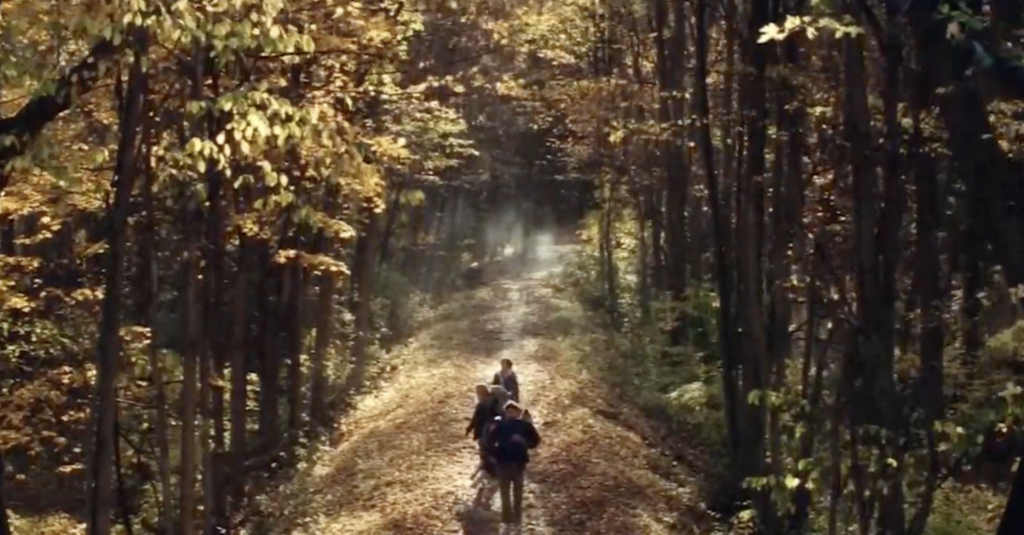
Be stealthy as you navigate this world without laws. Don’t light a fire unless absolutely necessary, and keep the noise down! Be ready to make alliances with other survivors. Share some food or medicine as a peace offering. But watch your back. Even the most well-meaning survivor can turn into a potential threat under the right circumstances.
Year 2-5
After two years of fighting the infected, the focus shifts from mere survival to building a sustainable future. Communities organize expeditions to clear zombies from critical areas, slowly expanding the safe zones surrounding their settlements.
Schools begin to re-form, focusing on teaching survival skills, history, and the importance of community and cooperation. Solar panels or wind turbines are built to power new communities, reducing our reliance on fossil fuels.

Still, the war against the undead is far from over, so training and drills are part of everyday life. So is the building and maintaining of defensive structures like walls, trenches, and watchtowers to stop zombies and hostile humans. We’ve still got a long road ahead, but it looks like the zombie apocalypse might not be the end of humankind after all.
Of course, this is a fictional scenario. But what if I tell you that there is a real-world virus that can spread through saliva and results in aggressive behavior in the infected host?
Yeah, this can be scarier than any horror movie.