



Swipe Down for Full Video Story
Imagine a tiny needle traveling toward Earth at the speed of light. At first glance, it might seem harmless, since it is so small. However, at such extreme speeds, even a microscopic object could carry an enormous amount of energy, enough to cause catastrophic effects on impact.
The physics behind this scenario is far more extreme than everyday intuition suggests, turning something ordinary into something potentially planet altering. To understand what could happen, we need to look at how energy and speed interact under the laws of physics.
Understanding the Speed of Light
Before exploring the potential damage a needle could cause, it is important to understand just how extreme the speed of light really is. In a vacuum, light travels at a constant speed of about 300,000 kilometers per second, or 186,000 miles per second. At that velocity, light can circle Earth roughly 7.5 times in just one second.
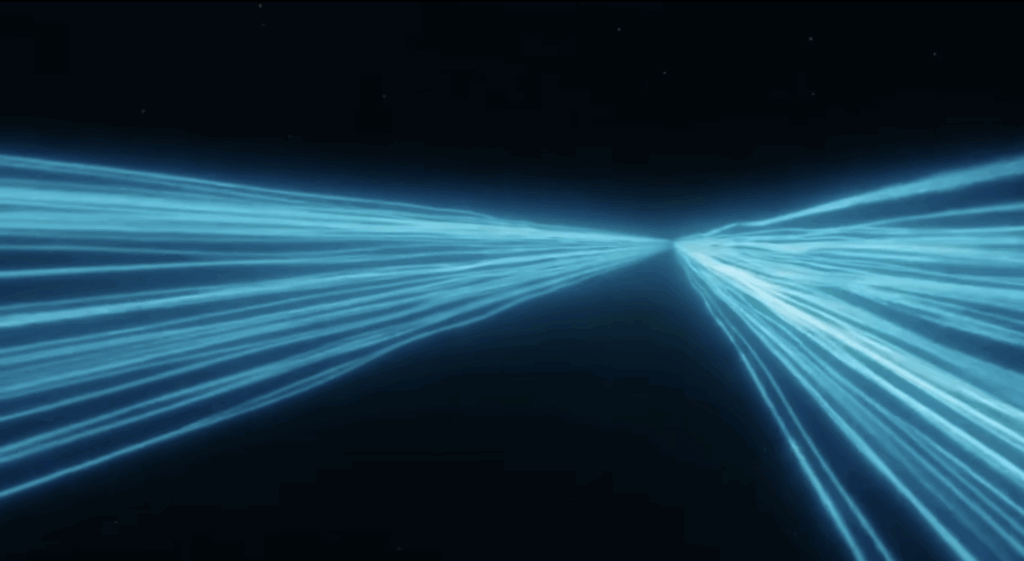
To put this into perspective, a journey to the Moon, which is about 386,400 kilometers away, normally takes spacecraft around three days to complete. At the speed of light, the same trip would take only about 1.3 seconds. By comparison, the fastest human made object, NASA’s Parker Solar Probe, reaches speeds of about 635,000 kilometers per hour, which is still far from anything close to light speed.
According to modern physics, nothing with mass can reach or exceed the speed of light, making the idea of a needle traveling at that velocity physically impossible under known laws of the universe.
Why It’s Practically Impossible
Einstein’s Theory of Relativity explains why this limit exists. As an object moves closer and closer to the speed of light, its effective mass increases and time for it slows down relative to an outside observer. The nearer it gets to light speed, the more energy is required to keep accelerating it further.
Reaching the speed of light would therefore require an infinite amount of energy, which is impossible within the limits of known physics and far beyond any current or future human technology.
Even so, to explore the idea further, imagine an extremely advanced alien civilization somehow manages to create a needle traveling at 99.9 percent of the speed of light.
The Devastation on Impact
Although the needle is incredibly small compared to Earth, its extreme velocity would give it an enormous amount of kinetic energy. At such speeds, even a microscopic object could release energy on a scale that is difficult to comprehend.
If it struck land, for example Central Park in New York City, the outcome would be devastating. As it entered the atmosphere, intense friction could cause it to heat up and potentially vaporize like a meteor. However, if it survived the descent, the impact would trigger an explosion far more powerful than a nuclear detonation.
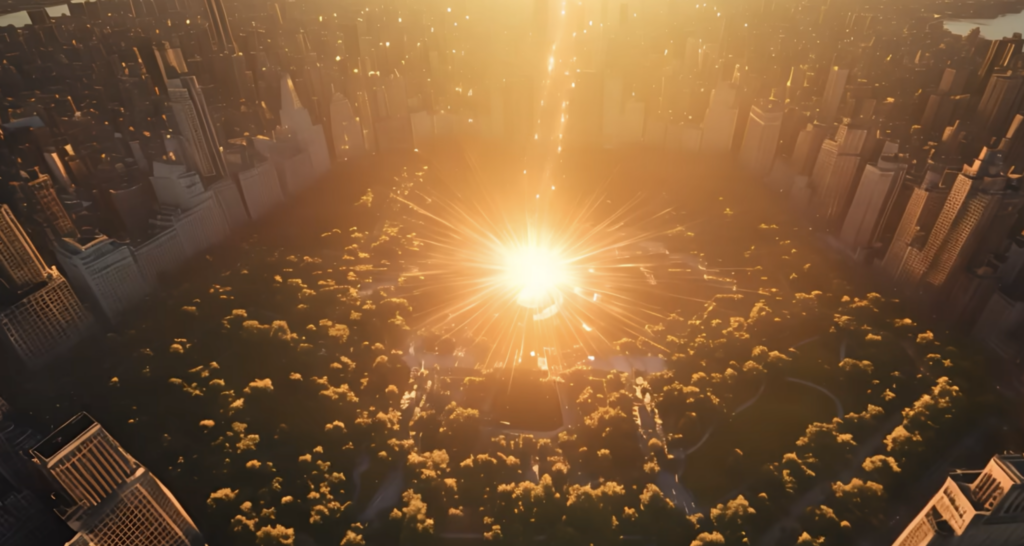
Everything in the immediate area, including trees, vegetation, and people, would be instantly destroyed. Nearby buildings would collapse, massive fires would spread, and a powerful shockwave comparable to a major earthquake could ripple across the region, reaching surrounding areas such as New Jersey.
Even so, the destruction would still be largely localized. Regions on the opposite side of the planet would likely feel little to no direct physical impact, although global consequences would still depend on how much debris and energy were released into the atmosphere.
What If It Hit the Ocean?
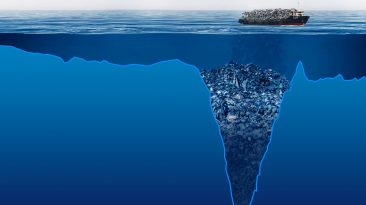
If the needle were to plunge into the ocean, its enormous kinetic energy would violently displace a vast amount of water, producing an enormous explosion like shock in the sea. Scientists estimate that the energy released could be comparable to a one megaton nuclear blast, capable of generating a towering water column and intense pressure waves.
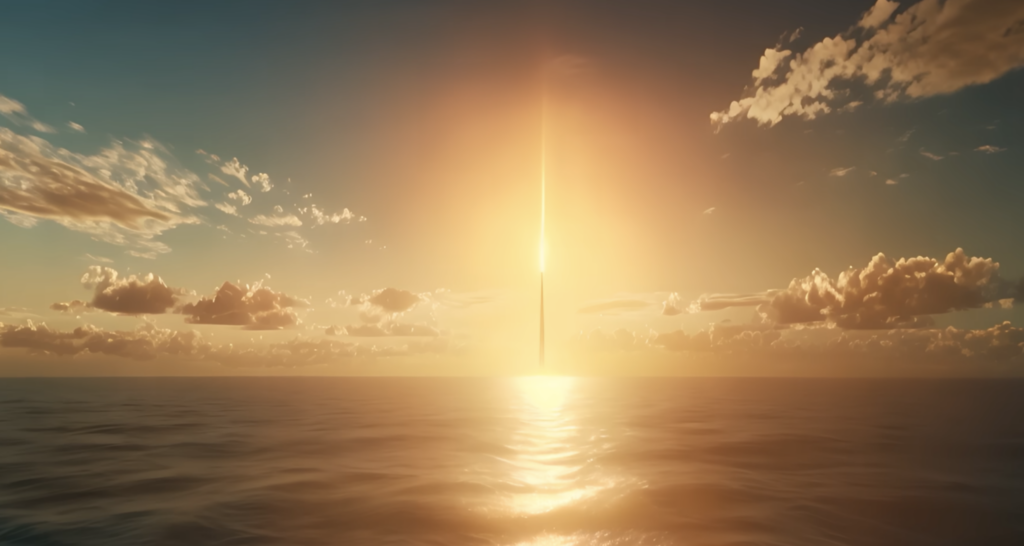
Past events, such as the 1946 Baker underwater nuclear test, produced water plumes rising more than 2 kilometers into the air, demonstrating how powerful underwater explosions can be. While an impact of this kind would be extremely dramatic and destructive locally, it would still be unlikely to generate a global tsunami, since those require large scale shifts in the Earth’s crust rather than a single, concentrated point of impact.
A Direct Hit on a Human
For anyone directly in the needle’s path, the outcome would be immediate and unavoidable. The energy released on impact would be instantly lethal, leaving no time for reaction or awareness.
The Global Catastrophe Scenario
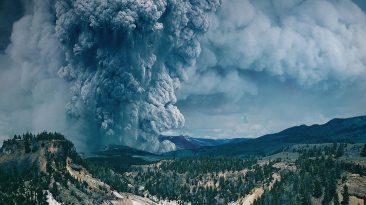
The most extreme scenario would occur if the needle were to strike an active volcano. In theory, such an impact could disturb underground magma systems, potentially triggering large scale volcanic eruptions. Throughout Earth’s history, eruptions of this magnitude have had catastrophic consequences, including near extinction level events.
The Toba eruption, for example, is believed to have dramatically altered global climate conditions and may have reduced human populations to just a few thousand survivors.
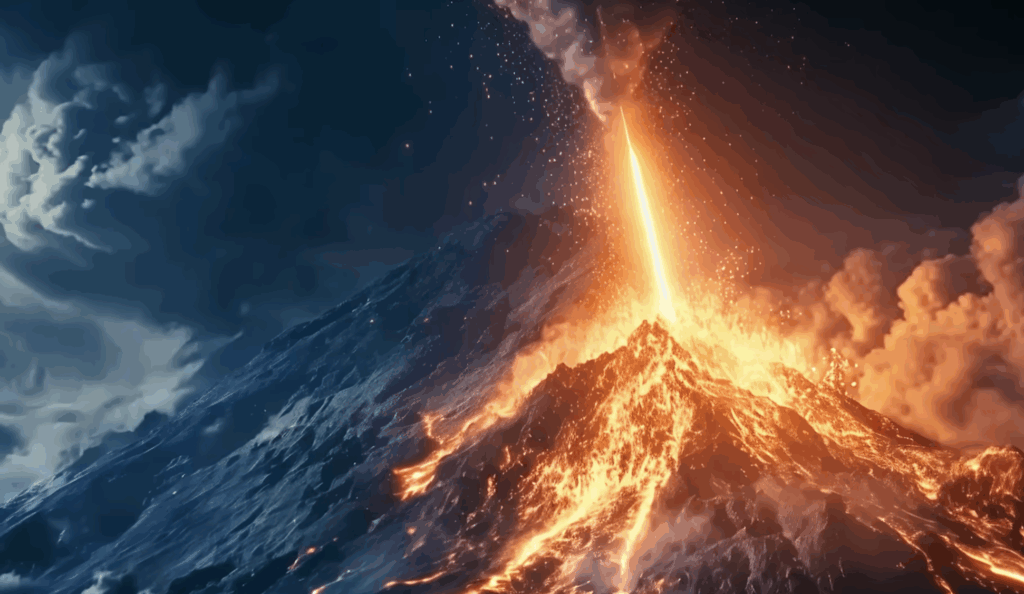
If a similar eruption were triggered today, volcanic ash could remain in the atmosphere for years or even over a decade, blocking sunlight and causing a dramatic drop in global temperatures in a phenomenon often described as a “volcanic winter.”
Widespread crop failures and ecosystem collapse would follow, threatening most plant and animal life on Earth, including humans. While a small portion of humanity might survive in relatively isolated and stable regions such as Australia or New Zealand, maintaining a global population of 8 billion people would be virtually impossible.
Why You Don’t Need to Worry
The good news is that the chance of a needle ever striking Earth at light speed is effectively zero. Reaching such a velocity would require infinite energy, which is impossible under the laws of physics as we currently understand them. On top of that, there is no evidence that any civilization, human or otherwise, can accelerate matter anywhere near the speed of light.
For now, this scenario remains safely in the realm of theoretical physics and science fiction, rather than something we need to worry about in reality.