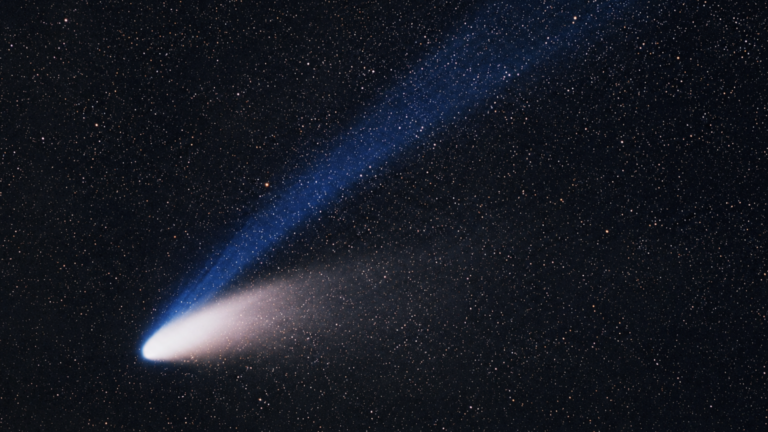
Halley’s Comet is one of the most famous visitors in our Solar System. It is a massive, peanut shaped object made of ice, dust, and frozen gases, stretching roughly 15 kilometers by 8 kilometers across. Every 76 years, it loops around the Sun, and humanity has been watching it for thousands of years.
So far, it has never posed a threat to Earth. But space is unpredictable on long enough timelines. If its orbit were altered in just the right way, there is a chance it could intersect with the Moon instead of safely passing by. And if that ever happened, the result would be a cosmic collision visible from Earth.
Because we understand Halley’s orbit very well, scientists would likely know about the impact years in advance. That warning time would make it one of the most anticipated disasters in human history. Even so, nothing could really prepare us for what would unfold.
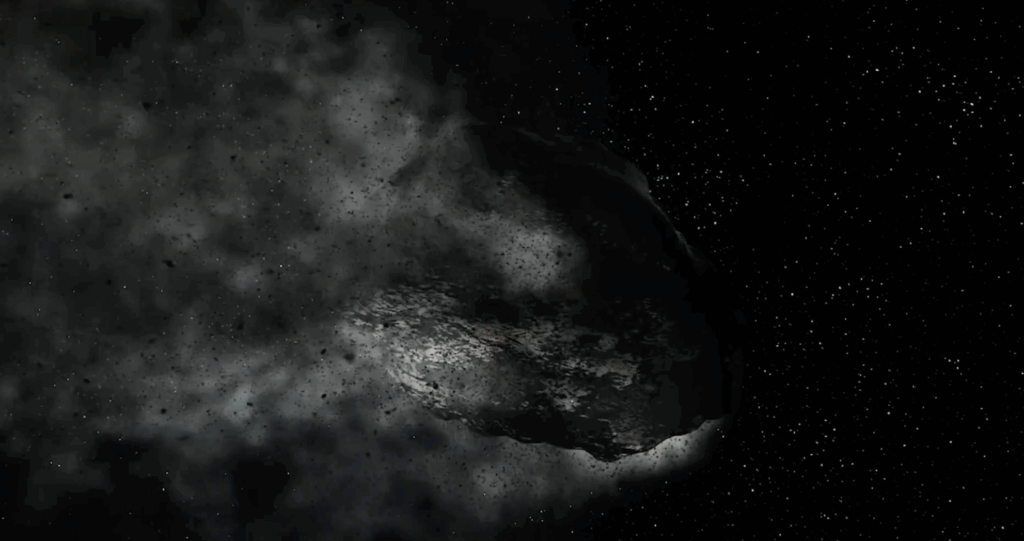
A useful comparison is the 2013 Chelyabinsk event, when a relatively small asteroid exploded over Russia, producing a brief but powerful flash and injuring over a thousand people. It also created a visible impact on the Moon when similar objects have struck its surface in the past, leaving behind small craters and brief flashes of light.
But Halley’s Comet is not in the same category. It is hundreds of billions of times more massive than objects like the Chelyabinsk meteor, meaning the energy released in a collision with the Moon would be on an entirely different scale.
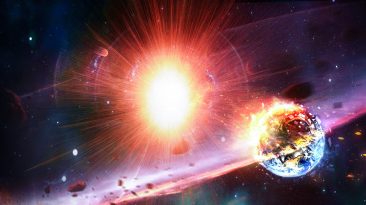
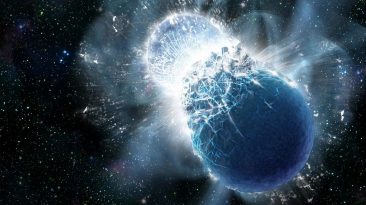
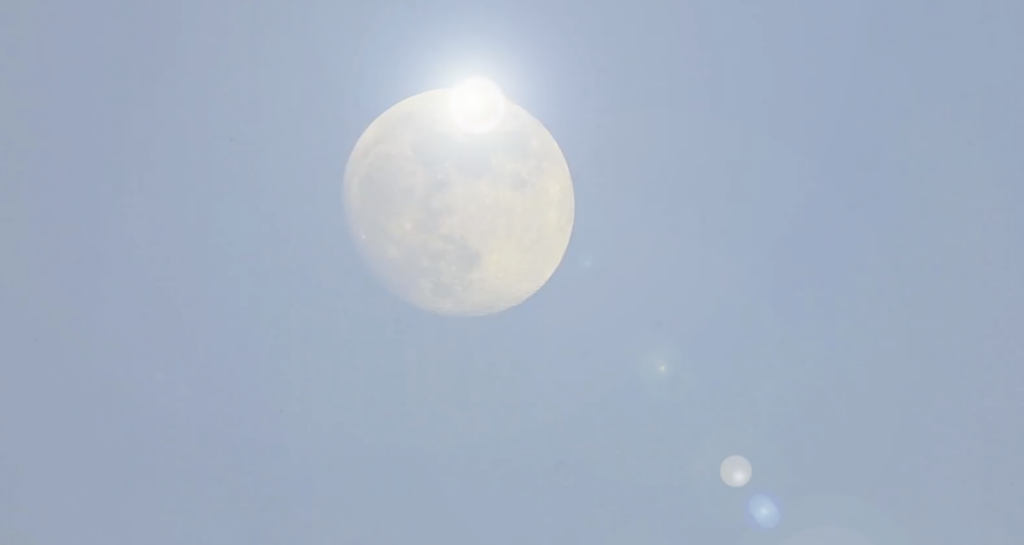
Instead of a small crater, the impact would violently reshape large portions of the lunar surface. From Earth, the event would likely appear as a sudden burst of intense light, almost like a second Moon briefly igniting in the sky.
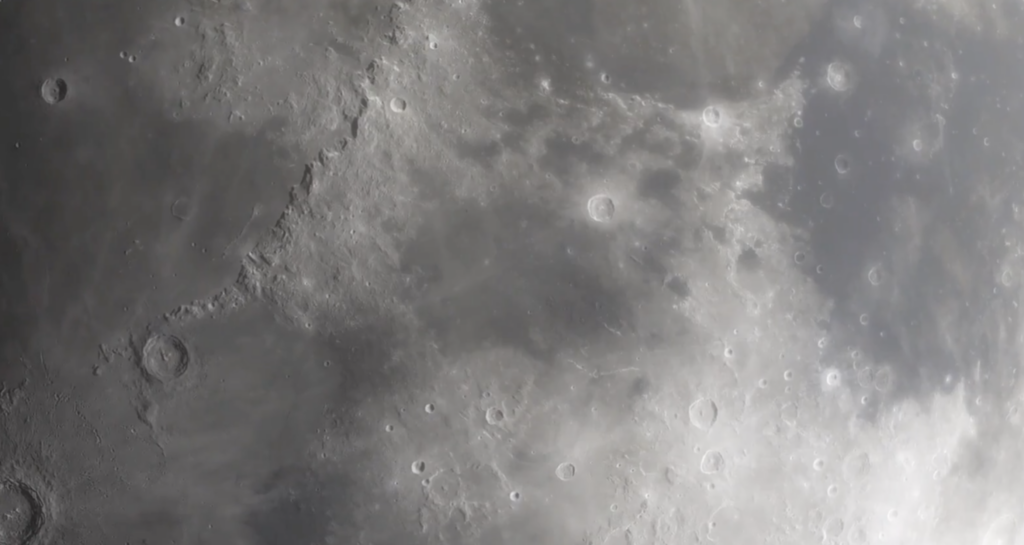
On the Moon itself, the consequences would be far more extreme. The impact could fracture large areas of the crust, exposing subsurface material and potentially releasing molten rock from deeper layers. Vast plumes of dust and debris would be launched into space, forming a chaotic cloud around the Moon.
Some of this material would simply drift around the Moon, but a significant portion could be accelerated beyond lunar escape velocity. Once free, those fragments would begin to move through space under the influence of Earth’s gravity.
As time passed, Earth would likely become the next destination for some of this debris. Small particles would burn up harmlessly in the atmosphere, but larger fragments could survive entry and create powerful airbursts or ground impacts.
Events like the Chelyabinsk explosion in 2013 show how even relatively small space rocks can cause significant damage when they enter Earth’s atmosphere. In a scenario involving lunar debris, the scale of destruction could vary widely, but some impacts could still be powerful enough to threaten cities if large fragments survived intact.
In such a situation, much of the global population would likely take shelter while scientists tracked incoming debris. Over time, conditions would stabilize as most of the material either burned up or fell harmlessly into the oceans or uninhabited regions.
However, the long term consequences would extend far beyond the initial impacts. The Moon plays a critical role in Earth’s space infrastructure and future exploration plans. If it were heavily damaged, it could complicate future missions, including lunar bases, mining operations, and deep space launch systems that rely on it as a stepping stone.
Space agencies would likely become even more focused on planetary defense and orbital monitoring. Constant observation of remaining debris would become essential to ensure long term safety in Earth’s orbit.
And while many people imagine that such an event might create a beautiful ring of debris around Earth, similar to Saturn, the reality would likely be far less stable and far more chaotic, with material gradually dispersing or falling back to Earth over time.