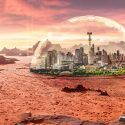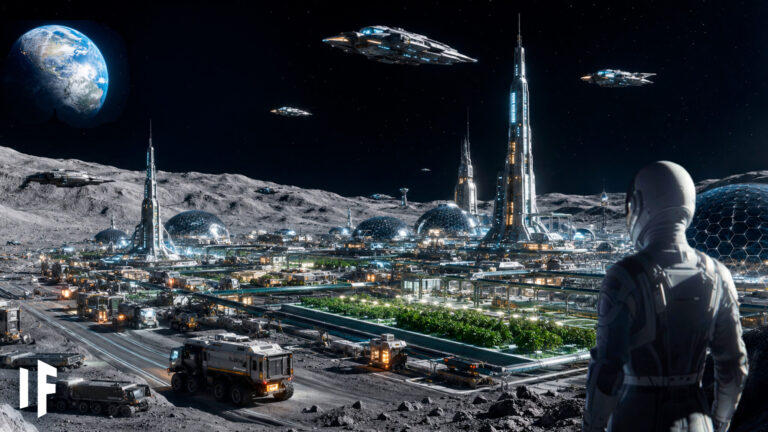
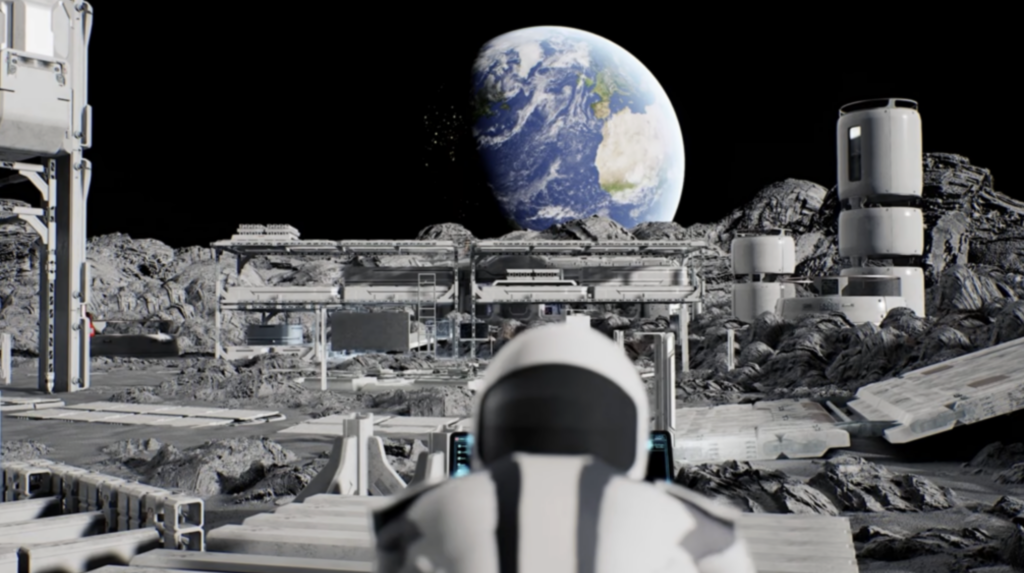
The year is 2126. Looking out your window, you watch Earth hanging silently above the lunar horizon. What was once a breathtaking image seen only by astronauts has become an everyday view for thousands of people living on the Moon.
Humanity has officially entered a new era. After decades of planning, NASA and its international partners have completed the first phase of Luna Prime, the world’s first permanent city on the Moon.
It is an incredible achievement, but one thing has not changed. The Moon remains one of the most hostile places humans have ever attempted to call home.
Compared to it, even Antarctica seems welcoming.
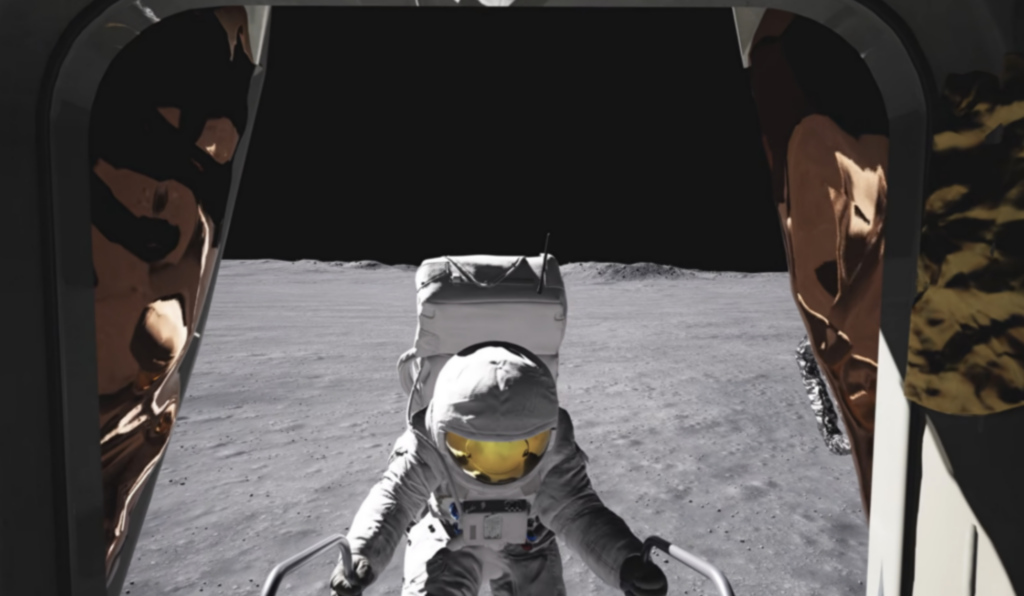
Living in a lunar city is not glamorous. Every day is a careful balance between advanced technology and one of the harshest environments in the Solar System.
Your day begins with a ride aboard an automated transit line heading toward the city’s sprawling solar farms. Energy is the foundation of life here. Every habitat, laboratory, greenhouse, and communication system depends on electricity generated across the lunar surface.
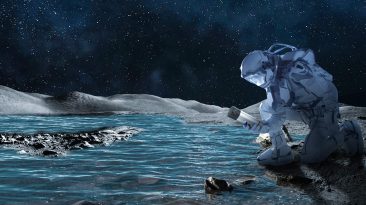
Today’s task is to inspect solar arrays and maintain heating systems that protect critical equipment located inside permanently shadowed craters. It is routine work, but on the Moon, routine can still be dangerous.
Stepping outside always carries risk.
Tiny pieces of space debris race across the lunar surface at incredible speeds. A particle no larger than a grain of sand can puncture a spacesuit, damage equipment, or destroy vital life support systems. Every mission beyond the habitat requires careful planning because there are no second chances in a vacuum.
The environment itself is equally unforgiving.
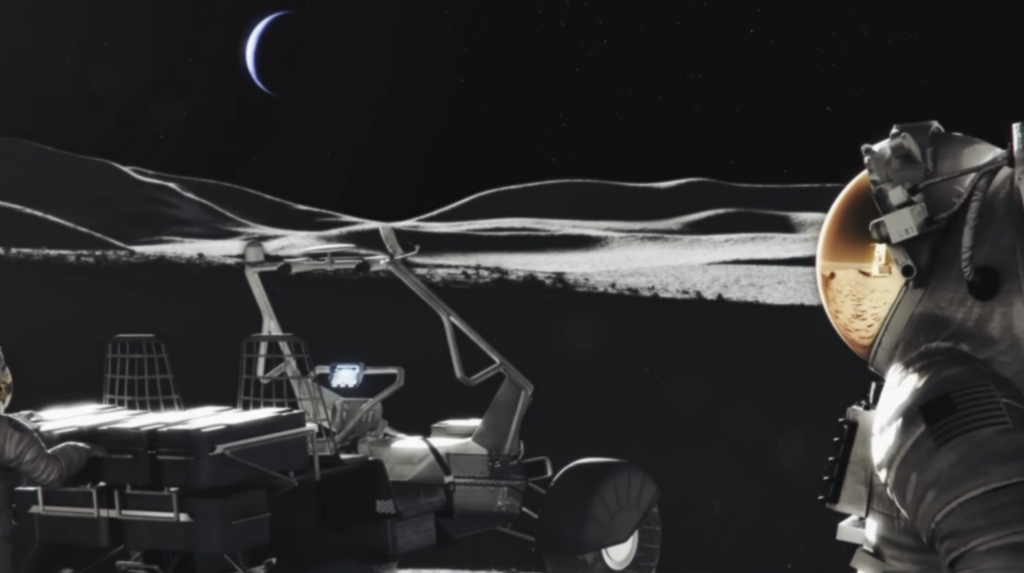
A lunar day lasts nearly an entire month on Earth. Regions near the equator experience approximately fourteen days of continuous sunlight followed by another fourteen days of darkness. During daylight, temperatures can climb above 127 degrees Celsius. Once darkness arrives, they can plunge below minus 170 degrees Celsius.
Unlike Earth, there is no atmosphere to regulate these dramatic swings.
There is also no breathable air, no weather, and no magnetic field protecting the surface from harmful solar radiation. A powerful solar storm can become life threatening within minutes for anyone caught outside without adequate shielding.
Despite these dangers, humanity has learned to survive through engineering. Advanced habitats, radiation barriers, thermal protection systems, and reliable life support allow entire communities to thrive where survival once seemed impossible.
But why build a city on the Moon in the first place?
The answer lies in physics.
Launching spacecraft from Earth requires enormous amounts of fuel because of the planet’s strong gravity. Nearly all of a rocket’s launch mass consists of propellant simply to escape Earth’s gravitational pull.
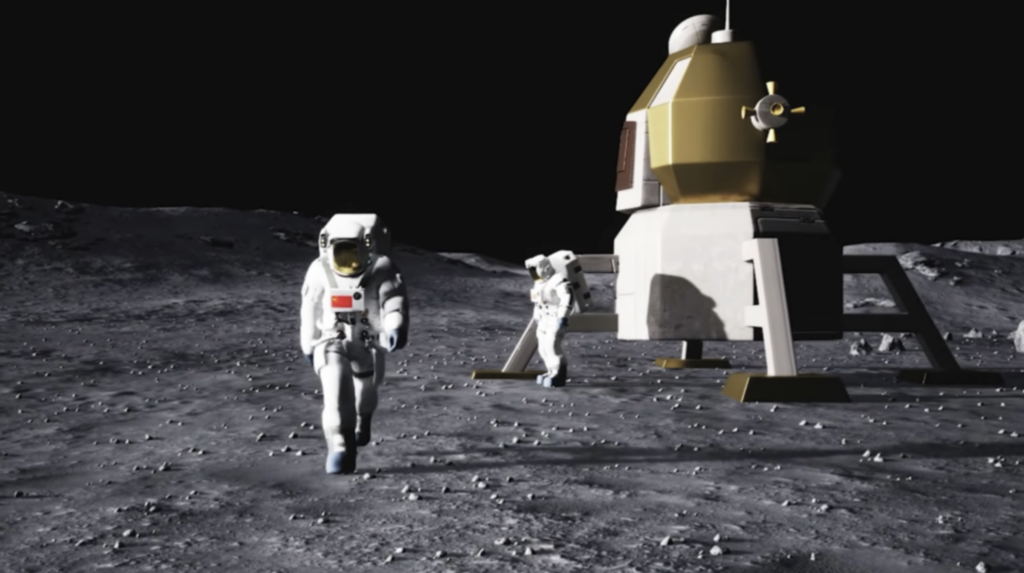
The Moon changes everything.
With only one sixth of Earth’s gravity and virtually no atmosphere, launching spacecraft becomes dramatically easier and far more efficient. A permanent lunar settlement serves as an ideal staging point for missions deeper into the Solar System.
Instead of being humanity’s final destination, the Moon becomes its gateway.
Future spacecraft bound for Mars, the asteroid belt, and even the outer planets could all begin their journeys from lunar spaceports. Engineers have even proposed electromagnetic launch systems capable of sending cargo into space without conventional rockets, making transportation even more efficient.
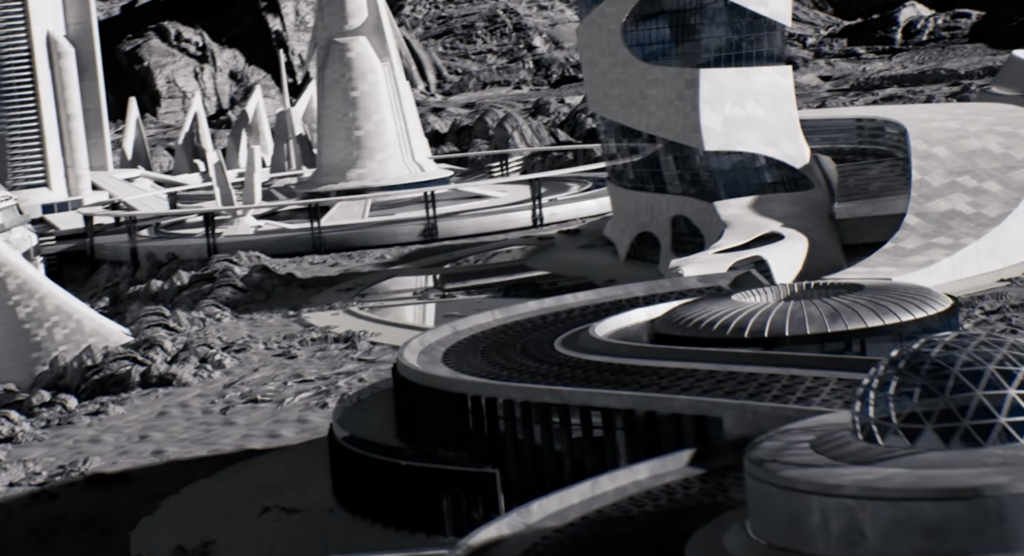
Luna Prime itself is unlike any city on Earth.
Every system is interconnected. Oxygen is produced, recycled, and carefully monitored. Water is recovered and purified continuously. Food is grown inside climate controlled agricultural facilities. Massive computers regulate temperature, pressure, and energy distribution around the clock.
Everything depends on everything else.
A single equipment failure could trigger a chain reaction affecting the entire settlement. That is why nearly every critical system has multiple backups, allowing the city to continue operating even when unexpected problems occur.
Yet surviving on the Moon involves more than keeping machines running.
The greatest challenge may be psychological.
Living hundreds of thousands of kilometers from Earth creates a unique form of isolation. Residents spend months or years inside enclosed environments with the same small communities. Research conducted during long duration isolation experiments has shown that confinement can increase stress, conflict, and mental fatigue if not carefully managed.
To combat these effects, lunar cities are designed with recreation areas, green spaces, social gathering places, and carefully planned work schedules that help maintain both physical and mental well being.
As you travel across the city, you pass the preserved remains of the earliest lunar habitats.
They seem tiny compared to the enormous domes surrounding them today.
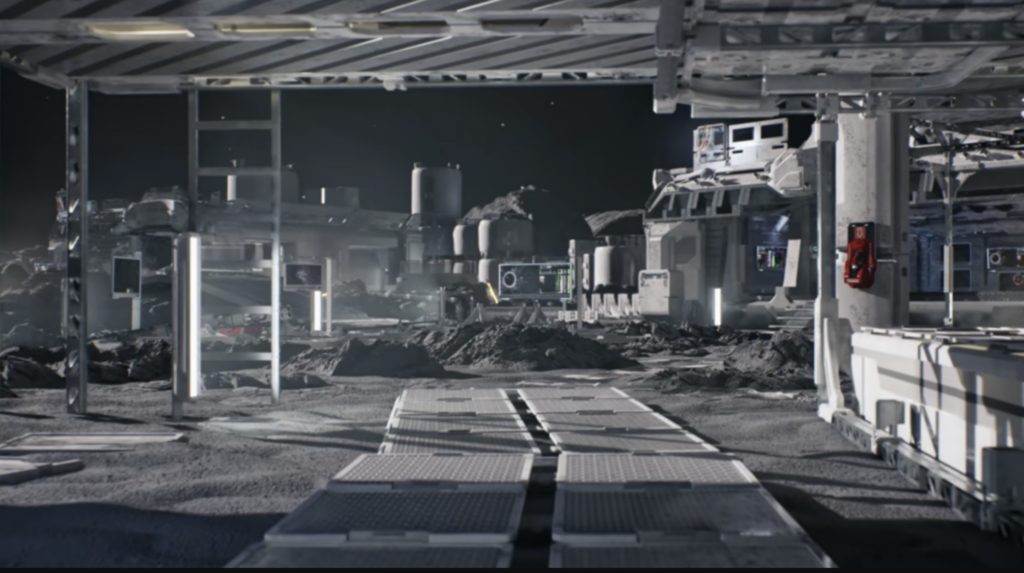
Those original outposts were built during the first wave of lunar exploration after water ice was confirmed near the Moon’s south pole. That discovery changed everything. Water could provide drinking supplies, oxygen for breathing, and hydrogen for rocket fuel, making permanent settlement realistic for the first time.
Construction techniques also evolved rapidly.
Instead of transporting every building material from Earth, engineers learned to use lunar regolith, the fine dust covering the Moon’s surface. Using advanced 3D printing and high powered lasers, they transformed the dust into durable construction material capable of shielding residents from radiation and micrometeorite impacts.
Temporary research stations gradually expanded into permanent bases. Those bases became neighborhoods. Eventually, they became cities.
Luna Prime was built near the Moon’s south pole for practical reasons. Certain elevated ridges receive sunlight for most of the year, allowing nearly continuous solar power generation. Nearby permanently shadowed craters preserve large deposits of frozen water, providing one of the most valuable resources available beyond Earth.
Having energy, water, and reliable communications concentrated in one region made the Moon’s south pole the ideal location for humanity’s first extraterrestrial city.
As your workday comes to an end, you step outside once more. Above you stretches a perfectly black sky filled with stars that never twinkle. There is no atmosphere to blur their light.
In the distance hangs Earth, bright blue and white against the darkness. It is a constant reminder of where humanity began. Life on the Moon is never easy. Every breath depends on technology. Every journey outside carries risk. Every day demands careful preparation.
But despite the challenges, Luna Prime represents something far greater than a city.
It is humanity’s first permanent foothold beyond Earth.
And if people can build thriving communities here, then Mars, the moons of Jupiter, and perhaps one day even worlds beyond our Solar System no longer seem quite so impossible.