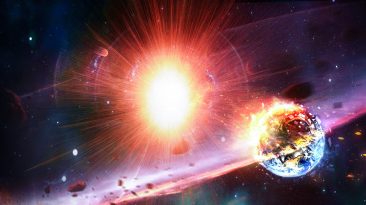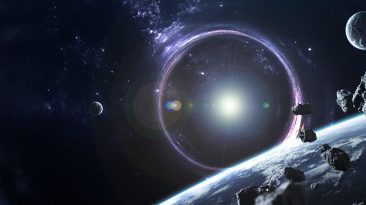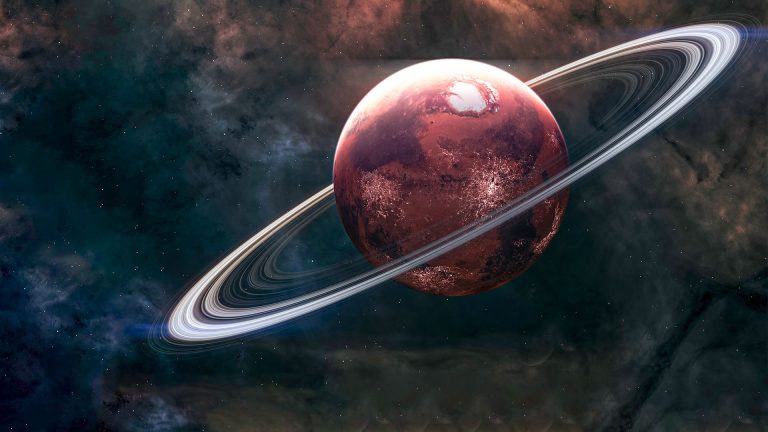
Picture standing on Mars and looking up at a ring stretching across the sky.
Beautiful, until you understand what those rings eventually do. Every piece of that debris is falling, and if Mars behaves anything like Saturn, settlers could face storms of rock and dust hitting the surface at 10,000 kg every second.
That is the price of living under a ring system, and Mars is genuinely heading toward one.
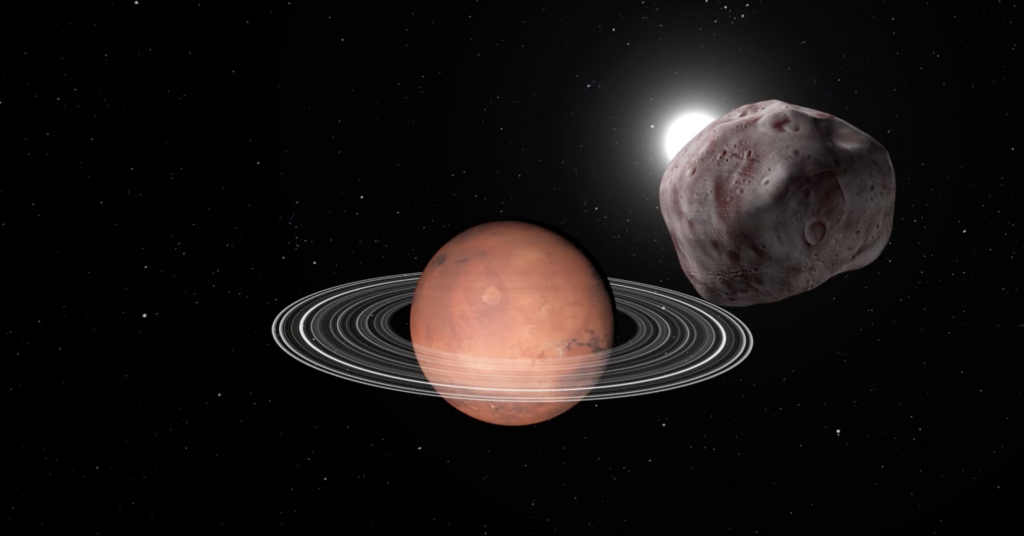
Scientists theorize that millions of years ago, Mars already had rings once, just like Saturn. And the red planet appears due for a new set.
Right now, ring systems belong to the four gas giants: Jupiter, Uranus, Neptune, and Saturn, with Saturn holding the largest by far. Mars could join that club.
The clue comes from its moons. Researchers studying Phobos and Deimos suggest Mars once had several more, including one up to 20 times larger than Phobos. Over billions of years those moons were destroyed and likely became an ancient ring system.
So are Phobos and Deimos next?
Phobos orbits only about 6,000 km above the Martian surface, and it is slowly losing altitude. Eventually it reaches what scientists call the Roche Limit, the closest a large body can come to a planet while still holding itself together against gravity.
For Phobos, that limit sits at roughly 5,470 km from Mars.
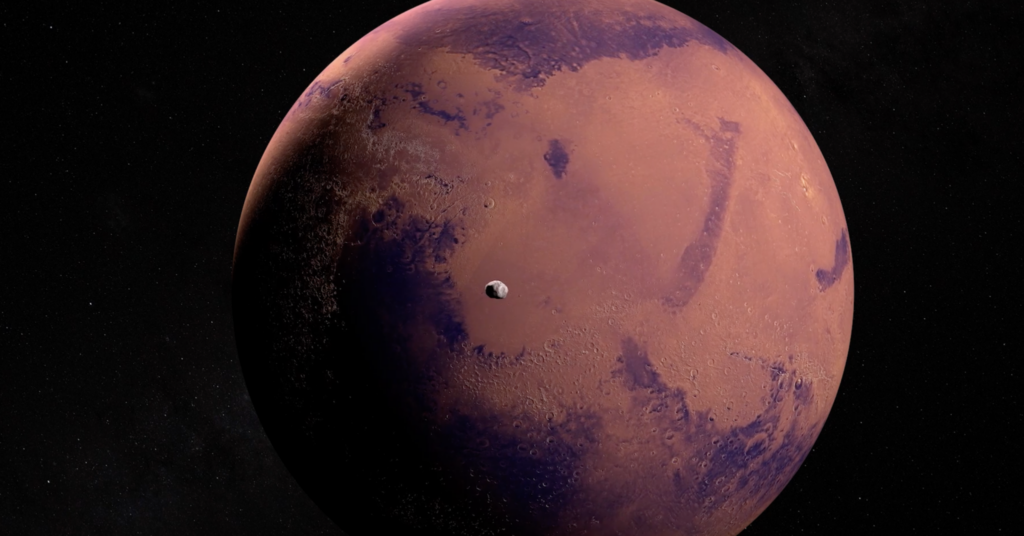
Cross that line and Martian tidal forces begin tearing the moon apart. Phobos breaks into carbonaceous chondrite meteorites, and the stony rock and dust spread out into a thin, dark ring circling the planet.
Deimos survives, because it orbits at a much safer 20,069 km from the surface. Instead of being destroyed, it would mark the outer edge of the new ring.
That reshaping of Martian orbit would complicate any plans to settle there. Not your plans, admittedly. Scientists estimate Phobos will not be ripped apart for about 50 million years, so this belongs to your very distant descendants.
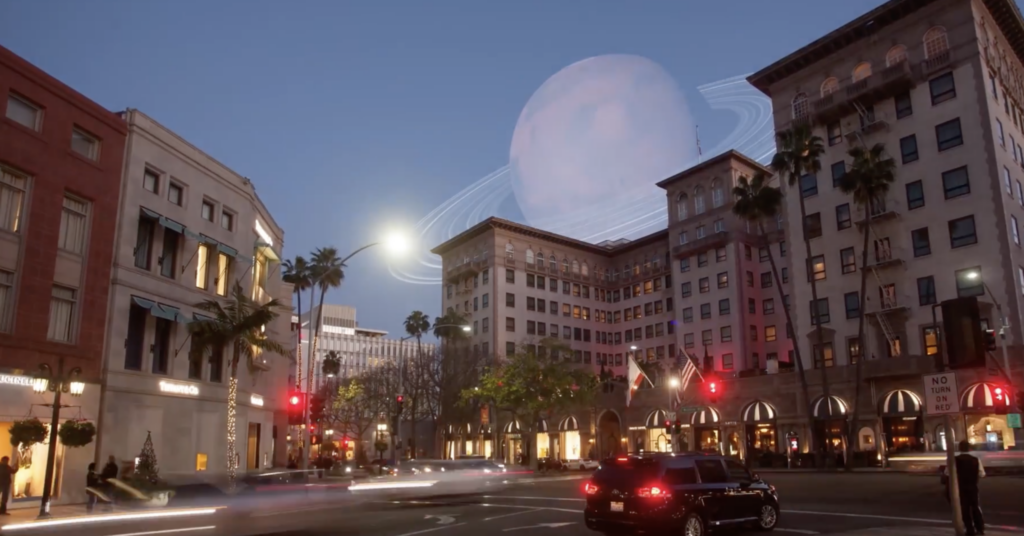
Still, the problems are worth understanding.
Rings would turn space flight into a navigation nightmare, making it difficult to transport people or resources and turning routine trips on and off the planet into hazardous rides.
They would also block sunlight, which matters enormously for surface settlements. Mars already averages minus 63 degrees Celsius, so any reduction in light makes a frozen world colder still. Your descendants had better pack serious spacesuits.
And then comes the real danger.
Eventually every object in that ring falls. Large rocks would punch fresh craters into the surface, and the bombardment would not be a single event but a continuous rain.
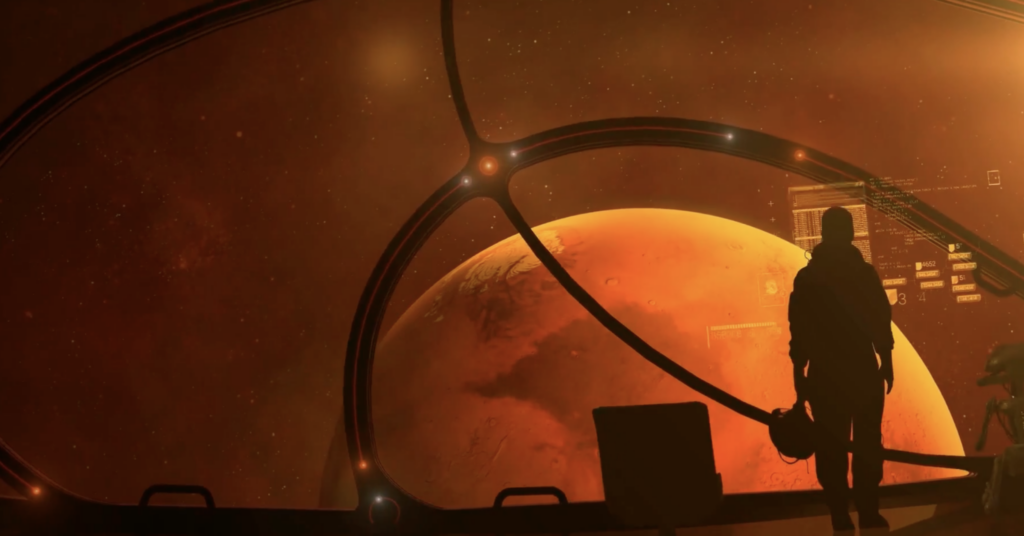
Ten thousand kilograms per second, arriving from above, for as long as the ring lasts.
Surviving that would depend entirely on developing technology capable of destroying incoming objects before they reach the ground.
The one piece of good news is timing. This bombardment would unfold somewhere between 1 million and 100 million years after the ring first forms, which leaves an almost comical amount of time to prepare.
Plenty of time to answer the obvious question. Could we simply nuke the falling rocks before they crush the Martian dream?