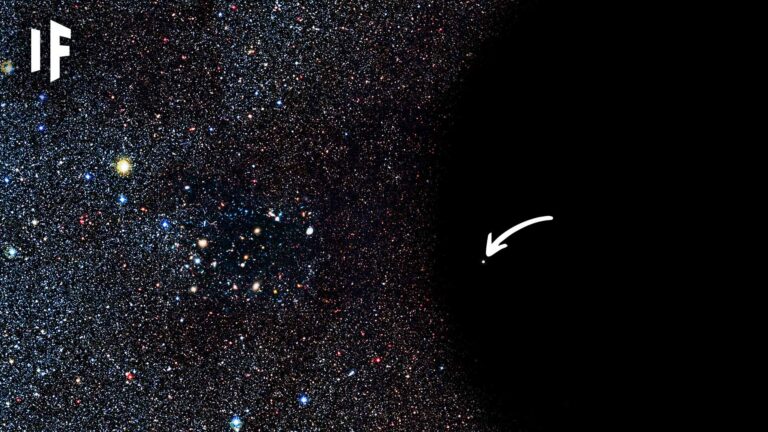
Build a spacecraft that travels at the speed of light, the absolute ceiling of physics, and point it at this destination. You would arrive in 700 million years. And arriving would only put you at the edge of it.
The place is called the Boötes Void, sitting in the direction of the Boötes constellation, and it is one of the emptiest regions ever discovered. Space is famous for being vast, yet this particular stretch makes the rest of the Universe look crowded.
The distance is hard to hold in your head. Andromeda, our nearest major galactic neighbor, sits about 2.5 million light years away, while the Boötes Void lies roughly 280 times farther than that. With today’s technology, the journey would take far longer than our entire civilization has existed.
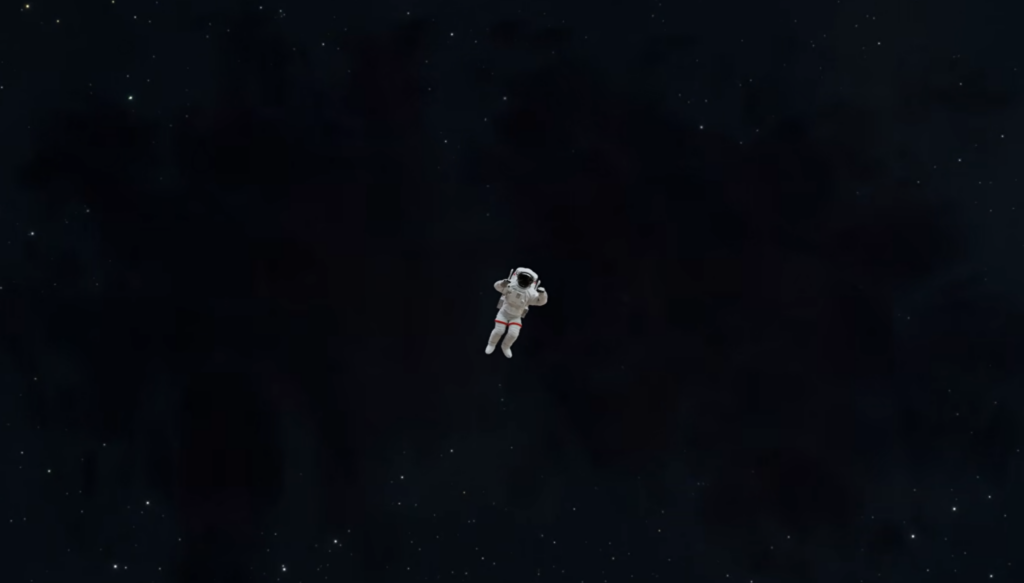
But the size is what makes it genuinely remarkable.
The Void stretches approximately 330 million light years across. Travelling from one edge to the center would take around 165 million years even at light speed, and entire collections of galaxies could fit inside it countless times over.
So what would it actually feel like in there?
Nothing dramatic. You would not sense yourself crossing into it, because there is no invisible wall and no sudden shift in gravity. There would simply be almost nothing around you.
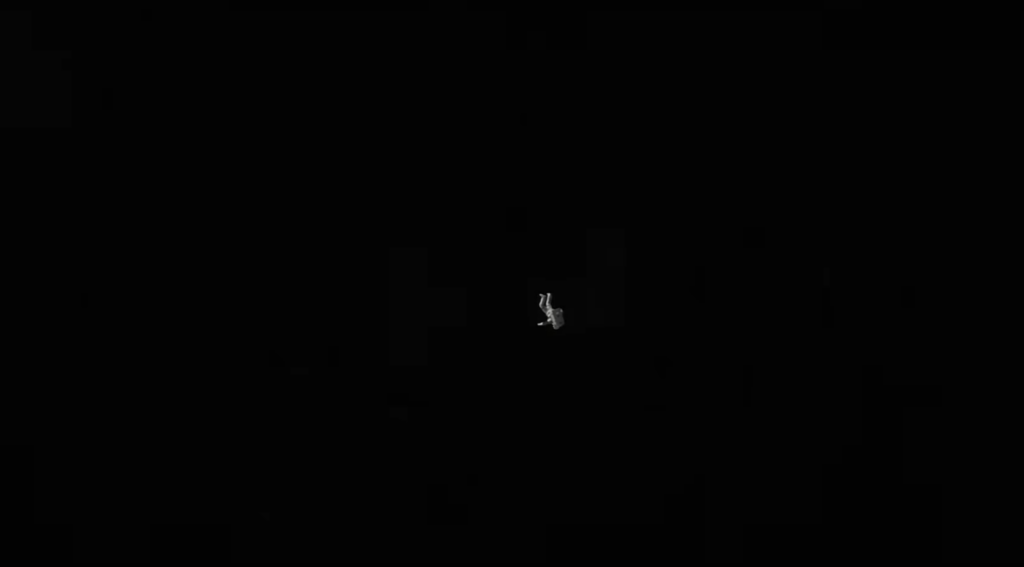
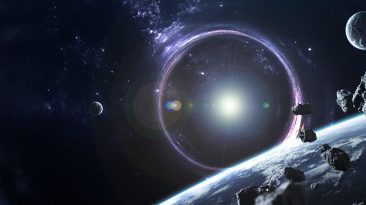
You would float in microgravity exactly as astronauts do in deep space, but with a crucial difference in the view. Very few stars nearby. Almost no galaxies close enough to serve as reference points. Just darkness stretching in every direction you look.
It would also be extraordinarily cold, hovering only a few degrees above absolute zero at roughly minus 270 degrees Celsius. Losing your spacecraft or your light source out there would be terrifying, and without landmarks you would have no way of knowing whether you were moving at all.
You could drift for years, centuries, or millions of years and watch nothing change.
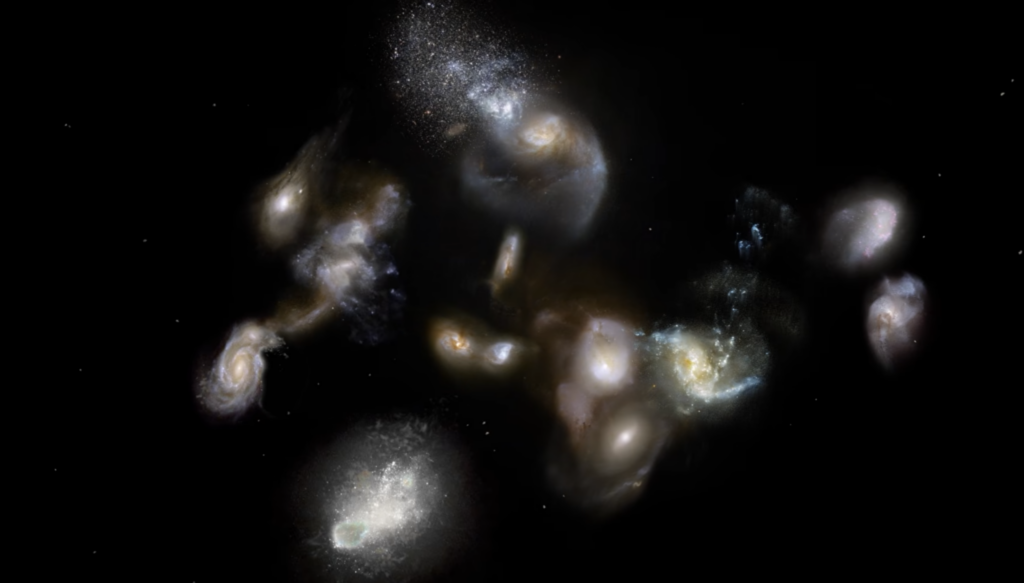
Despite the name, it is not perfectly empty. Scientists estimate around sixty galaxies exist inside it, but given the scale involved, those galaxies sit at immense distances from each other, and stumbling across one by chance would be almost impossible.
Finding this region taught astronomers something surprising about how the Universe is built. Matter is not spread evenly. Galaxies gather into vast filaments and clusters forming a cosmic web, and between those structures lie enormous regions holding almost nothing.
We call them cosmic voids, and they may account for most of the total volume of the Universe.
The Boötes Void remains one of the most extreme examples ever found, proof that the cosmos is not only vast but overwhelmingly empty. Among hundreds of billions of galaxies, there are still places where essentially nothing exists.
Stranded there, you would experience the deepest isolation imaginable. No stars lighting your way, no planets passing overhead, no galaxies filling the sky. Only darkness, silence, and an emptiness so immense it would rewrite everything you thought you understood about the Universe.