The core of Jupiter sits roughly 70,000 kilometers below the cloud tops, and nobody is ever getting there.
Not a person. Not a spacecraft. Not anything humans have ever built or are likely to build.
The planet has too many ways of destroying you on the way down, and it starts using them almost immediately.
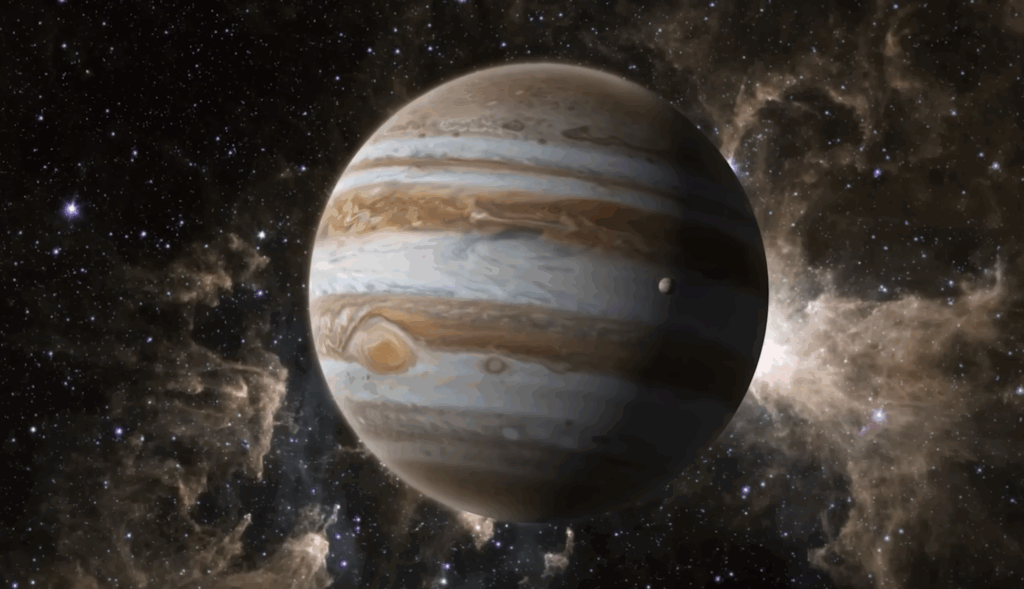
Jupiter is the largest planet in our Solar System, carrying more than twice the mass of every other planet combined. With a radius of about 70,000 kilometers, it is eleven times wider than Earth.
It is a gas giant, built mostly from leftover material from the formation of the Sun over 4.5 billion years ago. Beautiful from a distance, and hiding some of the most extreme conditions anywhere in the Solar System.
Entering the Atmosphere
The first thing you meet is the cloud layer, made largely of ammonia and water and driven by winds exceeding 500 kilometers per hour.
At the Great Red Spot, a storm that has been raging for at least 300 years, winds reach 680 kilometers per hour with constant lightning tearing through it. Temperatures there can climb above 1,300 degrees Celsius.
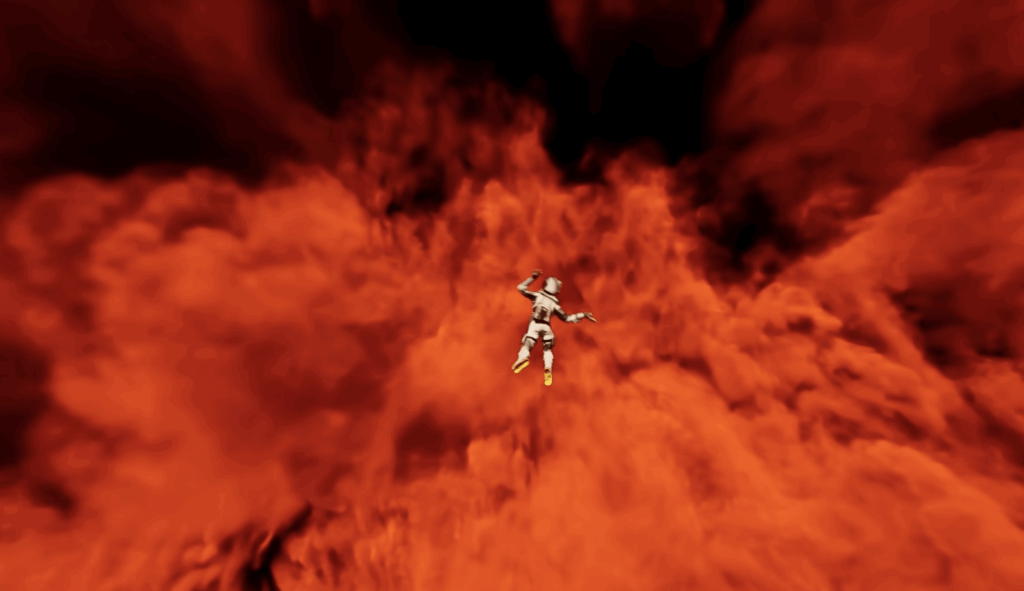
Below the clouds sits a region dominated by gaseous hydrogen and helium. Descend just 200 kilometers into it and the pressure is already over 3,000 times greater than Earth’s atmosphere, with temperatures approaching 1,900 degrees Celsius.
Breathing is impossible. Even the toughest suit ever designed would be struggling badly by this point, and you have barely started falling.
The Crushing Pressure of Liquid Hydrogen
Keep going and the pressure turns genuinely crushing. Hydrogen begins liquefying under the force, forming a dense electrically conductive fluid.
Picture the weight of hundreds of thousands of cars stacked above you, pressing in from every direction at once. Your body would physically begin compressing, while radiation from Jupiter’s magnetic field adds another way to die on top of everything else.
Metallic Hydrogen and the Core
Deeper still lies the metallic hydrogen layer, where hydrogen atoms are squeezed into a state that conducts electricity like metal.
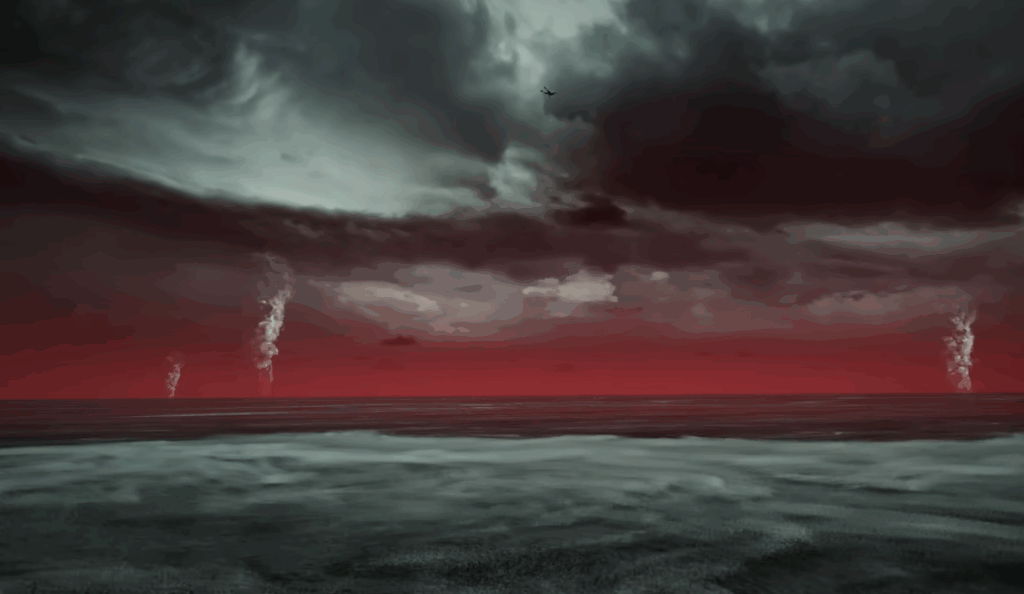
This layer generates the planet’s immense magnetic field, which accelerates charged particles to lethal levels.
And at the very center sits the core, made of ice, rock, and metal, though not as a solid surface. It behaves more like a superheated high pressure liquid, with temperatures exceeding 29,000 degrees Celsius and pressure over 43 million times that of Earth.
Anything reaching it would simply be obliterated.
What Would Actually Happen to You
The honest answer is that the core is irrelevant, because the journey kills you long before the depths matter.
Intense radiation, extreme heat, and crushing pressure combine into conditions with no survivable window at all. Any protective suit or spacecraft would be torn apart well before touching the metallic hydrogen layer.
Falling into Jupiter is not a thrill ride. It is being subjected to nearly every deadly condition in the universe simultaneously, on a planet whose beauty from a distance hides a world nothing living could ever endure.