Everyone knows what a sunset looks like. Reds and oranges bleeding across the horizon, the day fading out the way it always has.
Then you visit Mars, where the exact opposite happens. The daytime sky is rusty red and the sunset turns cool blue, a halo of cold light spreading around the Sun as it drops.
And Mars is not even close to the strangest one. Across the Universe there are worlds where the Sun sets twice, where twilight glows up from the ground, and where a planet is being torn apart while the light fades.
Mercury
Mercury hosts one of the strangest sunsets in the Solar System thanks to its unusual orbit and slow rotation. Near its closest approach to the Sun, the star appears to stop, reverse, and set again, creating a rare double sunset.
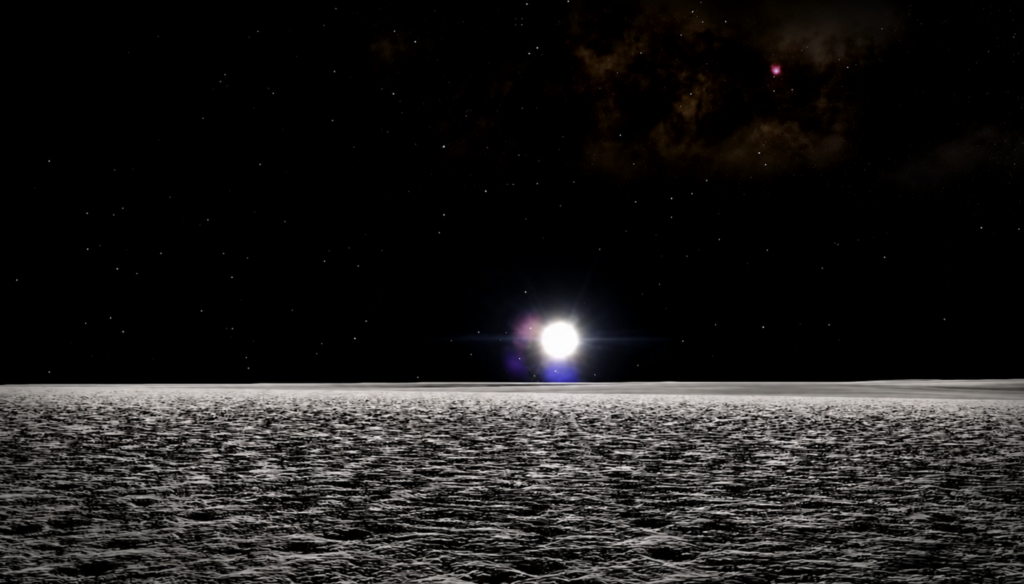
With no atmosphere to scatter light, the sky remains pitch black even during the day. Standing there, you would watch the Sun sink toward the horizon, hesitate, climb back up, and then finally disappear for good. The whole performance happens because the planet briefly orbits faster than it rotates, and it occurs only once every 176 Earth days.
Venus
On Venus the Sun is never visible as a sharp disk, because the planet is wrapped in dense sulfuric acid clouds. As sunset approaches, the yellowish sky gradually deepens into dark red before fading into a starless night.
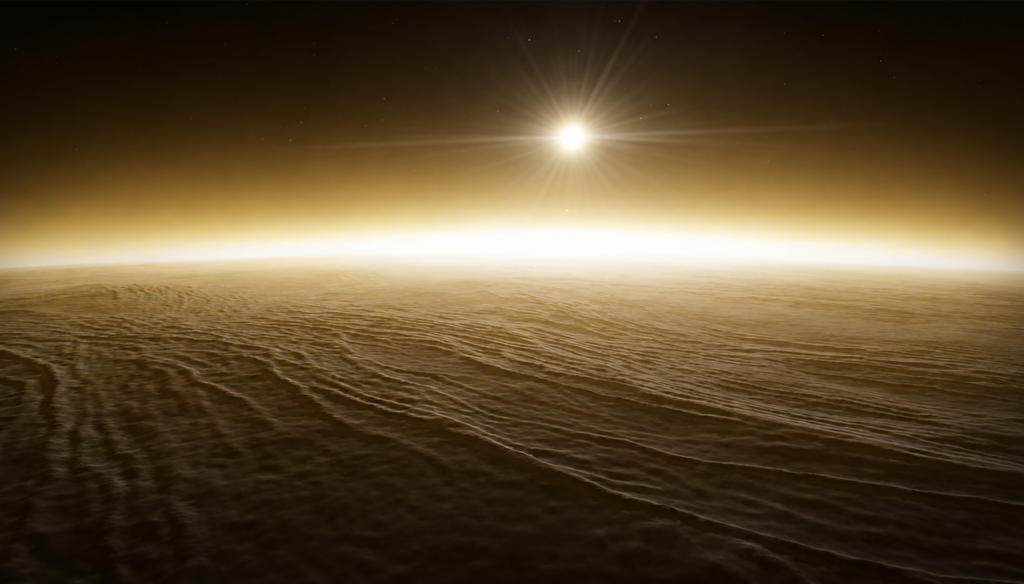
Because Venus rotates so slowly, the sunset can last for days. There is no single moment when the light goes out, only an endless dimming stretching across what would be weeks of your life. The clouds never break, so no stars appear afterward to mark the change.
Mars
Mars delivers the twist that gives this list its name. Fine dust particles in the thin atmosphere scatter red light during the day, producing that famous rusty sky.
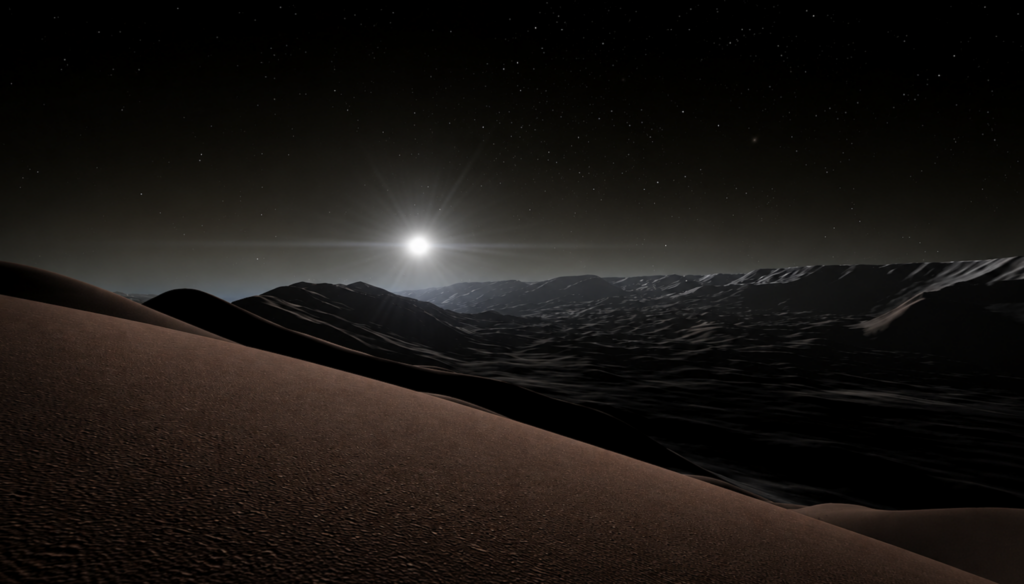
At sunset those same particles scatter blue light forward instead, creating a cool halo around the Sun. The effect is subtle rather than vivid, a soft blue glow spreading outward while the rest of the sky stays dusty and pale. Rovers have photographed it repeatedly, which makes this one alien sunset we have genuinely seen.
Jupiter
Jupiter has no solid surface, but from its cloud tops the Sun would appear tiny and intensely bright against a deep blue sky darker than Earth’s oceans.
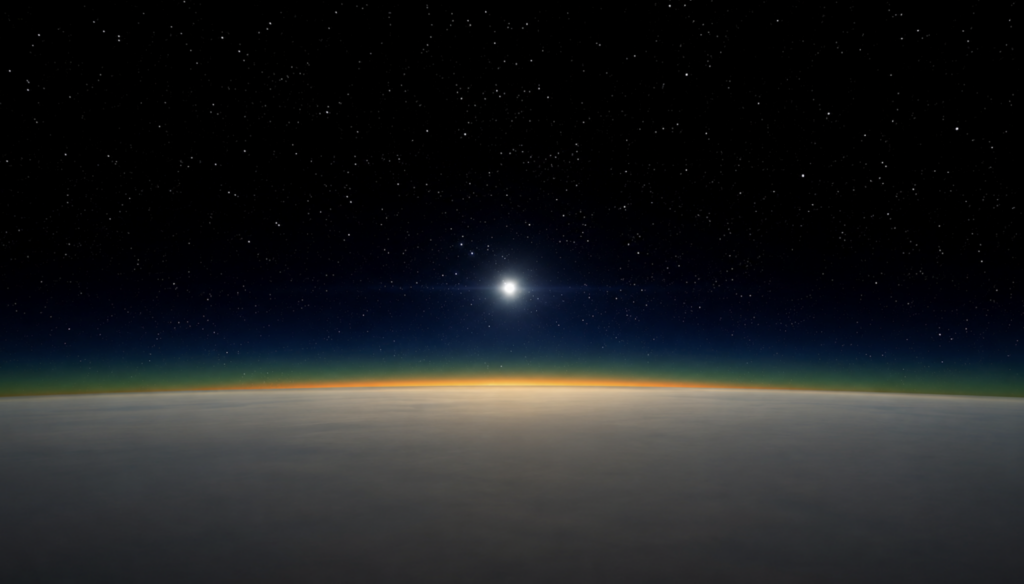
Because the planet spins so fast, sunsets happen more than twice in a single Earth day. You would never settle into any rhythm, since night arrives roughly every five hours and leaves just as quickly, while storm systems larger than entire planets turn beneath you the whole time.
Io
Io’s sunset often doubles as an eclipse. Every 42 hours, Jupiter blocks the Sun for nearly two hours, plunging the volcanic moon into shadow.
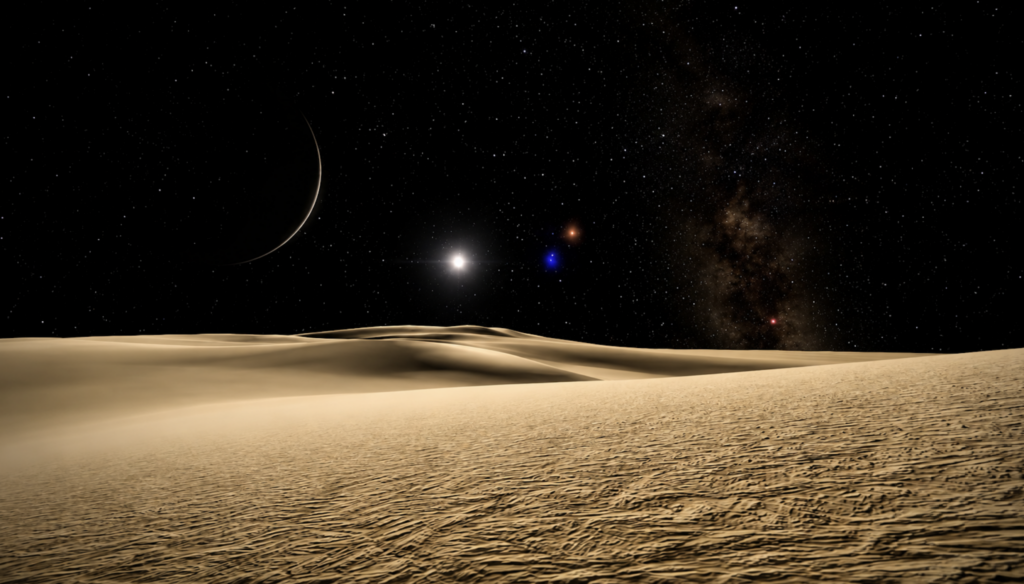
With only a thin atmosphere, the sky stays mostly black even during daylight. When darkness arrives, the only remaining light comes from the ground itself, as lava plumes and glowing volcanic gases paint the landscape orange. On the most volcanically active world we know, sunset is when the scenery finally becomes visible.
Europa
Europa’s sunsets trigger a faint glow across its icy surface. Radiation from Jupiter excites molecules in the ice, causing them to emit soft light after dark.
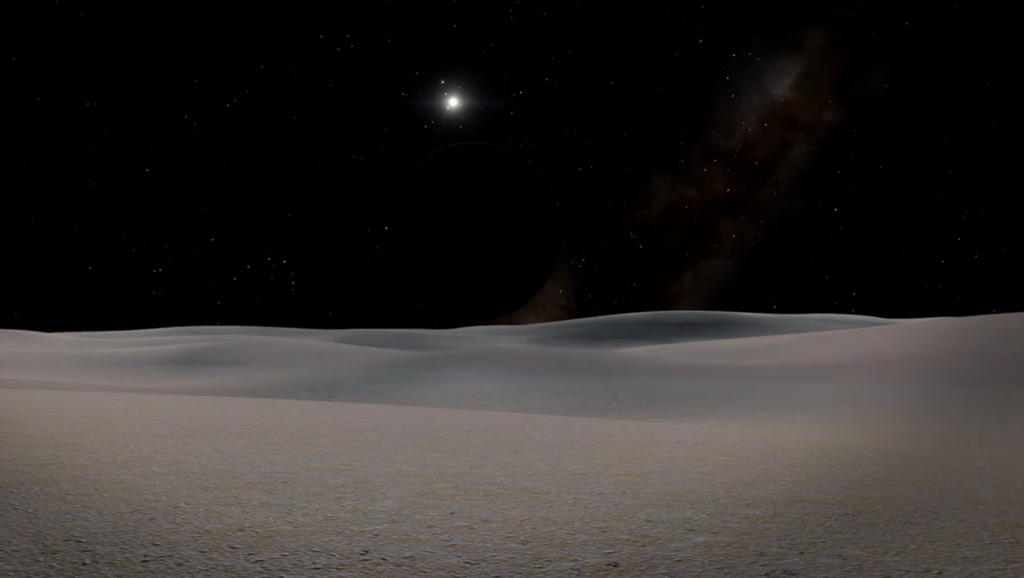
With an extremely thin atmosphere, the sky stays black while the ground shimmers. The effect strengthens as conditions darken, so the landscape brightens while the sky empties, and different regions glow in slightly different shades depending on what is frozen into the ice.
Ganymede
Ganymede, the largest moon in the Solar System, generates its own magnetic field. As the Sun sets, charged particles create aurora like displays near the poles.
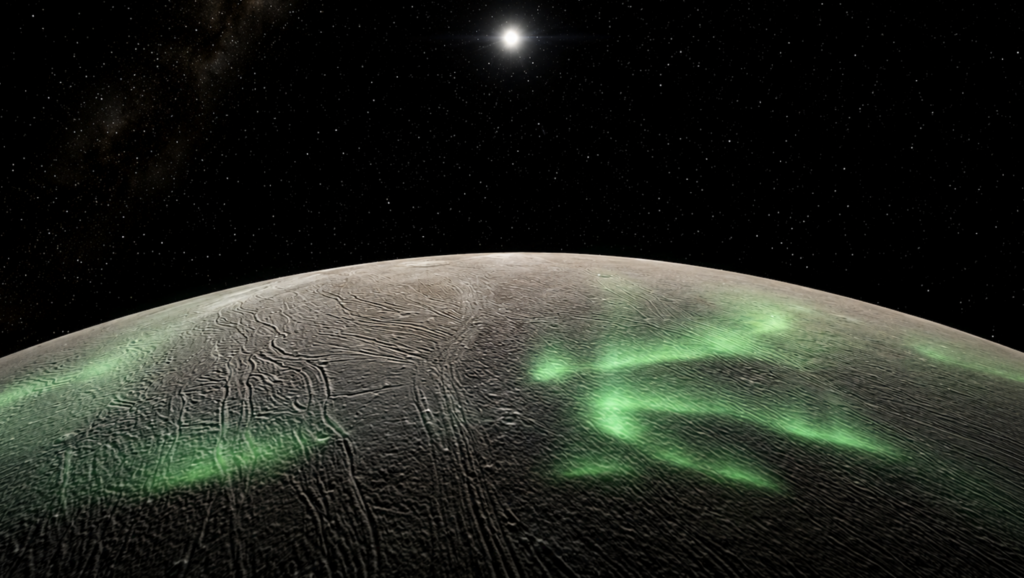
Most of that light sits in ultraviolet, so it would be subtle to human eyes. Bring the right equipment and the polar sky comes alive with ribbons no unaided observer could see. The magnetic field itself is a genuine oddity, since almost no other moon produces one.
Callisto
Callisto orbits far enough from Jupiter that eclipses are rare. Most sunsets look calm, with Jupiter hanging large in the sky without blocking the Sun.
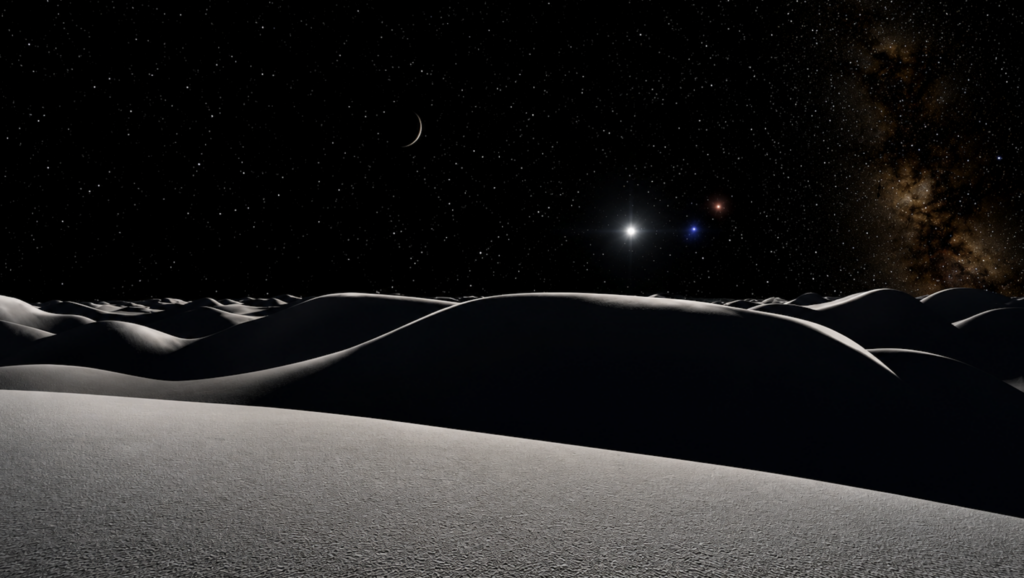
Only every few years does the gas giant create a dramatic shadow event. That same distance is why Callisto ranks among the more realistic sites for a future base, sitting outside the worst of Jupiter’s radiation, on a surface unchanged for billions of years.
Titan
Titan’s thick atmosphere turns sunsets into a hazy gradient running from orange to deep brown, while lakes of liquid methane and ethane reflect the dimming light like dark mirrors.
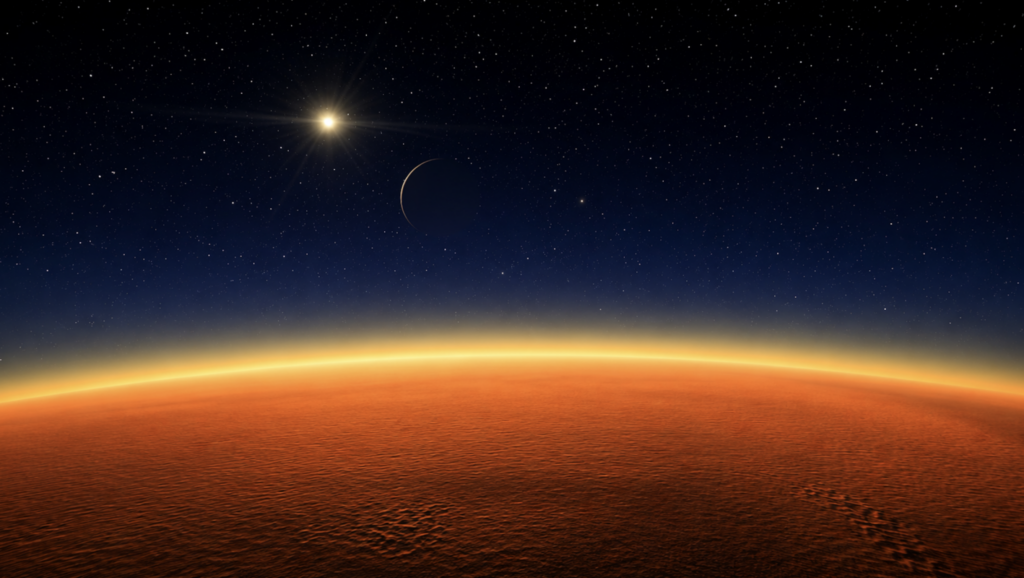
Saturn would loom overhead, adding to the alien scenery. The light never sharpens into anything crisp, since the haze diffuses it into a permanent glow, and methane rain may drift down slowly through it in the low gravity.
Saturn
From Saturn’s cloud tops, the sunset is defined by the rings. As the Sun dips, the shadow of the planet sweeps across them, darkening the rings section by section.
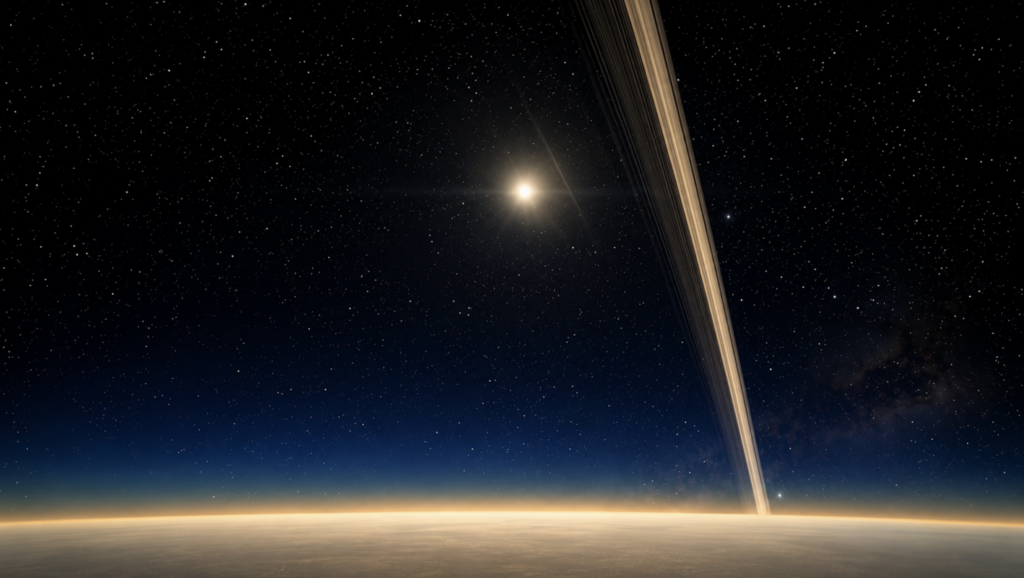
The effect resembles lights dimming on a cosmic stage. Because the rings stretch across the whole sky, the darkening happens in slow sequence rather than all at once, and depending on the season they appear as a bright arc overhead or a thin line cutting the horizon.
Uranus
Uranus rotates on its side, which produces the most extreme seasons in the Solar System. Near the poles, the Sun can circle the sky for decades before finally setting.
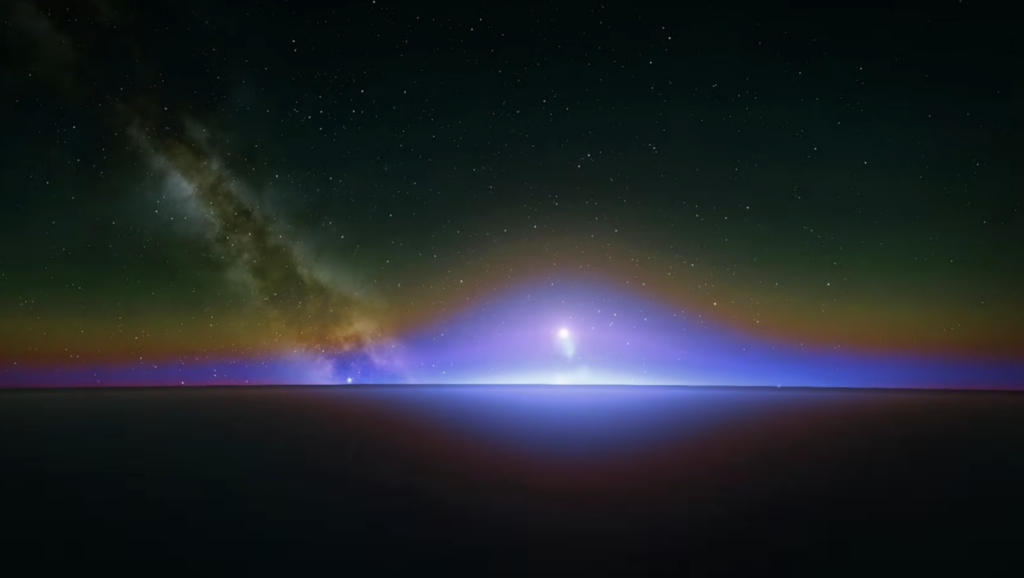
When it does, methane in the atmosphere filters out red light and turns the sky turquoise. A single polar night can last more than twenty years, making each sunset a generational event rather than a daily one.
Neptune
Neptune’s sunsets are subdued thanks to its immense distance from the Sun. The light is faint, and the sky shifts from deep blue to black.
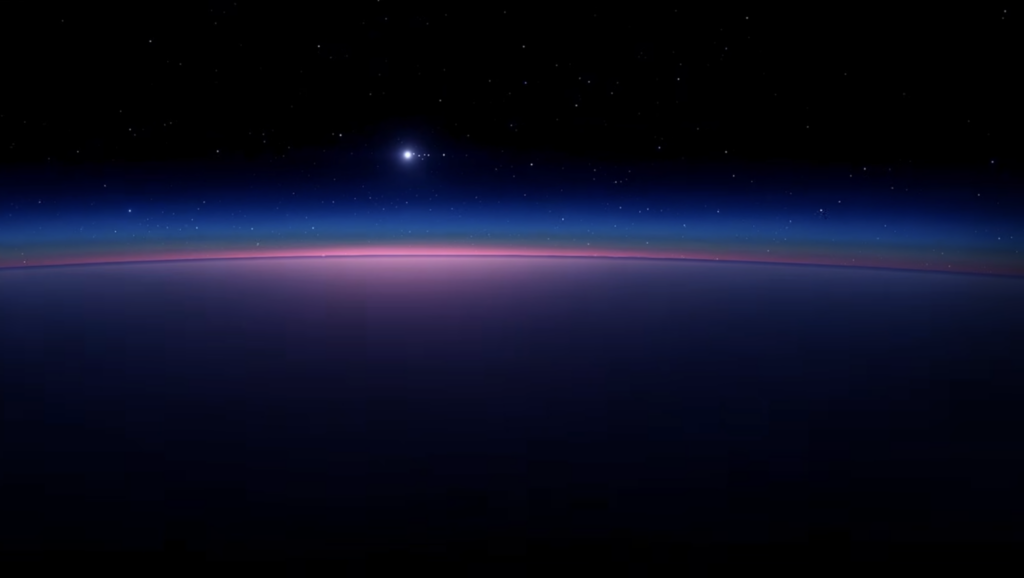
Sunlight out there is roughly a thousand times weaker than on Earth, so full daylight already resembles our deep twilight. Winds howl at supersonic speeds the entire time, yet visually the transition stays simple and quiet.
Pluto
Pluto’s thin atmosphere creates a deep blue twilight despite the distance, while its moon Charon hangs fixed in the sky due to tidal locking.
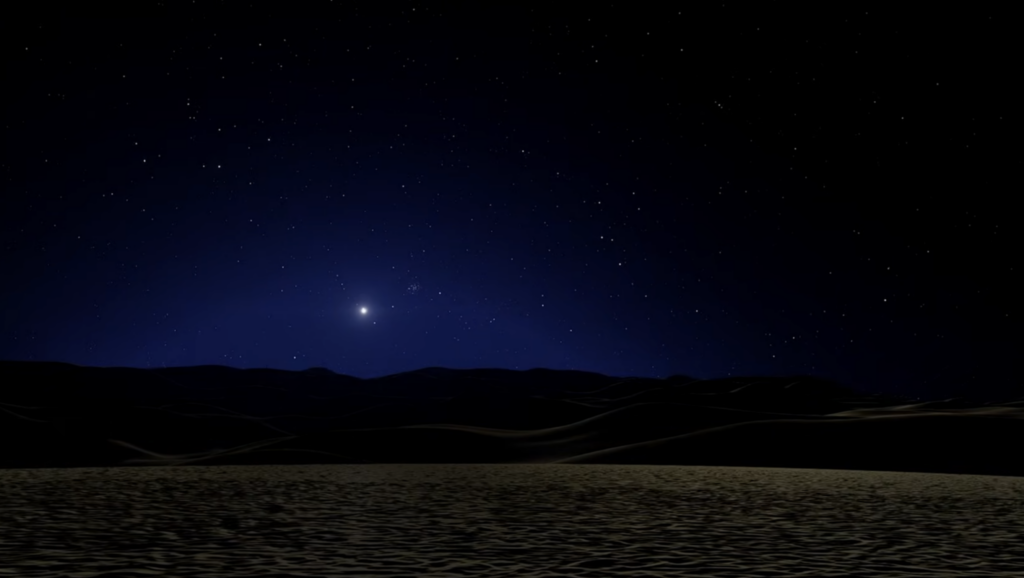
Charon never rises or sets from one hemisphere, permanently anchored above the horizon. The Sun itself would look like little more than a very bright star, and the dim light across icy terrain leaves the whole scene feeling frozen in place.
Kepler-444 c
This planet orbits very close to a small, dim star 119 light years away. Despite the modest size of that star, it would appear huge in the sky because of the tight orbit.
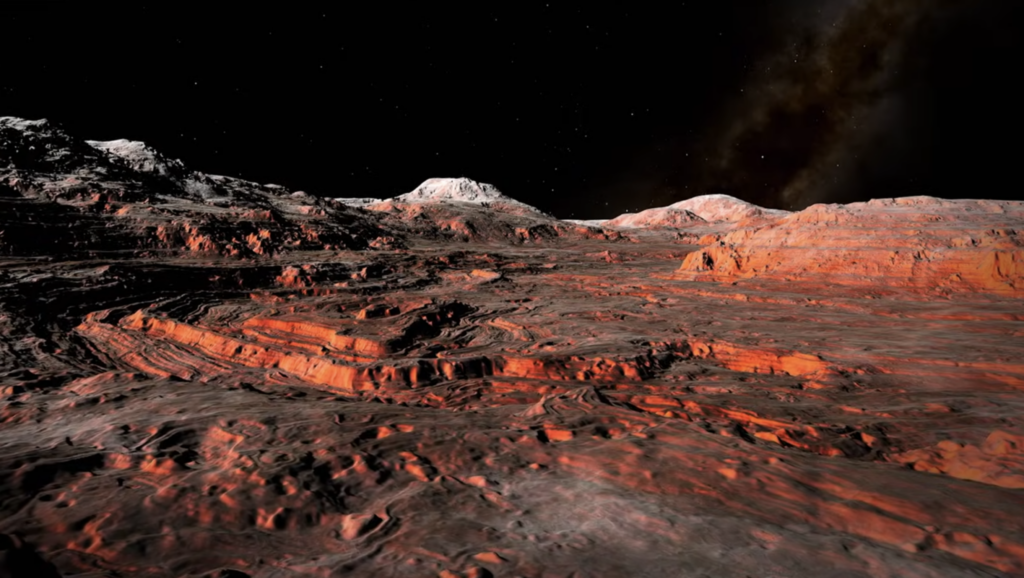
Sunsets would be brief but dramatic as the large stellar disk drops below the horizon, over in minutes rather than fading leisurely. The system itself is remarkably ancient, formed when the galaxy was still young.
Kepler-452 b
Often called an Earth like world, Kepler-452 b orbits a star slightly older and brighter than our Sun. Sunsets there would resemble ours with a little more brilliance.
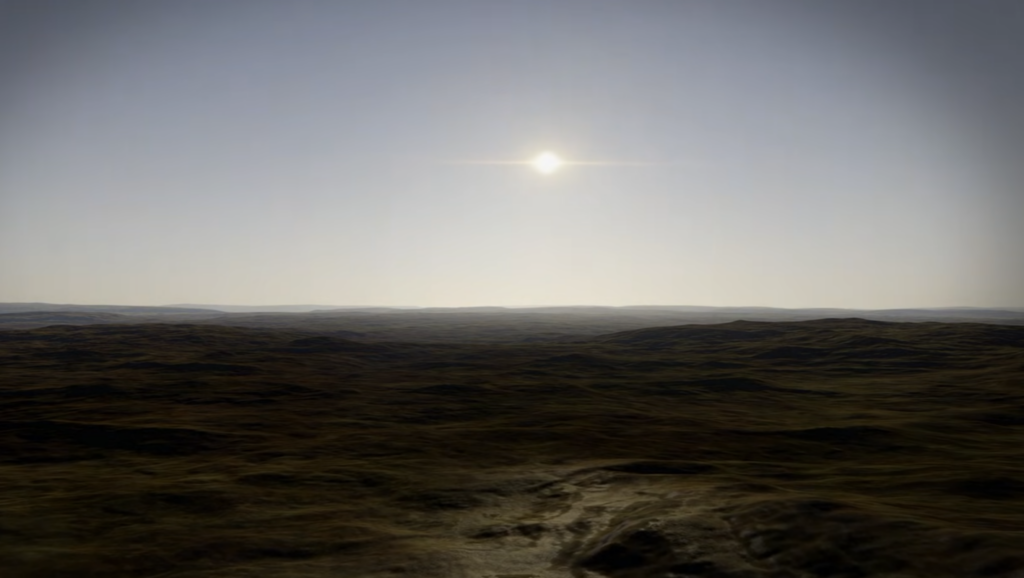
That extra stellar brightness would intensify twilight colors. Of everything on this list, it is the one that might genuinely feel like home, with differences small enough that you might not notice them straight away.
TRAPPIST-1 e
TRAPPIST-1 e likely has a dense atmosphere and possible cloud cover. Orbiting a dim red star, its sunsets would glow in warm crimson tones.
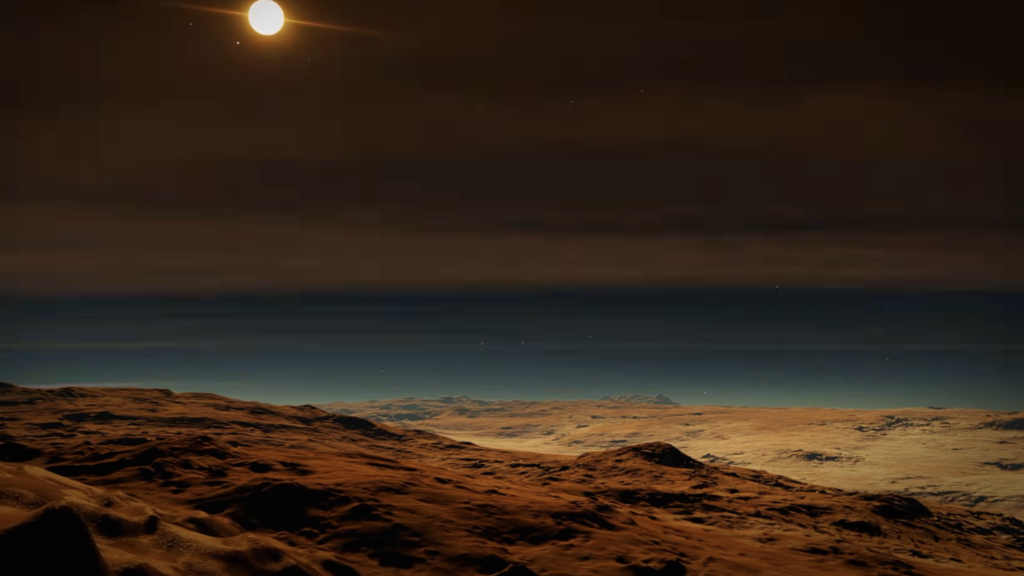
Auroras could appear if the planet carries a magnetic field. Several sibling planets share the same tight system, so others might be visible as bright disks beside the setting star, and red dwarf light is weak enough that even midday would feel like evening on Earth.
PSR B1257+12 c
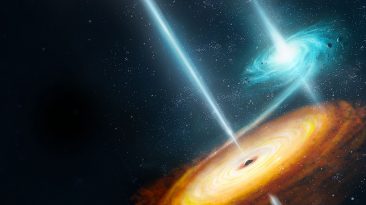
This planet orbits a pulsar, a rapidly spinning neutron star. Instead of a steady sunset, the light flickers like a cosmic strobe as radiation beams sweep past.
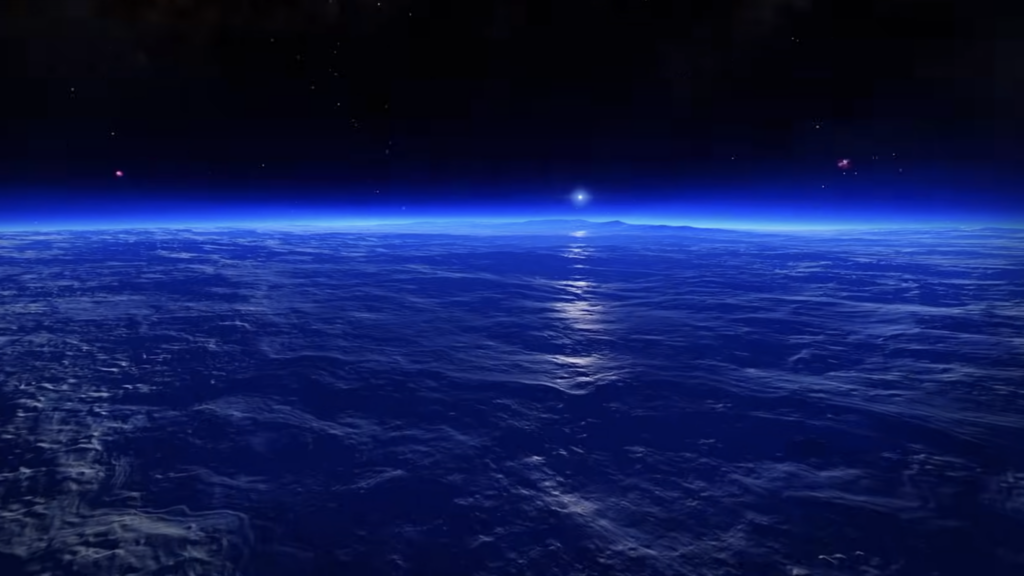
The sky alternates between brightness and darkness in rapid pulses, a rhythm closer to a lighthouse than a star. Radiation levels there would be lethal to anything resembling life as we understand it.
WD 1145+017 b
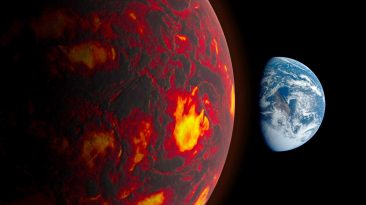
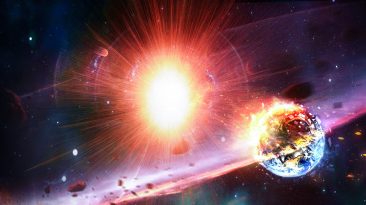
This world is being torn apart by the white dwarf it orbits, and each sunset happens amid streams of vaporized rock trailing through space.
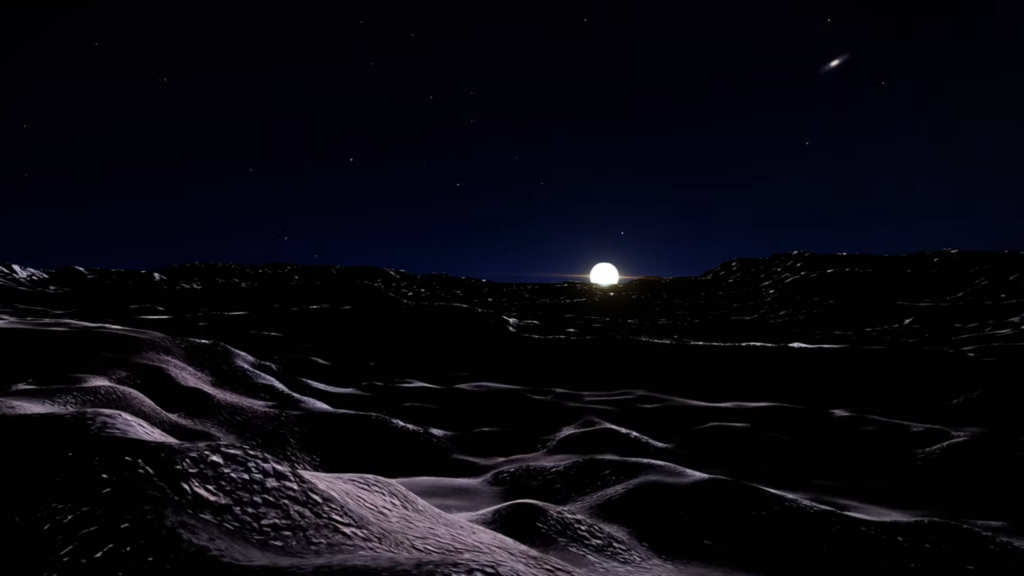
The blue white light of the star illuminates drifting debris. The planet is not merely dying, it is actively disintegrating, shedding material with every orbit, and astronomers measure that destruction by watching the debris pass in front of the star.
Blue light on Mars is only where it starts. The Universe has been staging sunsets for billions of years, and almost none of them look anything like ours.