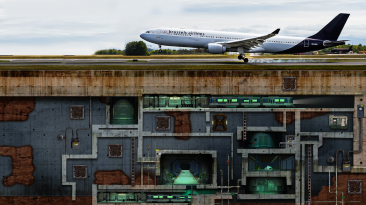
For all the technology humanity has developed, our civilization is still remarkably primitive when viewed against the scale of the universe. The Kardashev Scale offers one way to measure how advanced a civilization has become, based on the amount of energy it can command. By that measure, humanity has not yet reached Type I and is still somewhere around Type 0.
That means we are using only a small portion of the energy available on our own planet. But there is no guarantee that this will always be the case. If civilization survived long enough to keep advancing, it could eventually move beyond planetary power, harness stars, spread across galaxies, and perhaps reach possibilities that sound more like science fiction than science.
So what would happen if humanity somehow continued all the way to Type VI? At that stage, the biggest achievement would not simply be possessing enormous amounts of energy. A civilization this advanced could theoretically gain control over aspects of existence itself.
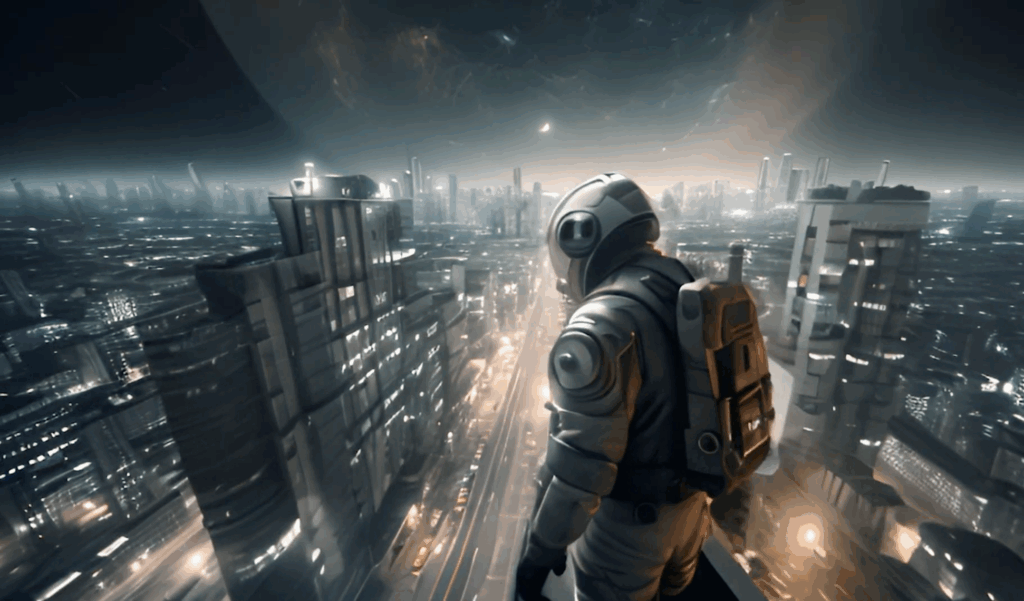
The journey would begin with Type I. Reaching this stage would mean gaining control over essentially all of the usable energy produced or available on Earth. Humanity could coordinate the planet’s energy systems as one interconnected network rather than relying on the fragmented sources we depend on today.
Such control could transform civilization completely. Power shortages could disappear, resources could be managed far more efficiently, and technologies designed to protect cities from extreme natural events could become much more advanced. Earth would effectively become a fully controlled technological environment.
Type II would require humanity to look beyond its home world. Instead of drawing energy mainly from Earth, civilization would begin harvesting the output of the Sun itself, giving it access to an amount of energy vastly greater than anything our planet can provide.
One theoretical approach would be to surround the Sun with enormous energy collecting structures. Whether built as a solid shell or as countless independent satellites, such a system could capture a huge percentage of the star’s output and provide power on a scale that is almost impossible to imagine.
After that would come Type III. Humanity would no longer be confined to the Solar System and could potentially establish settlements and energy collecting systems throughout the Milky Way.
Billions of stars could become part of one enormous civilization. Advanced technology might even allow these beings to extract energy from objects as extreme as black holes, turning some of the most violent phenomena in the galaxy into sources of usable power.
But the scale becomes far more difficult to comprehend after Type III. The hypothetical Type IV civilization would have access to energy on a universal scale, while Type V could potentially operate beyond the boundaries of a single universe.
Type VI takes the idea another step further. Instead of asking how much energy civilization can consume, we would have to ask whether the civilization could manipulate reality itself.
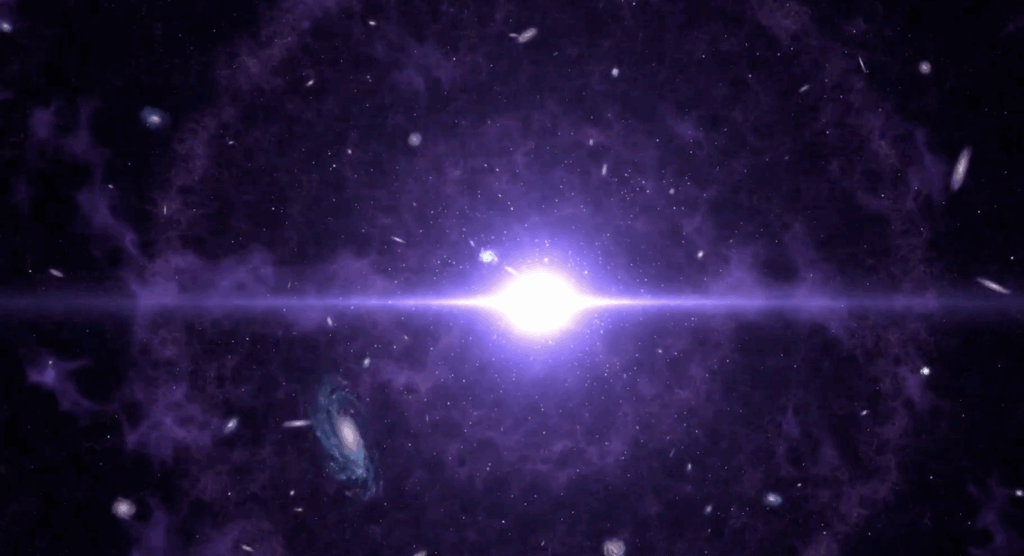
At this hypothetical level, the laws of physics might no longer represent fixed boundaries. A Type VI civilization could potentially understand the deepest mechanisms behind space, time, matter, and energy well enough to manipulate them in ways that are completely beyond present day science.
Space could become something that civilization actively controls instead of something that determines how far it can travel. The same might eventually be true of time, opening the possibility of interacting with different moments rather than being permanently carried forward by it.
That could turn the history of the cosmos into something that can actually be explored. Instead of relying on ancient light arriving from distant galaxies, an advanced civilization might theoretically find a way to observe cosmic events as they happened billions of years ago.
The creation of entirely new universes would be even more extraordinary. If reality could be manipulated at its most fundamental level, a Type VI civilization might theoretically construct artificial universes with conditions deliberately chosen by their creators.
These worlds would not necessarily need to resemble our own. Different physical constants, different forms of matter, and completely unfamiliar environments could be tested, allowing civilization to explore possibilities that nature never produced in our universe.
Even the definition of a human being could disappear along the way. After reaching such an advanced technological stage, biological evolution might no longer be the main way our descendants change.

Our descendants could potentially separate consciousness from biological bodies. Minds might be placed into artificial systems, synthetic bodies, simulated environments, or technologies that have no obvious equivalent in the natural world.
A person could potentially choose the form they wanted to inhabit and change it whenever they wished. Someone might spend part of their existence inside a physical body, move into a digital environment, and later transfer themselves into an entirely different system.
But this level of freedom would create a serious problem. When almost anything becomes technologically possible, society would need to establish rules for actions that could have consequences on an unimaginable scale.
Questions about ownership and privacy could become almost meaningless, while entirely new debates would emerge over who is allowed to modify reality and who has the authority to stop them. The more powerful civilization becomes, the more dangerous a single irresponsible decision could be.
There would also be a responsibility toward younger civilizations. A Type VI society could encounter worlds containing intelligent life that was thousands or millions of years behind it. Interfering with those civilizations could completely redirect their natural development.
The greatest moral problem might involve creating life. If humanity could construct entire universes, it might also be able to create species and civilizations inside them, allowing those beings to develop their own histories, cultures, and societies.
That would raise a question with no easy answer. If we created an entire civilization, would we have the right to erase it? Would creating life automatically make us responsible for everything that happened to it?
Perhaps the final challenge of becoming a Type VI civilization would therefore have little to do with technology. Gaining enormous power may be achievable over an unimaginably long period of time, but knowing when that power should be used could be much harder.
Once humanity could reshape space, manipulate time, construct universes, and potentially alter the rules governing reality, there might be almost no external limit left. At that point, the greatest thing standing between civilization and catastrophe would be the judgment of the beings holding that power.