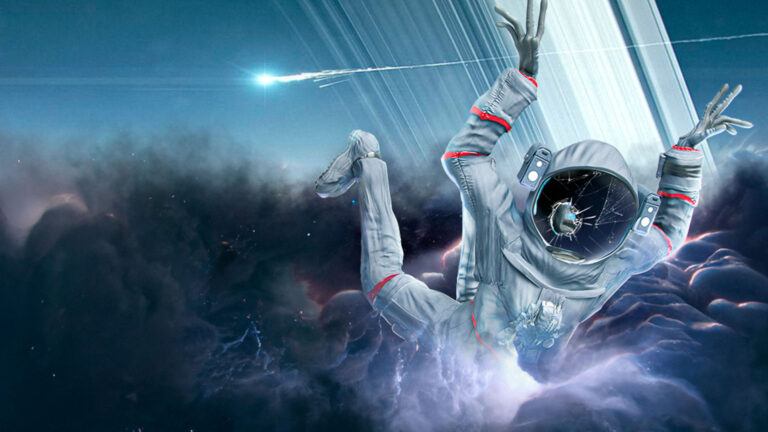
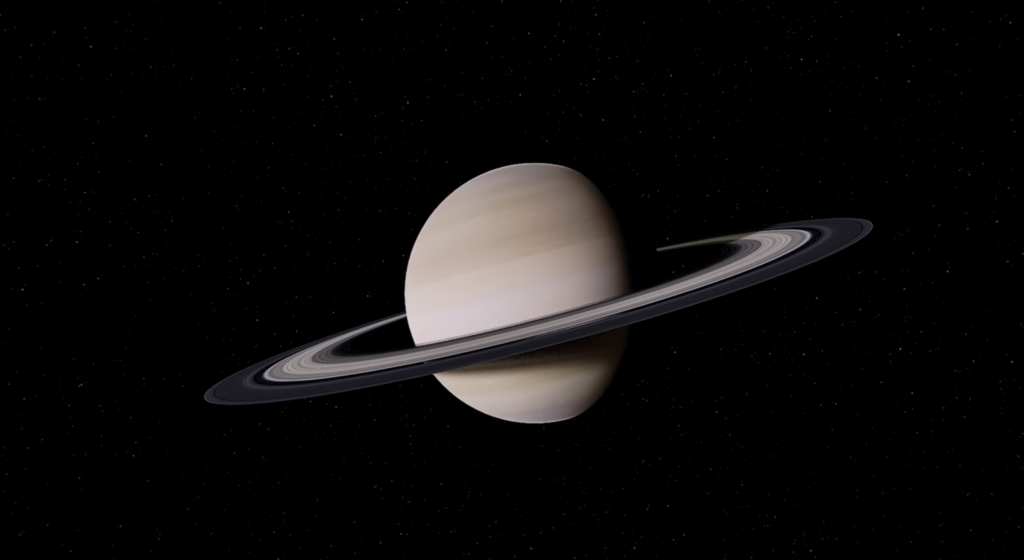
Imagine drifting toward Saturn with nothing but a viewport between you and open space. At first, the planet seems almost peaceful, a soft golden globe wrapped in thin, glittering bands. That impression does not last. The closer you get, the more obvious it becomes that this world is built to destroy anything that tries to enter it.
Before Saturn itself takes over, a handful of remarkable moons drift past your window. Enceladus gleams with a shell of ice, Iapetus sits far off with its strange two toned surface, and Titan looms largest of all, a hazy orange world many scientists rank among the most fascinating places beyond Earth. Any one of them could hold your attention for hours.
None of that curiosity matters for long, though, because Saturn’s gravity is already reeling you inward, and the rings mark the true beginning of the descent.
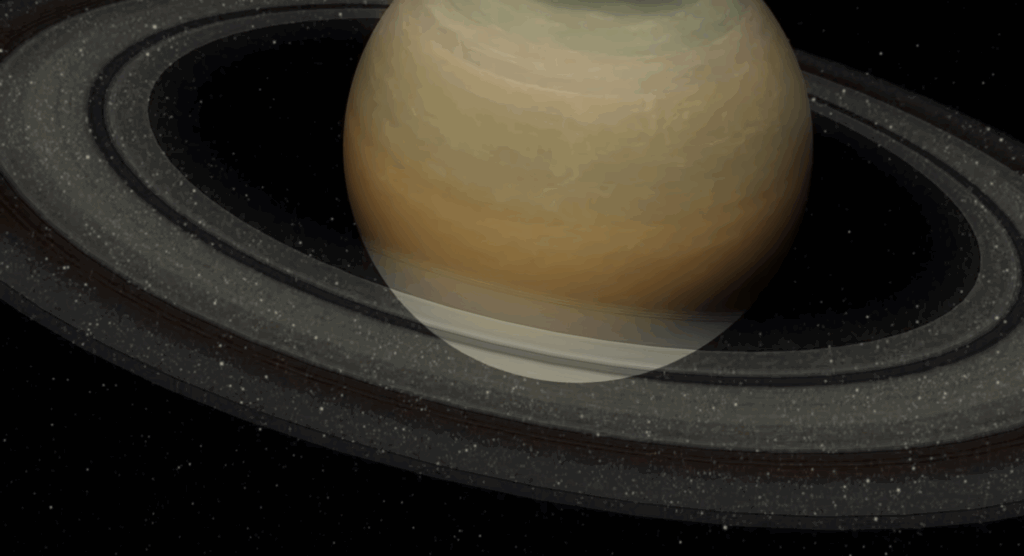
Crossing into the ring system feels nothing like gliding through open sky. Countless chunks of ice and rock, some tiny and some enormous, spin around the planet in overlapping bands that stretch for thousands of kilometers. There is no single surface to these rings at all, only an endless swarm of particles moving fast enough to shred anything unprepared for the impact.
Once through that debris field, the true atmosphere takes hold. Roughly 1,400 kilometers above the cloud layer, ribbons of color flicker across the sky as charged hydrogen reacts with radiation streaming in from the Sun. It looks almost magical from a distance, yet everything beneath that glow is shaped by weather violent enough to erase a spacecraft in moments.
Nowhere is that violence clearer than at the north pole, where a colossal storm has carved itself into a six sided shape wide enough to swallow several Earths. Streams of wind tear around this formation at astonishing speed, and even now researchers cannot fully explain why the pattern holds together the way it does.
Higher in that atmosphere, the cold is almost impossible to comprehend, plunging past 250 degrees Celsius below freezing. Ammonia crystallizes into icy clouds that hang like a poisonous fog, and a person exposed to that environment, even briefly, would have no chance at all.
Sink lower still and the emptiness starts to disappear, replaced by pressure that builds with terrifying speed. Nothing in Earth’s deepest oceans compares to what waits here, and any vessel attempting the descent would face forces multiplying far faster than its hull could ever be designed to handle.
At some point you would arrive at what researchers loosely call Saturn’s surface, though the term is misleading. There is no ground beneath your feet, only the hazy boundary where gas quietly thickens into something dense enough to resemble a floor, without ever actually becoming one.
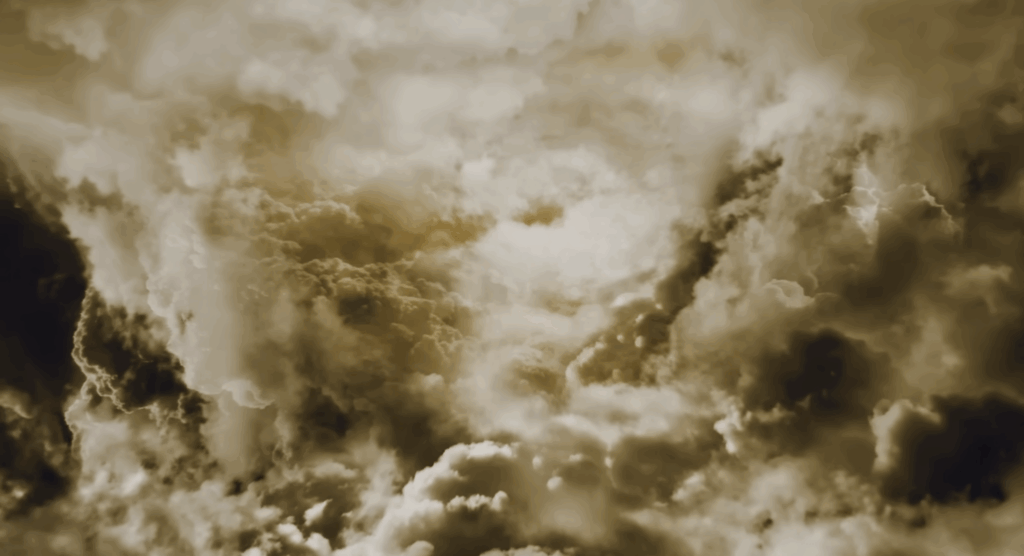
Push further down and hydrogen along with helium start behaving in ways that defy ordinary expectations. Squeezed under immense force, these gases slowly become liquid, forming a vast sea of compressed material that wraps around whatever lies at Saturn’s center.
Continue deeper and the numbers become almost meaningless. Heat may climb beyond 11,000 degrees Celsius, while pressure multiplies into figures thousands of times greater than anything found on our own planet. Buried at the middle is likely a dense core, perhaps several times heavier than Earth, wrapped in exotic material unlike anything we can replicate in a lab.
So there is no landing spot waiting at the bottom, no firm ground to explore, no stable point where a mission could finally rest. Saturn simply keeps pulling everything inward, layer after layer, until whatever entered it stops resembling anything recognizable.