Back in 2015, NASA’s Kepler mission spotted a planet that looked remarkably close to our own, a world now known as Kepler 452b. It circles a star similar to the Sun and falls inside the zone where liquid water could plausibly exist on its surface, earning it the nickname Earth 2.0 despite sitting thousands of light years away.
Now flip that idea around. Instead of a distant lookalike planet, picture a genuine twin Earth tucked somewhere inside our own Solar System, matching our world in size, gravity, atmosphere, and maybe even hosting life of its own.
On the surface that sounds calm and almost reassuring, but the actual physics involved would be anything but simple.
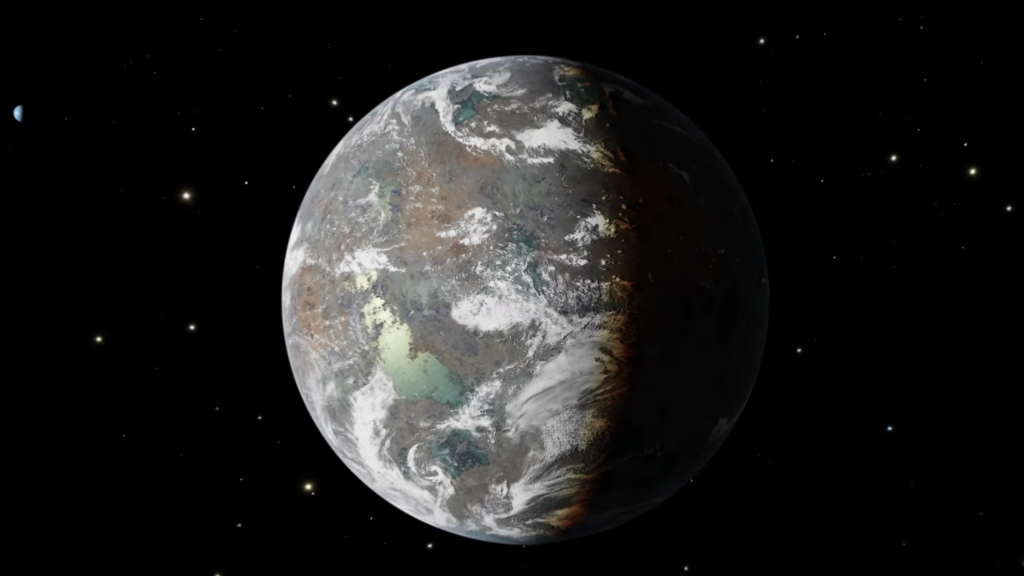
The most logical spot for such a planet would fall somewhere between the orbits of Earth and Mars, comfortably inside the Sun’s habitable band where temperatures stay mild enough to support Earth like conditions. Simply dropping a second world into that space, though, would immediately stir up gravitational trouble.
Two planets nearly matched in mass occupying a similar orbital neighborhood cannot hold a stable arrangement forever. Their combined gravity would continually tug at each other’s paths, slowly reshaping how each one travels around the Sun.
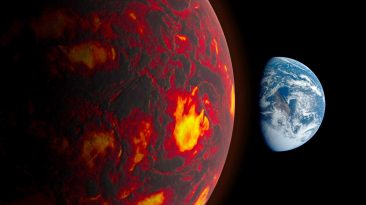
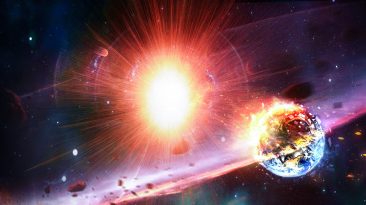
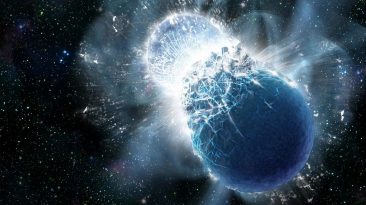
Given enough time, that tug of war tends to end in one of several dramatic outcomes, none of them calm. The most extreme possibility is an outright collision between the two worlds, a disaster on a scale almost impossible to picture.
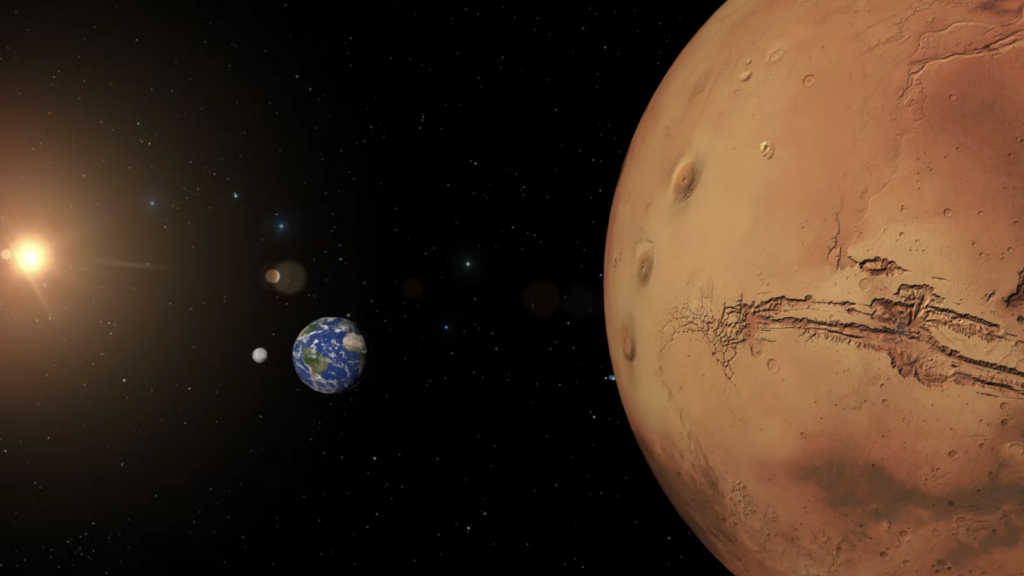
A less violent but still disruptive outcome involves the planets separating, one drifting closer to the Sun while the other slips further away, permanently upsetting the balance of the entire system.
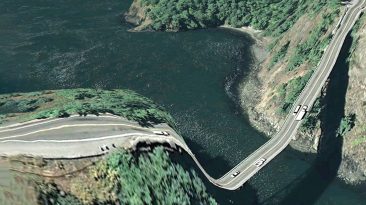
A stranger possibility exists too, one where both planets manage to share roughly the same orbital path for an extended stretch of time. Under ideal circumstances, that delicate cohabitation could theoretically hold together for millions or even billions of years.
Yet another hypothetical setup pictures the two Earth sized worlds locked in orbit around each other while together circling the Sun, similar to how a moon orbits a planet, just scaled up dramatically in size and complexity.
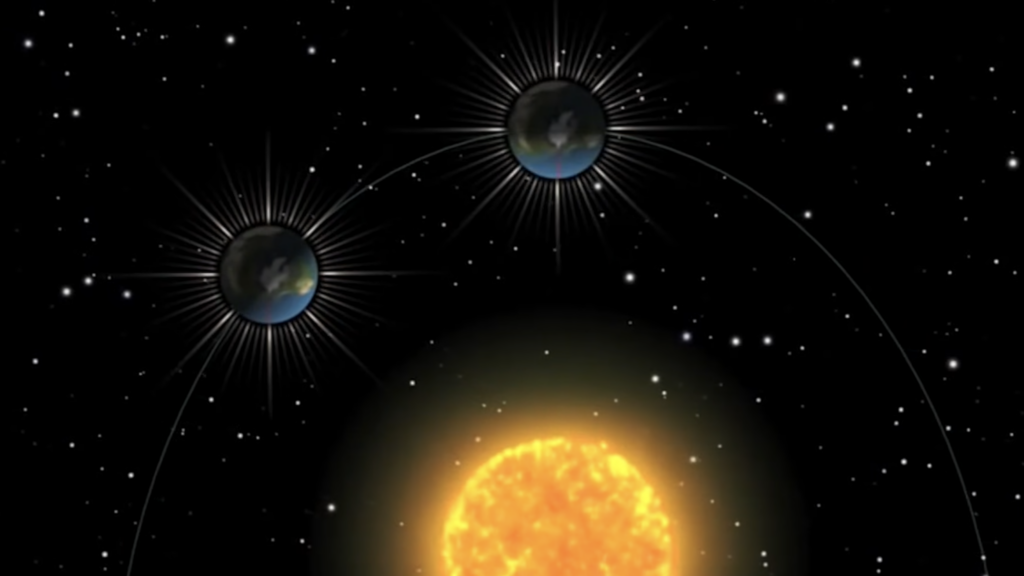
Even so, the underlying physics points toward instability over the long run. Rather than settling into fixed positions, the two planets would probably trade places periodically, nudged by small gravitational shifts involving both each other and the Sun.
A real world preview of this behavior already exists much closer to home, among two of Saturn’s small moons, Epimetheus and Janus. These moons trade orbital positions with each other every few years because of their mutual gravitational pull.
As the pair draws near one another, one moon accelerates while the other slows down, and the two effectively switch places before the entire cycle starts over again. That trick works fine for small moons, but scaling the same behavior up to planet sized bodies would introduce far more chaos.

Were a second Earth to fall into a similar swapping pattern, the long term consequences for both planets would hinge on precise timing, distance, and the strength of gravitational resonance between them. Even minor shifts could seriously disrupt climate patterns, orbital paths, and overall environmental stability on either world.
Suppose both planets somehow developed life on their own. The question of what happens when they finally interact becomes even more compelling, since nothing guarantees that intelligent life would evolve the same way twice, even under nearly matching conditions.
Biology, culture, and methods of communication could turn out completely different between the two civilizations. Matching environments do not automatically produce matching societies, so contact could swing anywhere from instant mutual understanding to total confusion.
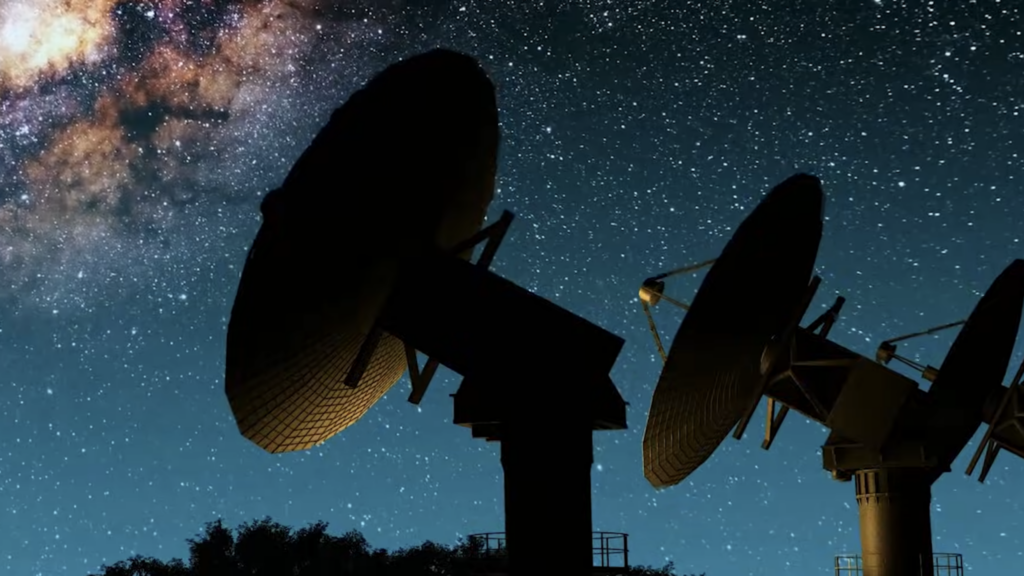
The earliest form of contact would probably not involve spacecraft at all, but rather remote signals. Radio waves or similar electromagnetic transmissions would likely serve as the first bridge connecting the two civilizations, long before any physical meeting became realistic.
If that early communication actually succeeded, deeper forms of contact might eventually follow, though the obstacles would stay massive, spanning language barriers, mismatched technology, and the difficulty of correctly interpreting each other’s intentions.
Even on our own planet, tiny differences in language and culture have caused serious misunderstandings throughout human history. Stretch that same challenge across two entirely separate worlds and the potential for confusion grows even larger.
Uncertainty aside, this whole thought experiment reveals something important about the world we already live on. Earth’s rarity isn’t just about its physical makeup, it comes from the precise, delicate balance of conditions that keep it stable, livable, and relatively calm across enormous stretches of time. For now, the notion of a twin Earth remains purely theoretical, a useful exercise that helps highlight just how fragile and singular our own planet really is within the wider Solar System.