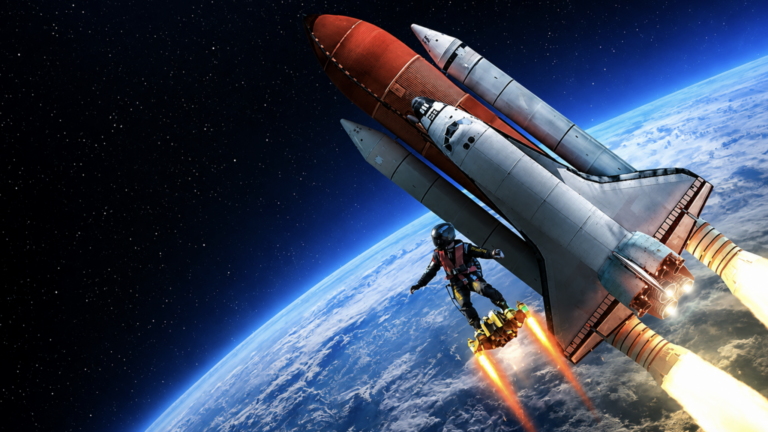
Jetpacks have come a long way from the clunky machines once seen in science fiction. One day, they might even become practical enough for short trips. But imagine taking things much further and using one to fly all the way from Earth to space.
At first, it sounds like the ultimate personal adventure. You would lift off from the ground, climb higher than any aircraft, pass through the atmosphere, and eventually find yourself surrounded by the darkness of space. There would be one enormous problem, though: getting back down.
Reaching space on a jetpack would require incredible amounts of power, extreme speed, and protection from some of the harshest conditions on Earth. In 1984, astronaut Bruce McCandless famously flew untethered in space using NASA’s Manned Maneuvering Unit. Your journey would be much harder because you would have to travel through Earth’s atmosphere before reaching space.
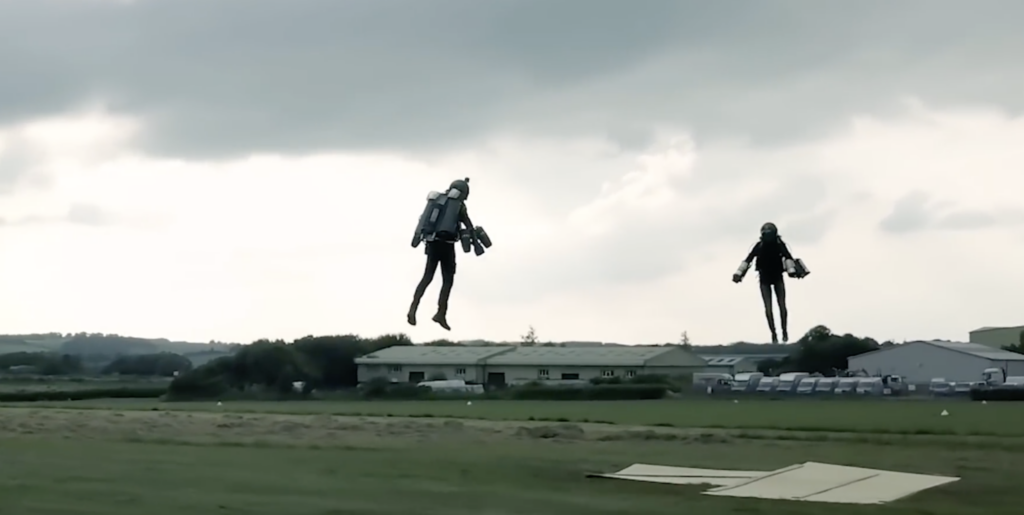
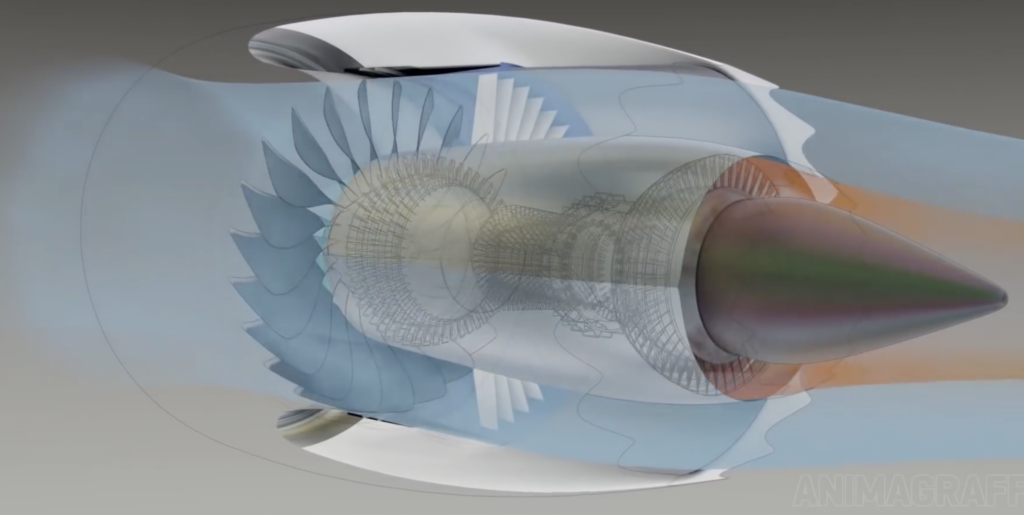
The first challenge would be choosing a jetpack powerful enough for the job. Modern turbojet jetpacks use kerosene based fuel and typically rely on two engines, fuel pumps, and computer systems to keep the thrust balanced during flight.
Unfortunately, these machines are nowhere near powerful enough to send a person into space. A kerosene fueled jetpack can provide only a few minutes of flight, reaching speeds of around 193 km/h (120 mph). Hydrogen peroxide systems can also produce thrust by creating high pressure steam, but they face similar limitations.
Some hydrogen peroxide jetpacks weigh roughly 57 kg (125 lb) and can reach speeds of around 160 km/h (100 mph). That might be impressive for a short flight, but escaping Earth’s atmosphere requires something far more powerful. You would need an energy dense fuel capable of pushing you to extraordinary speeds, and today’s personal jetpacks cannot do that.
Even if we imagine that future technology solves the propulsion problem, you would still need serious protection. A spacesuit similar to those designed for modern astronauts would be essential because the atmosphere becomes increasingly hostile as you climb.
Your jetpack would also need to carry a compact life support system. Oxygen, temperature control, communications, and protection from the vacuum of space would all have to come with you. Then there is the small matter of speed.
To escape Earth’s gravity completely, you would eventually need to reach around 40,000 km/h (25,000 mph). Getting anywhere close to that speed with a jetpack would put enormous stress on both you and the machine.
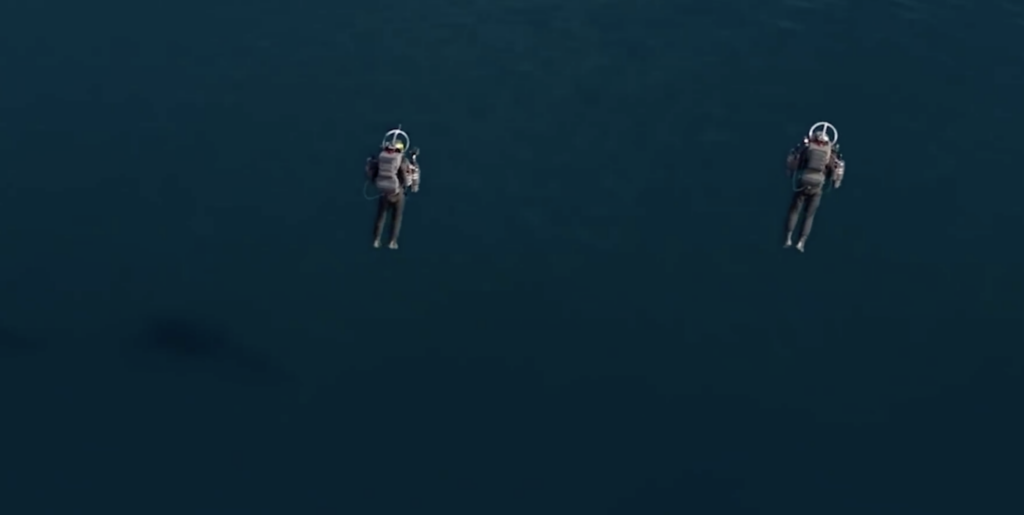
Your climb would begin in the troposphere, where you would pass clouds, aircraft, and increasingly thin air. At around 8 km (5 mi), you would need supplemental oxygen because the atmospheric pressure is already too low for an unprotected person to breathe normally.
The temperature would also become a serious concern. Near the top of the troposphere, temperatures can fall to around -60 ºC (-76 ºF). At roughly 10 km (6.2 mi), you would enter the stratosphere, where the air remains extremely cold before conditions change again higher up.
At about 50 km (31 mi), you would enter the mesosphere, followed by the thermosphere at higher altitudes. Temperatures in the thermosphere can reach around 2,000°C (3,600°F), although the air is so thin that there are not enough molecules to transfer much heat to you.
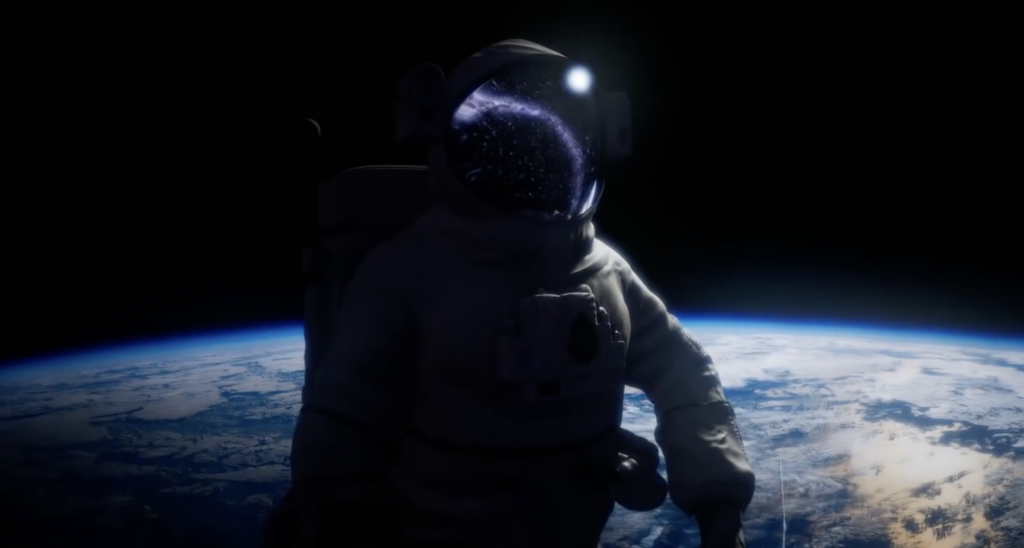
Eventually, you would reach space, but reaching orbit would require another huge increase in speed. A stable low Earth orbit requires roughly 25,200 km/h (15,660 mph), comparable to the velocity of the International Space Station.
And then comes the biggest problem. Your jetpack has taken you into space, but you still need enough fuel to change your trajectory and return safely to Earth. Running out of fuel after reaching space would leave you with very few options.
You would also have to avoid space debris moving at incredible speeds. Objects in orbit can travel faster than 35,888 km/h (22,300 mph), meaning even a small piece of debris could be deadly.
So reaching space on a jetpack might someday become technically possible, but surviving the trip would be another story. The moment you realized your fuel was running low, the incredible achievement of reaching space could quickly become a desperate fight to make it home.