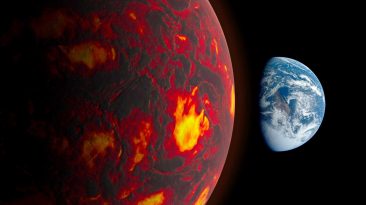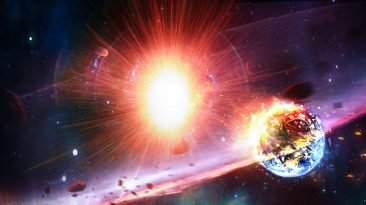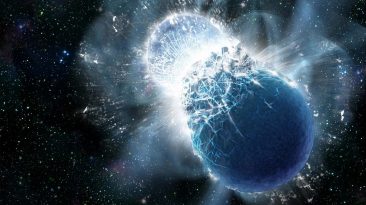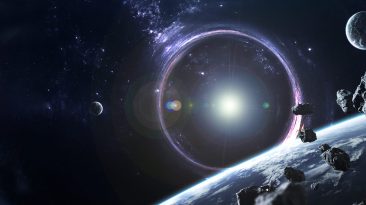
Imagine a black hole heading straight for Earth. We could wait for it to swallow our planet, or we could try to destroy it before it’s too late. We’d throw everything we have at it, from nuclear weapons to advanced technology we might not even have yet. Maybe we’d even try throwing a white hole at it. But is it actually possible to destroy a black hole?
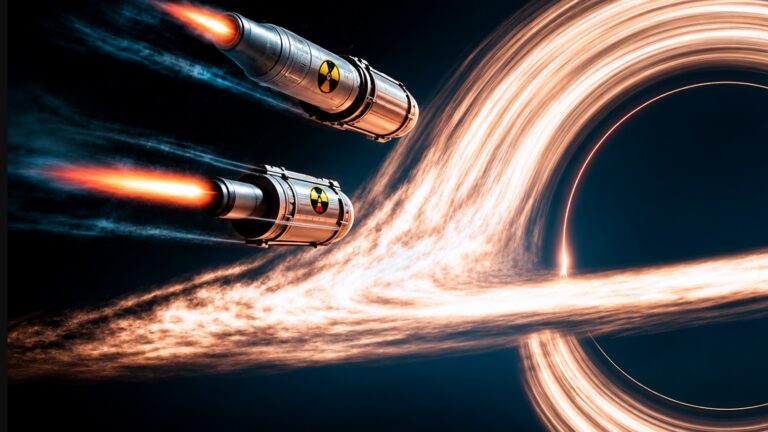
Our first attempt would be to collect every nuclear weapon on Earth and launch them at the approaching black hole. Together, they would produce energy equivalent to approximately 425,000 atomic bombs from World War II. Surely, that would be enough to destroy almost anything. Right?
Well, not a black hole. These cosmic objects consume matter and energy. When our nuclear weapons entered the black hole, it would simply swallow them. Instead of exploding, the black hole would become even more massive. Bullets, lasers, and enormous superweapons wouldn’t work either.
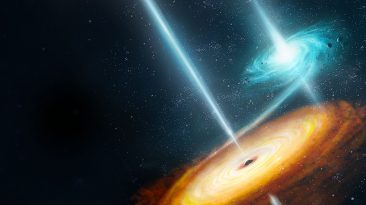
To understand why, we need to know what makes a black hole so difficult to destroy. Black holes are incredibly dense regions of space with gravitational forces so strong that not even light can escape. As you approach one, you eventually reach a boundary called the event horizon. Once you cross it, there’s no turning back. The gravitational pull would stretch and squeeze your body simultaneously, a process known as spaghettification.
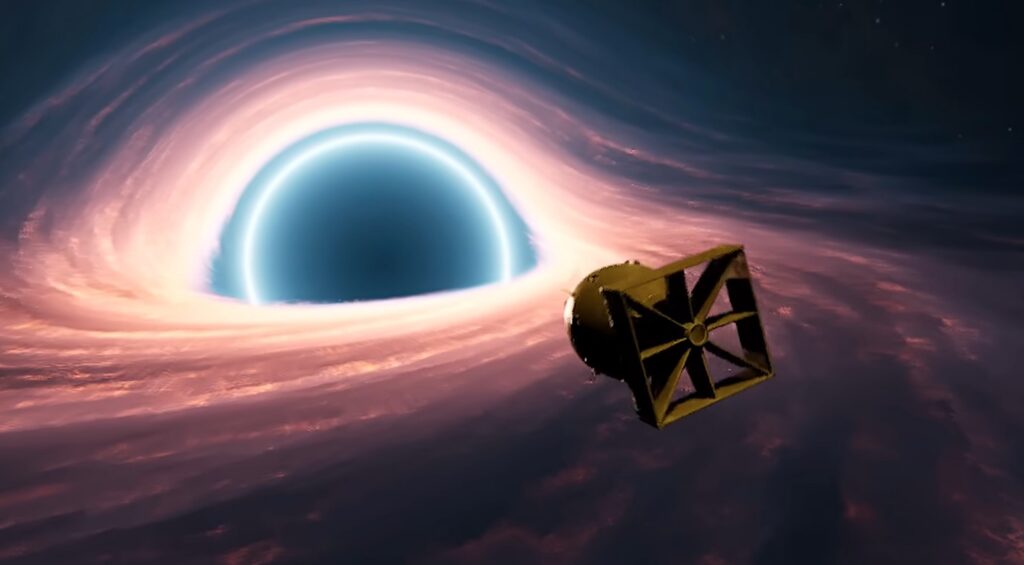
So, instead of attacking it with ordinary weapons, what if we created our own black hole using antimatter? We could accelerate protons to nearly the speed of light and collide them with a material such as iridium, producing antiprotons that could be collected to create antimatter. Then, we’d send our artificial black hole straight toward the approaching one.
Unfortunately, the regular black hole would simply absorb the energy from the antimatter. It would become even bigger.
Maybe starving it would work? If we stopped it from consuming anything, it would no longer grow. But its original mass would still exist, meaning it would remain just as dangerous.
Another possibility would be to use a white hole. These theoretical objects work in the opposite way to black holes. If nothing can escape a black hole, nothing can enter a white hole. Perhaps throwing one at our black hole could make the two annihilate each other, releasing an enormous burst of energy and gamma radiation. Unfortunately, we don’t actually have a white hole, and we don’t know how to create one.

What about traveling back in time? If we could build a time machine and connect a wormhole to the black hole’s past, we might reach the moment before it was born and destroy it with nuclear weapons or lasers. But we don’t have time machines or wormholes either.
There are also theoretical ways to destroy a black hole by changing its physical properties. Black holes spin and carry electrical charge, and both must remain within certain limits. If we increased their spin and charge enough, we might disrupt the conditions that keep them stable. Another possibility would be to slow their rotation by extracting energy from them. However, even stopping a black hole from spinning wouldn’t make it disappear.
But there is one final option. And it doesn’t require weapons, antimatter, or time travel. It only requires patience.
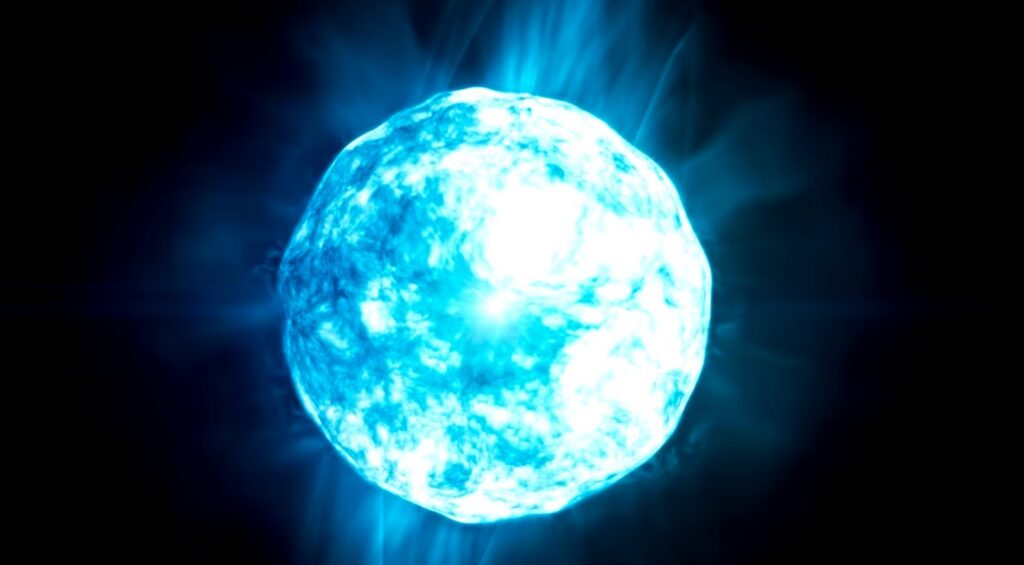
According to quantum theory, particles and antiparticles constantly appear in pairs. Near a black hole, one particle can fall inside while the other escapes into space. Over an incredibly long period, this process slowly reduces the black hole’s mass. It’s known as Hawking radiation. Eventually, after an enormous amount of time, the black hole would completely evaporate.
So, can we destroy a black hole? Not with anything we currently have. Our best option might simply be to wait a few trillion years for it to disappear on its own. Luckily, the chances of a black hole heading straight for Earth are incredibly small. But if one ever did, getting away as quickly as possible might be our only real chance.