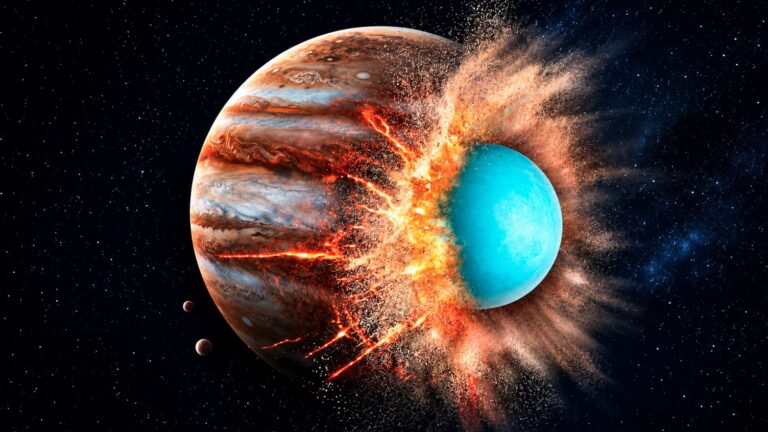
It’s all over for Uranus. The ice giant is locked into a collision course with the king of all planets in our Solar System, Jupiter. What would happen as the two planets made their epic approach? Would Uranus get pulled apart into bits and pieces? Or could this ice giant somehow deal a mortal blow to its gigantic opponent?
First, let’s get to know our two planetary opponents. Jupiter is the largest planet in the Solar System. Put all the other planets together, and it’s still twice as massive. But this monstrosity has no solid surface. It’s nearly all gas, made mostly out of hydrogen and helium.
In the other corner is Uranus. Even though it’s 20 times smaller than Jupiter, it’s the third largest planet in the Solar System. Underneath its hydrogen and helium atmosphere, there’s an abundance of water ice. That’s why Uranus isn’t a gas giant like Jupiter. It’s an ice giant, just like its neighbor Neptune.
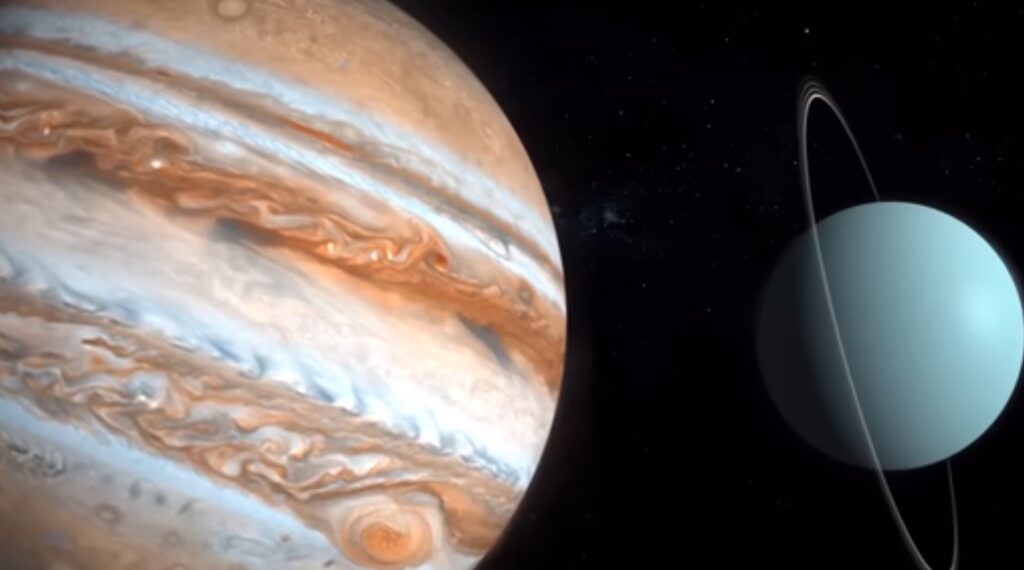
Uranus is also the most unique planet in the Solar System. It rotates on its side, thanks to an Earth-sized object that slammed into it billions of years ago. So could the most epic collision in the history of collisions end with Uranus getting knocked right side up?
As Uranus approaches Jupiter, it would first have to survive a close encounter with Saturn. With its colorful rings and many moons, Saturn is twice as large as the icy planet. However, the two planets have very similar gravitational pulls. As they just barely brush past one another, Uranus could end up sweeping up a moon or two to add to its current collection of 27.
Uranus would then be barreling toward its opponent. Jupiter is over 20 times as massive as Uranus, and even though it doesn’t technically have a surface, its surface gravity is more than twice as strong.
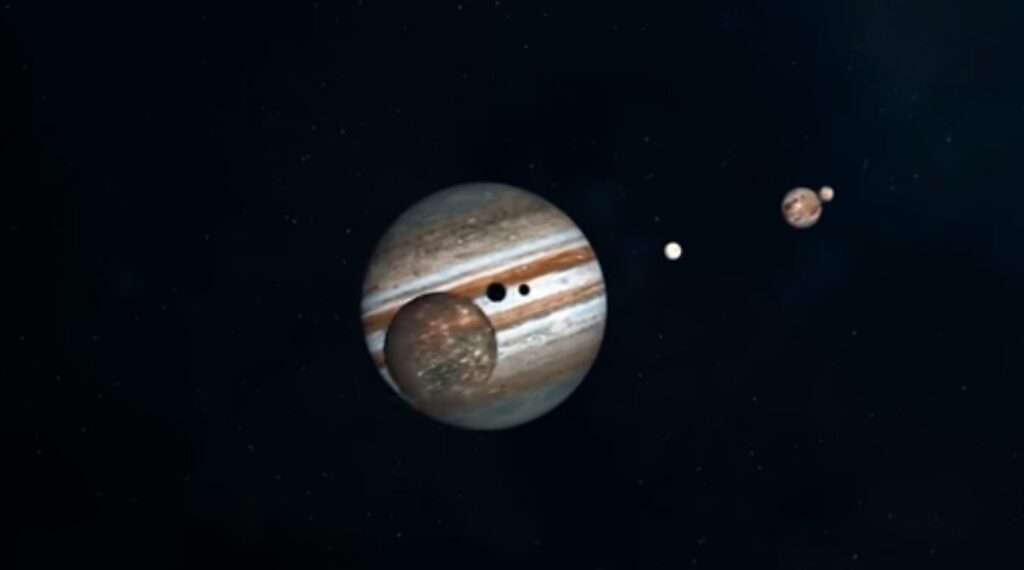
Before reaching Jupiter’s atmosphere, Uranus would also have to pass through some of its 80 moons. One of the first would be Pasiphae, a moon more than 60 times smaller than Earth’s Moon. Uranus would likely pass right by it and the remaining moons without much trouble.
Now, the planetary heavyweights would finally be approaching each other. How the collision unfolded would depend on Uranus’ angle of impact.
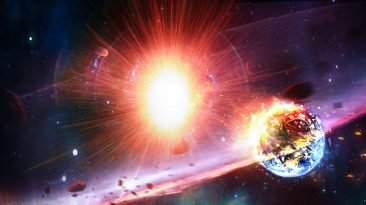
If Uranus somehow slipped into Jupiter’s orbit, the two planets would be on course for a head-on collision. Their atmospheres would compress as they came into contact, causing temperatures to rapidly increase. But they wouldn’t explode into enormous balls of fire. Neither planet has the oxygen needed for that kind of combustion.
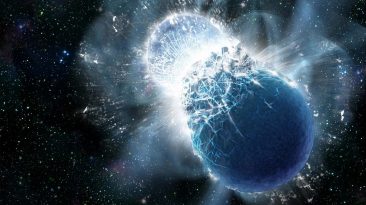
The collision would still be incredibly violent. The two planets would make full-body contact, combining their mass along the way. You might end up with a strange new planetary heavyweight, something like a Juranus or a U-piter.
One thing that wouldn’t happen, though, is Jupiter turning into a star. It would need 85 times its current mass to become a low-mass star. Adding Uranus would only increase its mass by a fraction.
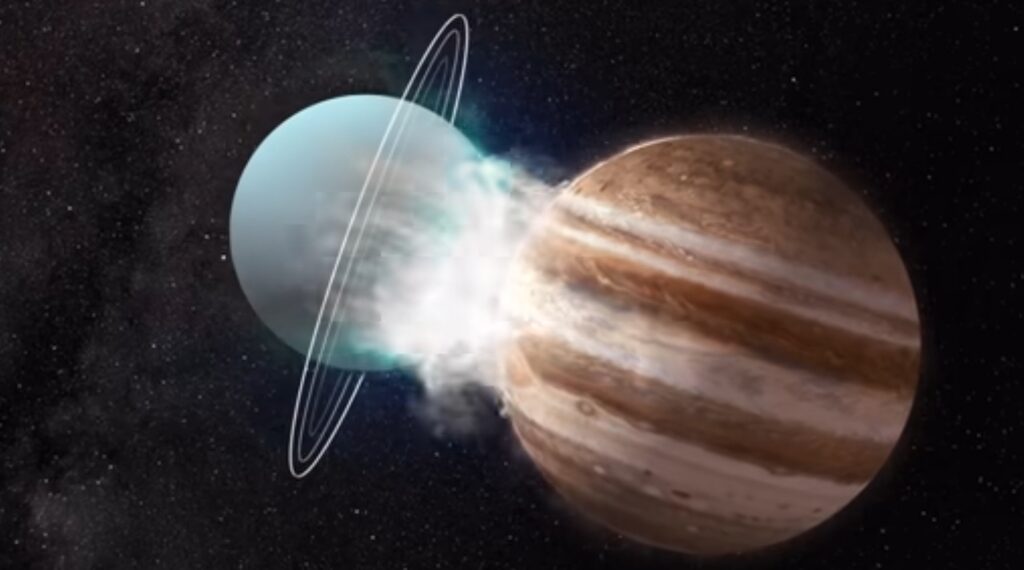
More realistically, Uranus could hit Jupiter from the side. Their atmospheres would compress on impact, but instead of completely merging, both planets could remain somewhat intact while enormous amounts of gas were thrown into space.
After this epic encounter, we could still be left with eight planets in the Solar System, although these two would look very different. Jupiter would become a thinner version of its formerly enormous, gassy self. Uranus could end up being little more than a solid rocky core covered in water and ammonia.
And if things unfolded this way, Saturn could finally take over the throne as the largest planet in the Solar System.