Venus is often described as Earth’s twin because the two planets are similar in size and structure. However, the similarities end there. Beneath its beautiful yellow clouds lies one of the most hostile environments in the entire Solar System. Temperatures are hot enough to melt lead, atmospheric pressure is crushing, and clouds filled with sulfuric acid surround the planet. So what would happen if you attempted to survive there for 100 days?
Your journey would begin with a surprisingly long commute. Even when Earth and Venus are relatively close, they remain approximately 38 million kilometers apart. Depending on their positions, the distance can increase to 260 million kilometers. Reaching Venus would take several months of traveling through space before you could even begin your survival challenge.
Landing would be your first major obstacle. Venus has an extremely thick atmosphere consisting of approximately 96.5 percent carbon dioxide. As you enter it, powerful winds reaching 360 kilometers per hour could throw your spacecraft around. Parachutes and thrusters would help slow your descent, but even a small mistake could end the mission before you reached the surface.
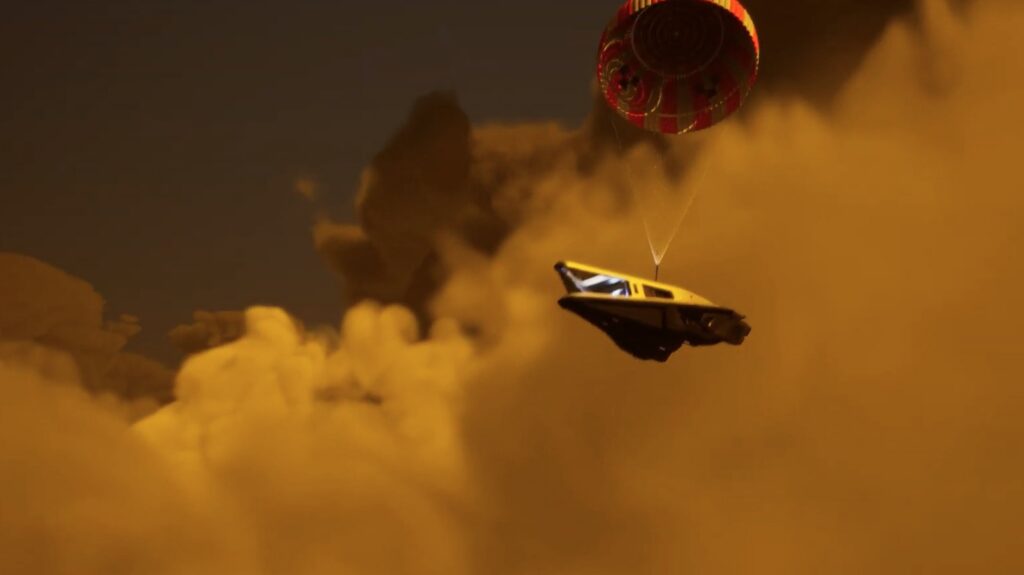
The pressure would become increasingly dangerous as you descended. At ground level, atmospheric pressure is approximately 92 times greater than on Earth. Imagine being almost one kilometer underwater, with the surrounding pressure constantly trying to crush everything around you. Ordinary spacecraft would have no chance of surviving these conditions without extensive reinforcement.
Even if your spacecraft managed to land safely, the temperature would introduce another serious problem. Venus reaches approximately 475 degrees Celsius, making it the hottest planet in the Solar System. Your protective spacesuit would need extraordinary insulation and powerful cooling systems just to keep you alive. Without them, the extreme heat would quickly overwhelm your equipment.
And then there is the rain. Venus has enormous clouds containing sulfuric acid, which gives the planet its distinctive yellow appearance. Fortunately, the temperatures near the surface are so extreme that acid droplets evaporate before reaching the ground. Nevertheless, the surrounding atmosphere remains dangerous enough to destroy unprotected equipment.
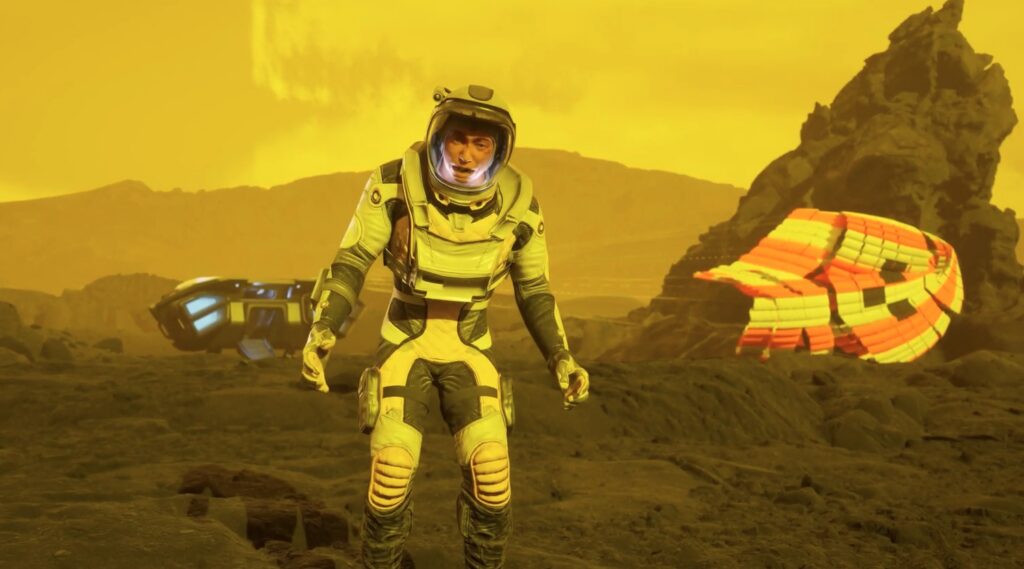
Finding somewhere to establish a permanent shelter would be another challenge. Venus has enormous volcanic structures, including collapsed magma chambers known as paterae. Scientists have also discovered evidence suggesting that volcanic activity may still be occurring on the planet. However, nobody has directly witnessed a Venusian volcano erupting.
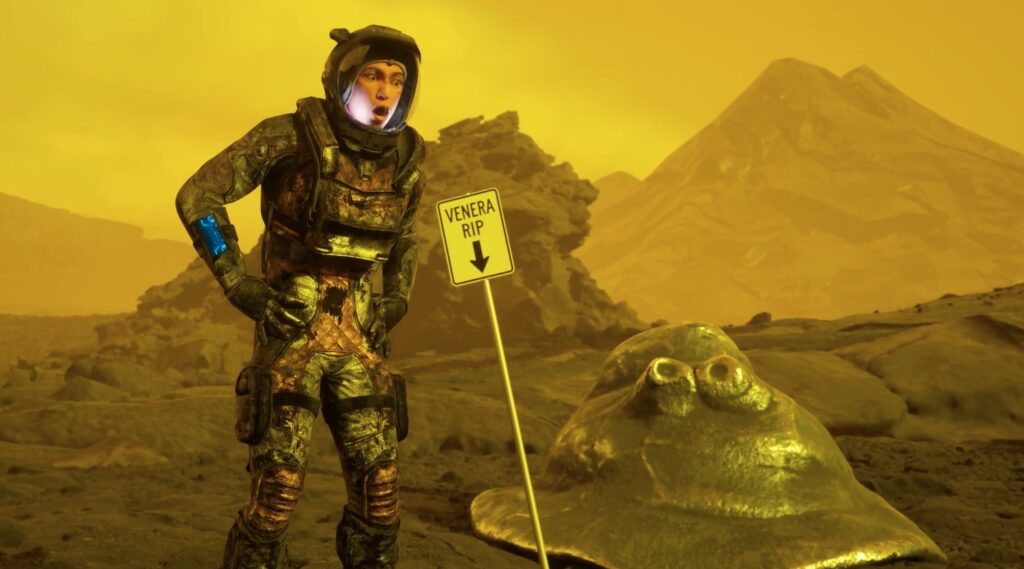
Previous missions demonstrate just how difficult survival would be. The Soviet Venera 13 lander managed to operate on the surface for approximately 127 minutes before succumbing to the extreme conditions. Other spacecraft have struggled to survive even that long. Clearly, spending 100 days on the ground would be practically impossible.
However, there might be another way.
Instead of attempting to survive on the surface, you could build a floating habitat high above it. NASA engineers previously explored a concept known as HAVOC, short for High Altitude Venus Operational Concept. The idea involved using enormous helium filled airships to explore and potentially establish human habitats in the planet’s atmosphere.
At an altitude of approximately 50 kilometers, conditions become surprisingly more manageable. Atmospheric pressure is roughly comparable to Earth’s, while temperatures drop to approximately 75 degrees Celsius. That is still uncomfortably hot, but it is considerably more manageable than the scorching surface below.
Your cloud habitat would need oxygen supplies, temperature regulation, protective materials and constant maintenance. Sulfuric acid droplets could gradually damage its exterior, creating leaks that might compromise the entire structure. Regular inspections and repairs would therefore become essential.
There would also be some fascinating mysteries surrounding your new home. Scientists have observed unusual dark streaks in Venus’s clouds that remain relatively stable despite powerful winds. Some researchers have suggested that these features could potentially involve microscopic organisms capable of surviving extreme conditions. The possibility remains unconfirmed, but the idea of discovering life while living above Venus would certainly be extraordinary.
As the days passed, your biggest challenge might become maintaining the habitat rather than simply surviving the atmosphere. Micrometeorites could damage the structure, equipment could malfunction, and even a small leak could threaten everything you had built.
Eventually, after losing your original shelter and moving into a backup airship, you might finally reach your 100th day.
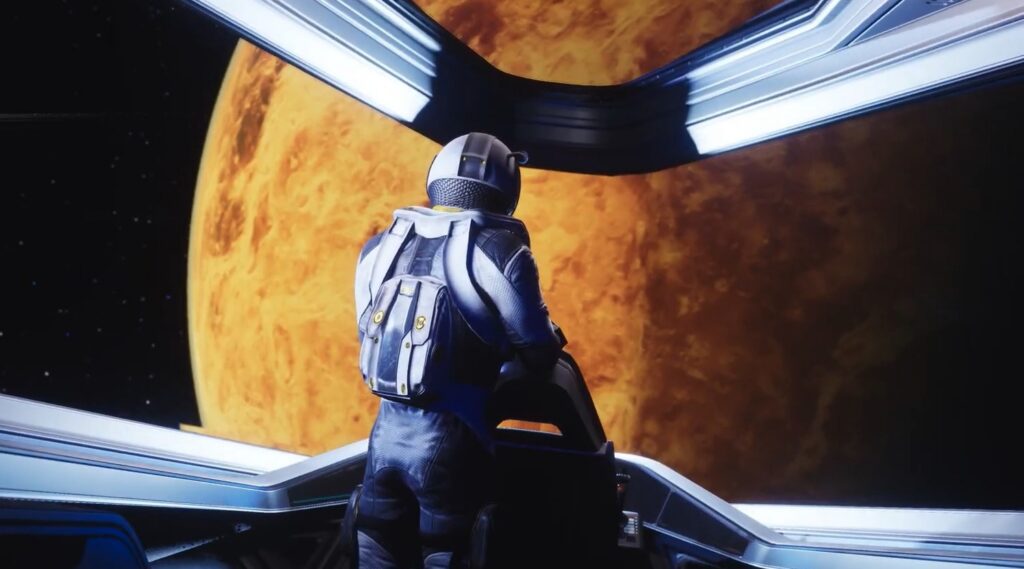
Surviving Venus would be an extraordinary achievement, but getting home would present another challenge. Your spacecraft would need to be operational, properly fueled and capable of escaping the planet’s gravitational pull.
Venus may be named after the goddess of love, but it is hardly a romantic destination. Still, its upper atmosphere offers a surprisingly promising possibility for future human exploration. With the right technology, people might one day find a way to live among its clouds, turning one of the Solar System’s most hostile planets into an extraordinary place to call home.