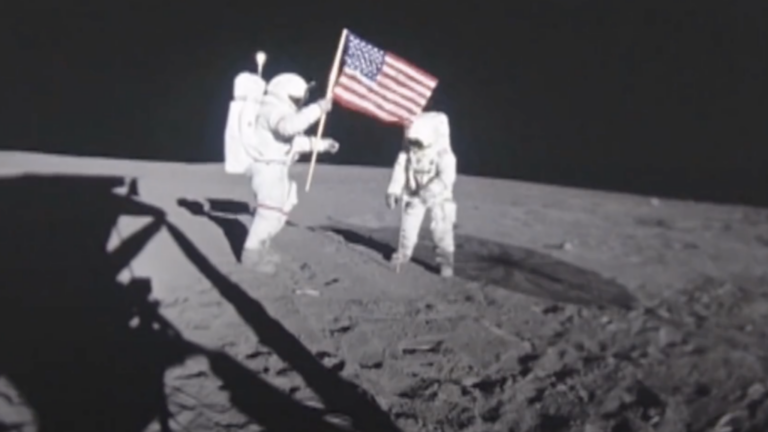
July 1969 changed humanity’s understanding of what was possible. When Apollo 11 reached the lunar surface, millions of people around the world watched the event unfold on television. For the first time, human beings had traveled to another world and walked across its surface, turning an extraordinary scientific ambition into reality.
Now imagine that history taking a completely different direction. The Apollo program continues, rockets are launched, and astronauts train for lunar missions, but the decisive landing never occurs. There are no human footprints on the Moon and no famous images of astronauts standing beside a lunar module. The consequences would extend far beyond the space program itself.
The reason is that the Moon landing was never simply an isolated scientific achievement. It was the most visible result of a much larger technological and political struggle. That struggle had begun years earlier when the Soviet Union launched Sputnik, shocking the United States and demonstrating that space had become another arena for competition between the two superpowers.
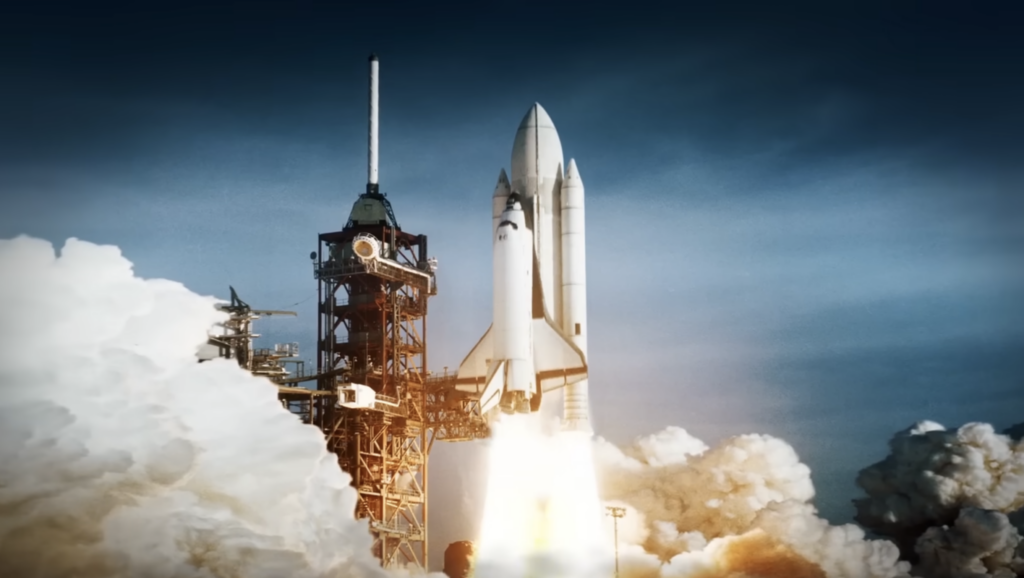
The American response included the creation of NASA, which brought together scientists, engineers, and government resources under one national space agency. Much of its early momentum came from the political demand to demonstrate American technological strength. Without a lunar objective, NASA might still have existed, but its size, funding, and influence could have developed very differently.
A failed or abandoned Moon program would also have changed the political meaning of the Space Race. Every successful launch became evidence that one side was advancing faster than the other. The absence of an American lunar victory could have allowed the Soviet Union to maintain greater prestige in space, potentially altering the way the Cold War was perceived around the world.
The effects would not have remained in government or military circles. The enormous engineering challenges created by the Apollo missions pushed companies and researchers to develop smaller, faster, and more reliable electronic components. Integrated circuits became increasingly important because spacecraft required powerful equipment without the weight and size of earlier computer systems.
That pressure helped accelerate the wider electronics industry. If the lunar program had never reached its ultimate goal, the demand for compact and dependable computing technology might have been weaker. Personal computers, portable electronics, and eventually smartphones could therefore have followed a noticeably slower path toward becoming affordable consumer products.
Space exploration also encouraged major advances in communications technology. Satellites became increasingly valuable for transmitting information across enormous distances, supporting television broadcasts, telephone connections, weather observation, and eventually global data networks.
Without the same early investment in space infrastructure, the development of these systems could have taken longer. Geosynchronous satellites, for example, made it possible to maintain continuous communication coverage over large portions of Earth. Their importance today extends from broadcasting and telecommunications to navigation and international connectivity.
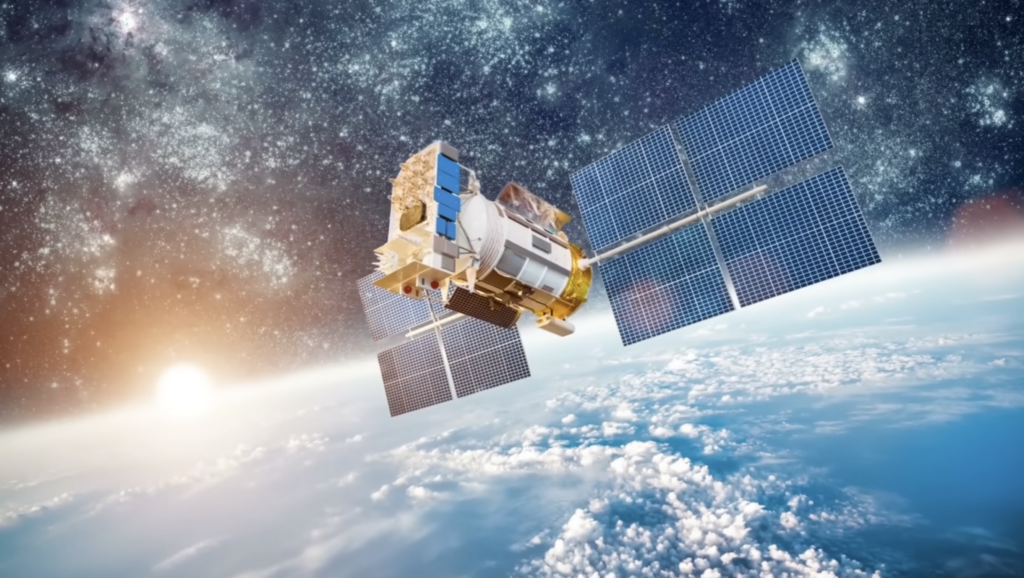
Navigation technology could have experienced a similar delay. Modern GPS depends on satellites that constantly transmit timing and positioning information. Although satellite navigation has military origins and would likely have emerged eventually, a weaker space program could have postponed widespread civilian access to accurate location services.
Scientific research would also lose an important foundation. The engineering experience accumulated through decades of human spaceflight contributed to later missions and observatories. Projects such as the Hubble Space Telescope benefited from generations of knowledge involving orbital operations, precision engineering, communications, and spacecraft maintenance.
Earth observation would have suffered as well. Satellites provide scientists with information about hurricanes, rainfall, ocean temperatures, wildfires, ice coverage, and long term climate changes. Without a mature space industry, meteorologists would have fewer tools for tracking dangerous weather systems and governments could receive less warning before major disasters.
Some medical technologies could also have arrived later. Space missions forced engineers to create equipment capable of monitoring astronauts, controlling temperatures, conserving resources, and operating reliably in extreme conditions. Techniques and technologies developed for those challenges later found applications in hospitals and other areas of medicine.
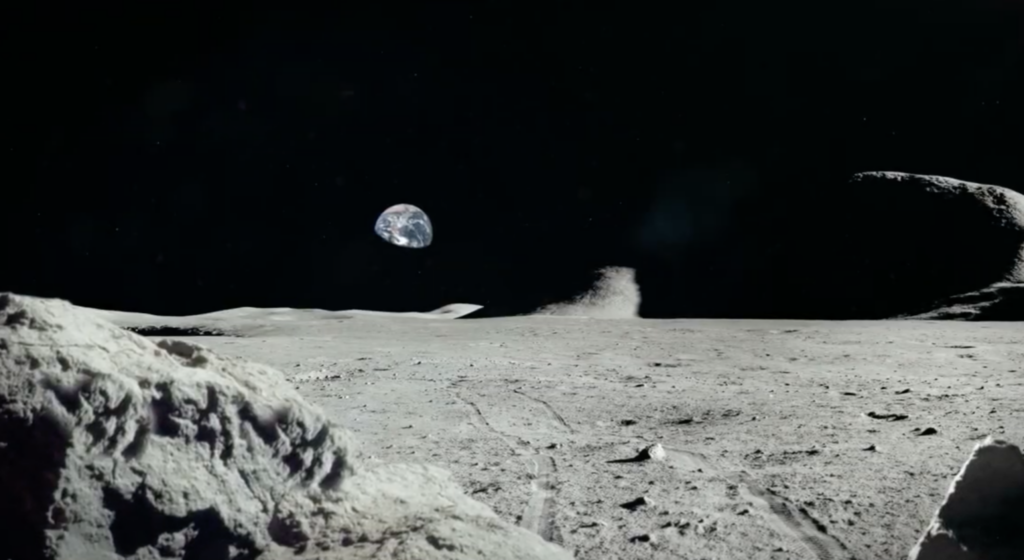
The biggest difference might ultimately be found in humanity’s ambitions beyond Earth. Lunar missions provided experience with navigation, landing, life support, communications, surface operations, and long distance crewed travel. Without that experience, future plans involving Mars, asteroids, and other destinations would face a much steeper learning curve.
Public enthusiasm could have changed too. The Apollo missions inspired enormous numbers of young people to study engineering, physics, astronomy, and mathematics. Without the unforgettable sight of humans walking on the Moon, the cultural impact of space exploration might have been considerably weaker, potentially influencing which scientific careers future generations chose to pursue.
Space exploration would almost certainly have continued even without Apollo 11. Governments, researchers, and eventually private companies would still have reasons to develop rockets and explore beyond Earth. But the pace of progress could have been slower, the technology reaching consumers later, and humanity’s confidence about becoming a spacefaring civilization much weaker. The Moon landing was therefore more than a historic broadcast or a Cold War victory.
It accelerated technologies, inspired scientific research, strengthened the space industry, and gave humanity practical experience beyond Earth. If that achievement had never happened, modern civilization would probably still look familiar, but many of its most important technologies and ambitions might have arrived years later or developed along entirely different paths.