







Swipe Down for Full Video Story
Deep frying a turkey can already be risky enough. Every year, kitchen fires and oil explosions send people running for cover during holiday dinners. But what if we tried something even more extreme? Instead of lowering a turkey into boiling oil, imagine launching one into space and firing it back toward Earth at nearly the speed of light.
Would it somehow be safer? Or would it become one of the most destructive events in human history?
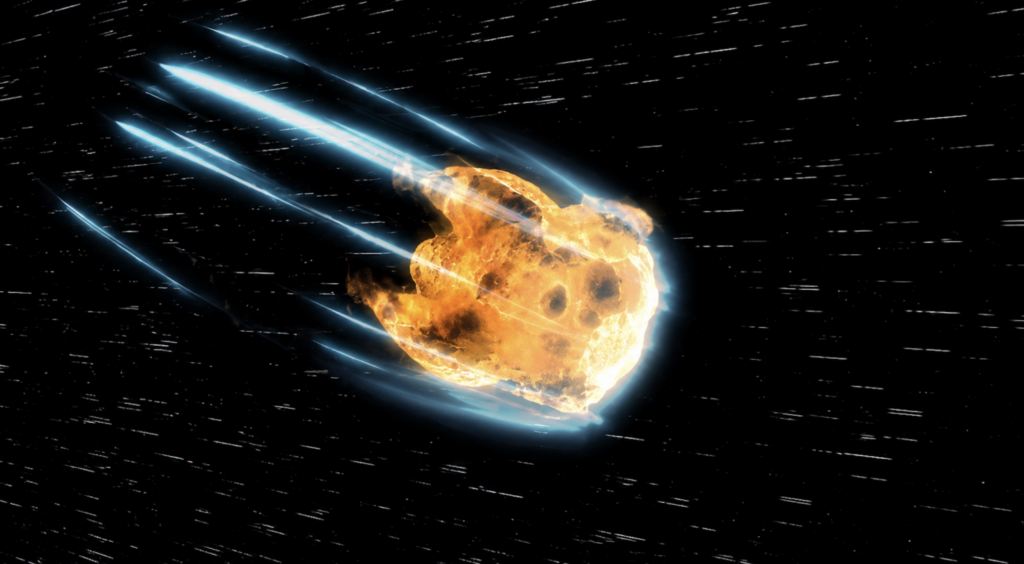
To understand the danger, we first need to grasp how fast light actually travels. The speed of light is roughly 300,000 kilometers per second, or about 186,000 miles per second. At that speed, something could circle the entire Earth more than seven times in only one second. It is the fastest speed anything in the universe can travel.
Of course, according to physics, no object with mass can truly move at the speed of light. As an object accelerates, its mass increases dramatically while its length contracts. Reaching the speed of light would require an infinite amount of energy, which is impossible. So our turkey cannot actually hit light speed.
But for the sake of this bizarre experiment, let us bend the rules a little. Instead of traveling at 100 percent the speed of light, our turkey will move at 99.99 percent. That is still unimaginably fast, and more than enough to create absolute chaos.
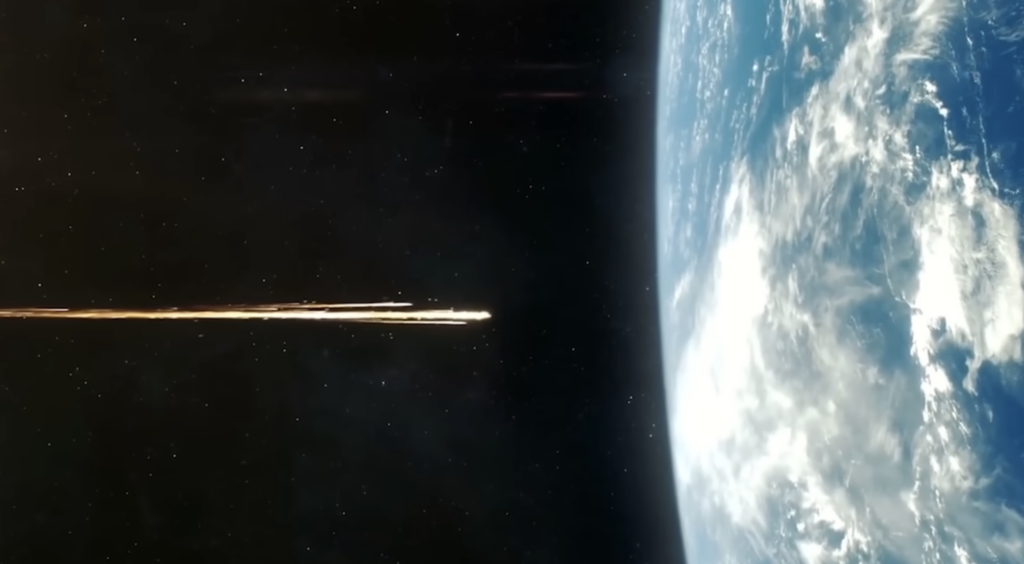
As the turkey races through space toward Earth, everything might seem calm at first. But the moment it reaches the atmosphere, disaster begins. Earth’s atmosphere is filled with tiny particles and molecules. At normal speeds, these are harmless. But when something moves at relativistic speeds, even microscopic particles become deadly projectiles.
The turkey would immediately start smashing into atmospheric particles with unbelievable force. The collisions would release enormous amounts of energy, causing violent explosions high in the sky. Long before the turkey ever touched the ground, people across the planet would notice bright flashes lighting up the atmosphere like massive fireballs.
The sound alone would be terrifying. Shockwaves from the explosions would roar across entire regions, shattering windows and damaging buildings. The turkey itself would begin to tear apart under the extreme stress, but that would not stop the destruction. Every fragment would continue moving at nearly the same incredible speed, creating even more explosions as it plunged deeper into the atmosphere.
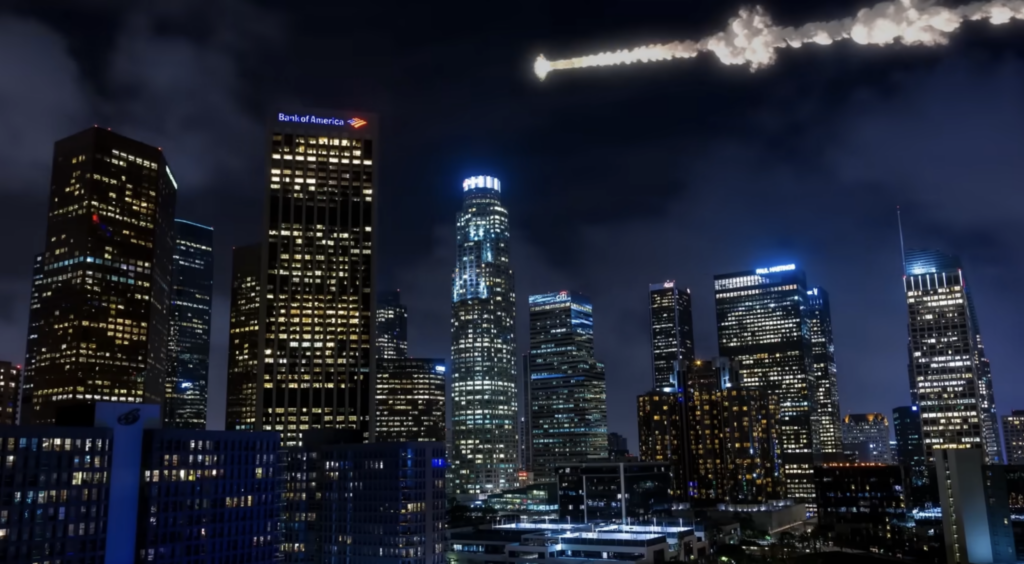
Scientists often compare impacts like this to meteor explosions. One famous example is the Chelyabinsk meteor that exploded over Russia in 2013. That meteor burst apart about 23 kilometers above the ground and released enough energy to injure around 1,500 people. Buildings were damaged, windows shattered across entire cities, and the blast wave was felt for miles.
Now imagine something far worse. A turkey traveling at relativistic speed could release energy equivalent to tens of thousands of Chelyabinsk style explosions. The atmosphere itself would become a chain reaction of devastating blasts.
And this is still the best case scenario.
If any significant portion of the turkey actually reached the surface, the impact would be catastrophic. Even a relatively small object moving at 99.99 percent the speed of light carries an absurd amount of kinetic energy. Physics calculations suggest the impact could rival hundreds of nuclear bombs detonating at once.
If the turkey slammed into a major city like New York, the city would vanish instantly. The explosion would flatten buildings for miles in every direction. Fires would erupt across the region, and millions of lives could be lost within moments.
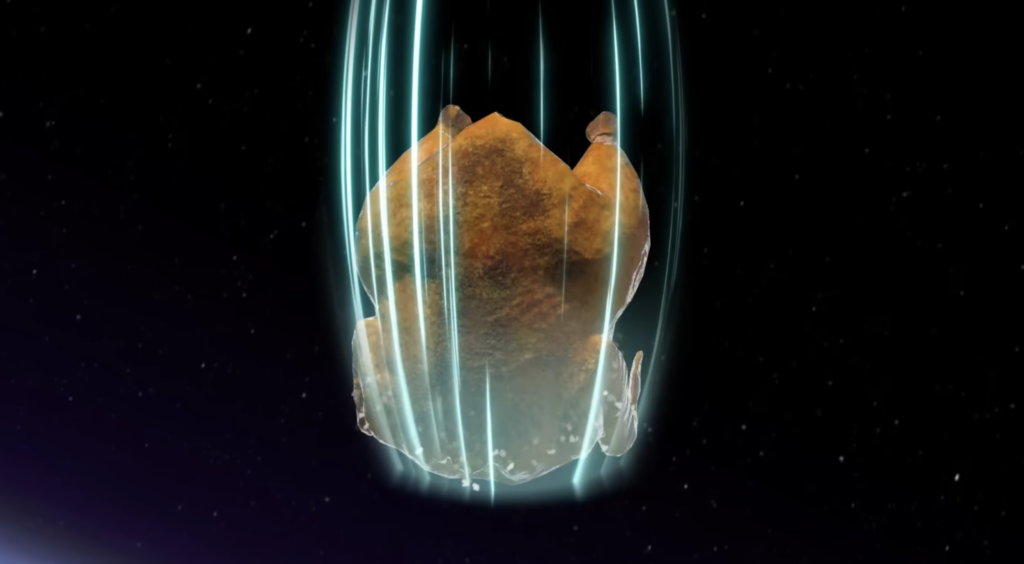
But the destruction would not stop there. The force of the impact could crack Earth’s crust, triggering earthquakes and volcanic activity far beyond the impact zone. Massive amounts of dust and debris would blast into the atmosphere, potentially affecting global temperatures and weather patterns.
Across North America, shockwaves could topple structures and ignite fires hundreds or even thousands of kilometers away. Entire regions might become uninhabitable. All of this devastation would come from something that normally sits harmlessly on a dinner table.
In the end, this ridiculous thought experiment reveals just how terrifying extreme speeds can be. Speed alone can transform even an ordinary turkey into a planet shaking weapon. Thankfully, the laws of physics prevent objects like this from ever reaching the speed of light.
So the next time someone warns you about the dangers of deep frying a turkey, just remember: things could always be much, much worse.