Imagine looking up at the night sky and learning that a black hole is racing toward Earth at nearly the speed of light. Not a giant one that swallows galaxies, but a tiny black hole no larger than a coin. It sounds harmless at first. After all, how dangerous could something that small really be?
The answer is terrifying.
Even the smallest black holes can contain enormous amounts of mass packed into an unbelievably tiny space. And if one of them passed near Earth at relativistic speeds, the consequences could range from global disasters to the complete destruction of human civilization.
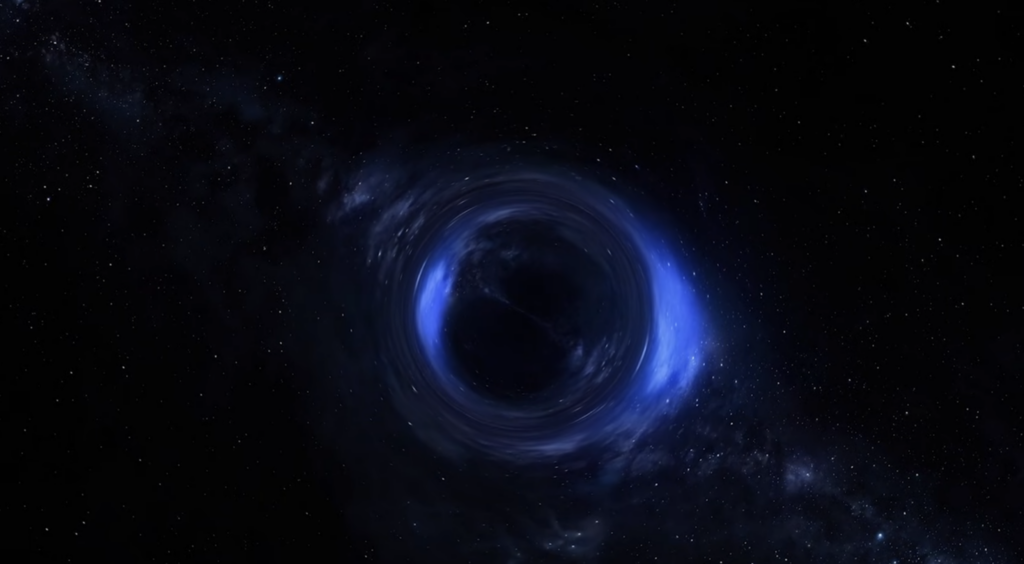
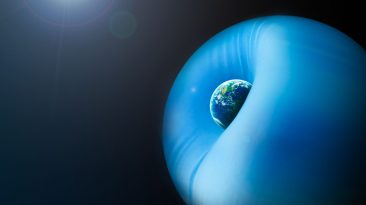
To understand just how dangerous this cosmic intruder would be, let us start with a relatively “small” black hole. Imagine one with the same mass as Earth itself. Obviously, a black hole like this could never naturally exist alongside our planet, but hypothetical scenarios are where physics becomes especially fun and frightening.
This black hole would weigh as much as Earth while being smaller than a marble. Despite its tiny size, its gravity would remain just as powerful as our entire planet’s. Now picture it hurtling through space toward us at nearly the speed of light.
At that speed, it would cross Earth in only a fraction of a second.
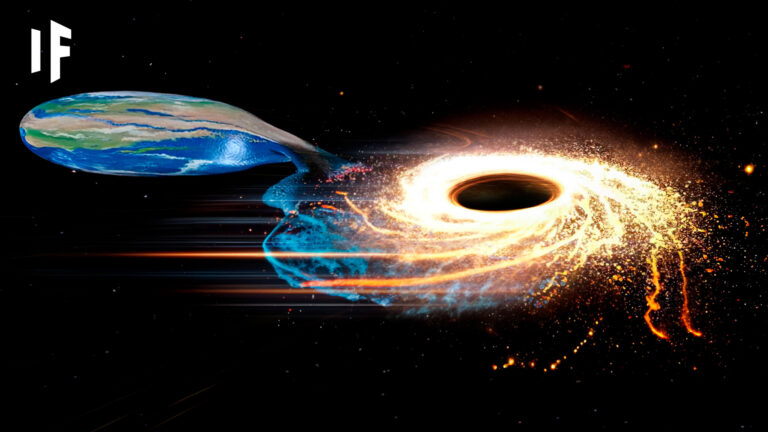
If the black hole passed close by without directly colliding with Earth, we would still face catastrophic consequences. Gravity does not pull evenly across large objects. The side of Earth closest to the black hole would feel a much stronger force than the far side. These differences are known as tidal forces, and they can literally stretch planets apart.
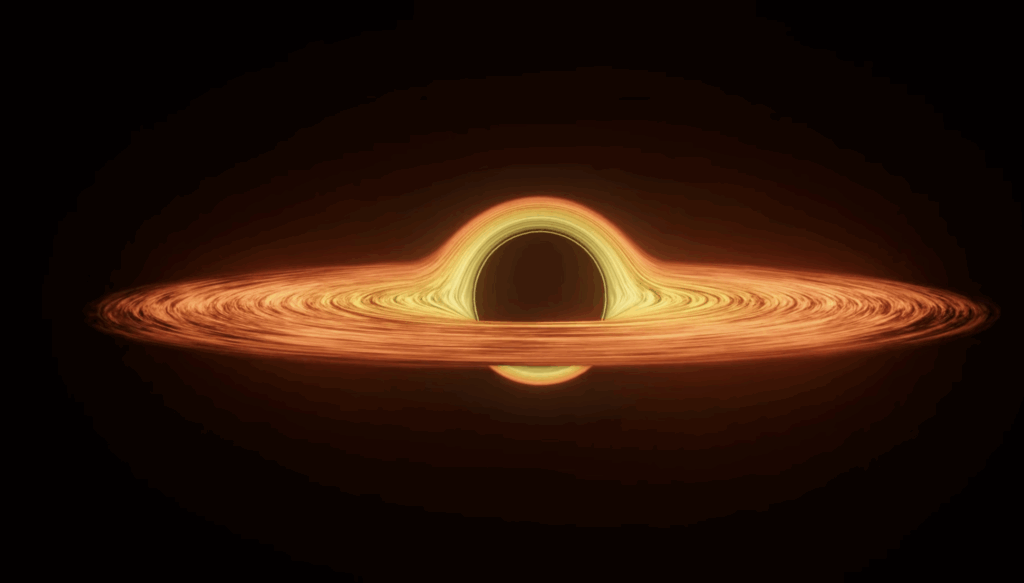
As the black hole screamed past, Earth’s crust would bend and crack under the stress. Massive earthquakes would ripple across continents within moments. Volcanoes that had been dormant for thousands of years could suddenly erupt. In the oceans, gigantic tsunamis would form and race toward coastlines at terrifying speeds.
And all of this destruction would happen from a black hole that never even touched the planet.
But this is only the beginning.
Now let us replace that tiny black hole with something much worse: a stellar mass black hole containing the mass of ten Suns. These objects are born when giant stars collapse at the end of their lives, compressing unimaginable amounts of matter into a single point in space.
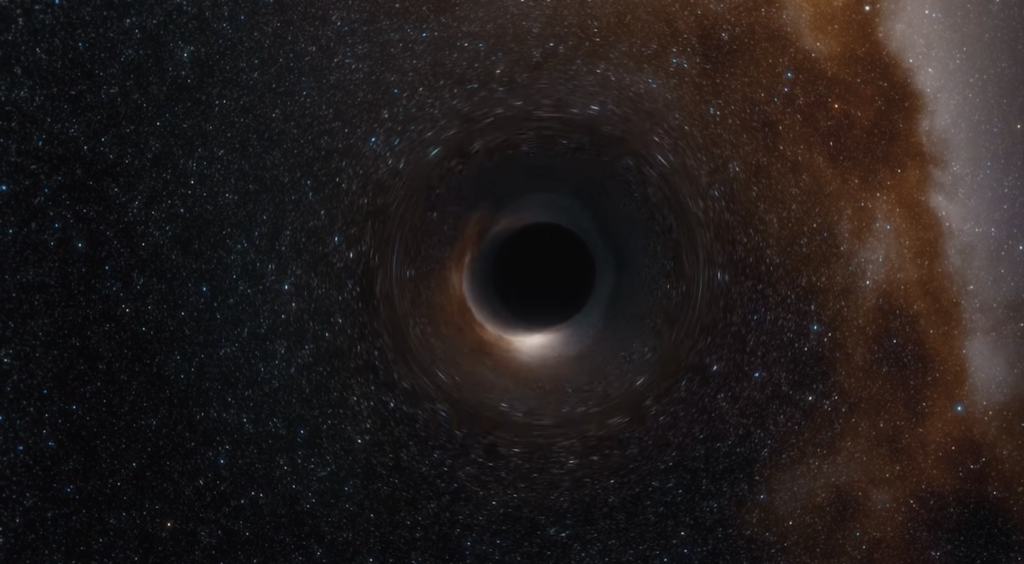
The moment this black hole entered the outer edges of our Solar System, scientists would know humanity was out of time.
The first signs of trouble would appear in the Kuiper Belt, the distant region filled with icy objects beyond Neptune. The gravity of the incoming black hole would begin disturbing the orbits of dwarf planets, comets, and frozen debris. But Earth would only have a few short hours before total chaos arrived.
As the black hole moved inward, the outer planets would begin drifting away from their normal orbits. Neptune and Uranus would wobble first, followed by Saturn and Jupiter. Eventually, the inner Solar System would start destabilizing as well.
By the time the black hole approached Earth, our planet would already be in crisis.
The Moon’s orbit could shift dramatically, causing tidal waves unlike anything in recorded history. Earth itself might tilt slightly off axis, disrupting weather patterns worldwide. Hurricanes, superstorms, and violent atmospheric disturbances would erupt across the globe. Then the gravitational effects would become impossible to survive.
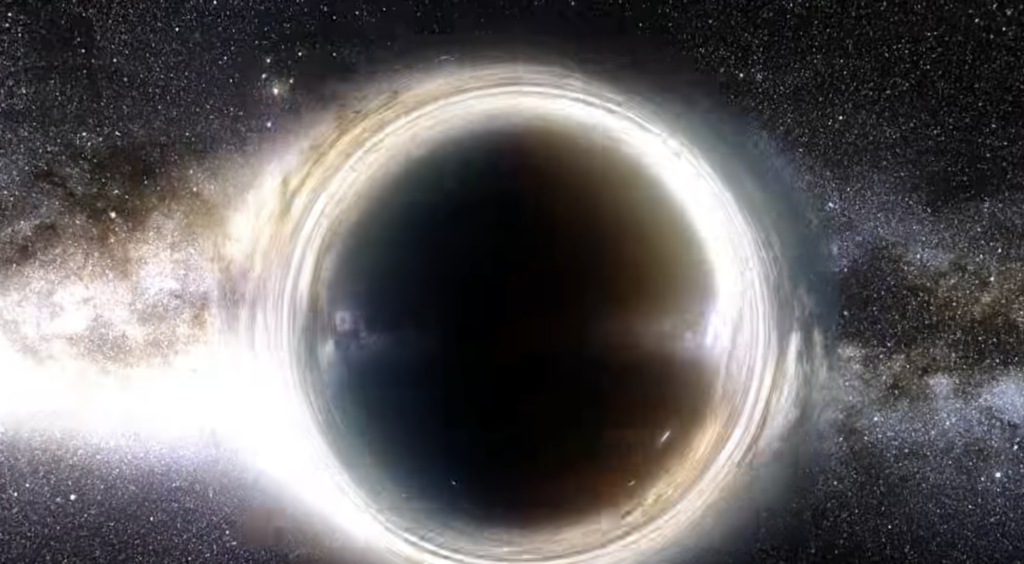
The atmosphere would begin behaving unpredictably as the black hole’s immense gravity distorted the planet. Supersonic winds could rip across continents, flattening cities in minutes. Satellites would fall from orbit, streaking through the sky like burning meteors.
For a brief and horrifying moment, people on Earth might even experience partial weightlessness. Buildings, vehicles, and debris could lift from the ground as the gravitational balance of the planet became unstable.
Civilization would collapse almost instantly. Coastal cities would disappear beneath giant waves. Inland regions would suffer earthquakes, fires, and infrastructure failures on a global scale. Communication systems would fail. Power grids would shut down. Humanity would be thrown into complete chaos within hours.
And yet, unbelievably, there is something even worse.
Meet Phoenix A*, one of the most massive black holes ever discovered. This cosmic monster contains roughly 100 billion times the mass of our Sun. Its event horizon, the boundary beyond which nothing can escape, stretches hundreds of billions of kilometers across.
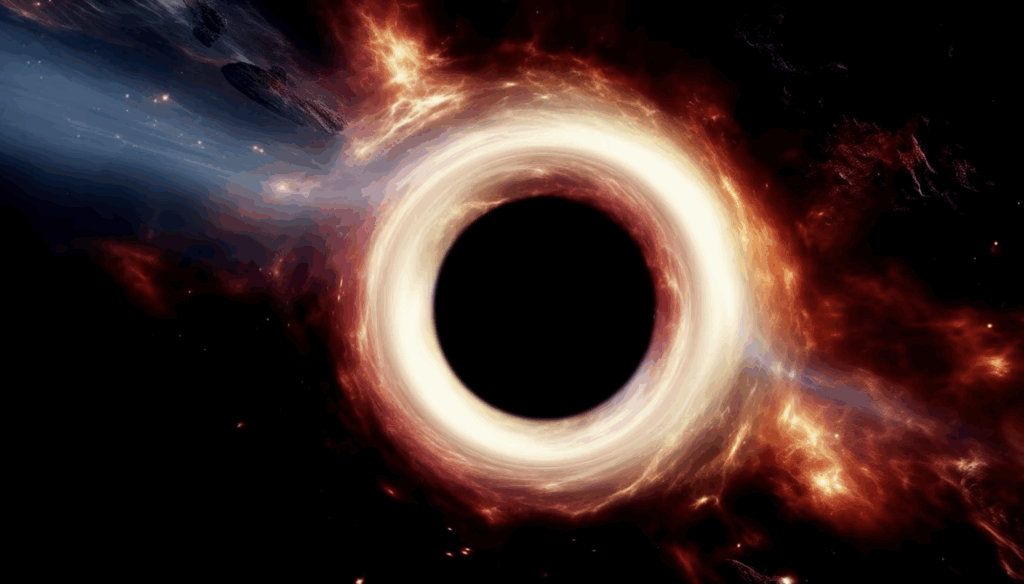
To put that in perspective, this black hole is vastly larger than our entire Solar System.
If an object like Phoenix A* passed near us, Earth would not simply experience disasters. The entire Solar System could be destroyed.
Long before the black hole arrived, every planet would feel its gravitational pull. Orbits would unravel. Worlds could be flung into deep space or dragged toward the black hole itself. Earth might survive the initial encounter physically, but it would no longer orbit the Sun normally.
Without stable sunlight, temperatures would plummet rapidly. Oceans would freeze. Plants would die. Food chains would collapse within months.
Even if small groups of humans somehow survived the initial destruction underground or in protected shelters, life afterward would be nearly impossible. Earth would become a frozen wandering planet drifting through darkness.
Thankfully, scenarios like this are incredibly unlikely. Scientists have never detected a black hole heading toward Earth, and the odds of one passing dangerously close are extremely low.
Still, these thought experiments reveal just how powerful black holes truly are. They may be invisible, but their gravity can reshape stars, planets, and even entire galaxies. And if one ever came too close to Earth, humanity would quickly learn that size means nothing when it comes to the most destructive objects in the Universe.