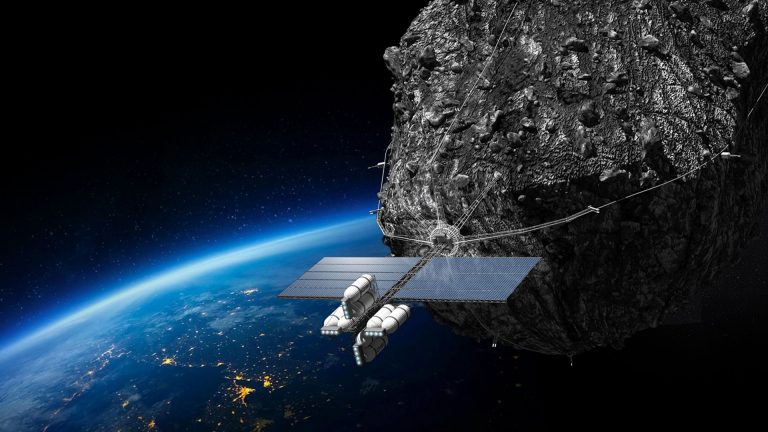
Once in a while something drifts into our Solar System that has no business being here. It didn’t form around our Sun. It wasn’t born from the same cloud of dust that built the planets. It simply arrived, after who knows how long crossing the empty space between stars.
Astronomers call them interstellar objects, or ISOs, and the frustrating thing about them is how briefly they stick around. They come in fast, swing past, and disappear again. Blink and the chance is gone.
Which is a shame, because each one is basically a sealed package from another corner of the galaxy. Catch one and you’re holding material that formed somewhere we will never visit.
So far the most famous is Oumuamua.
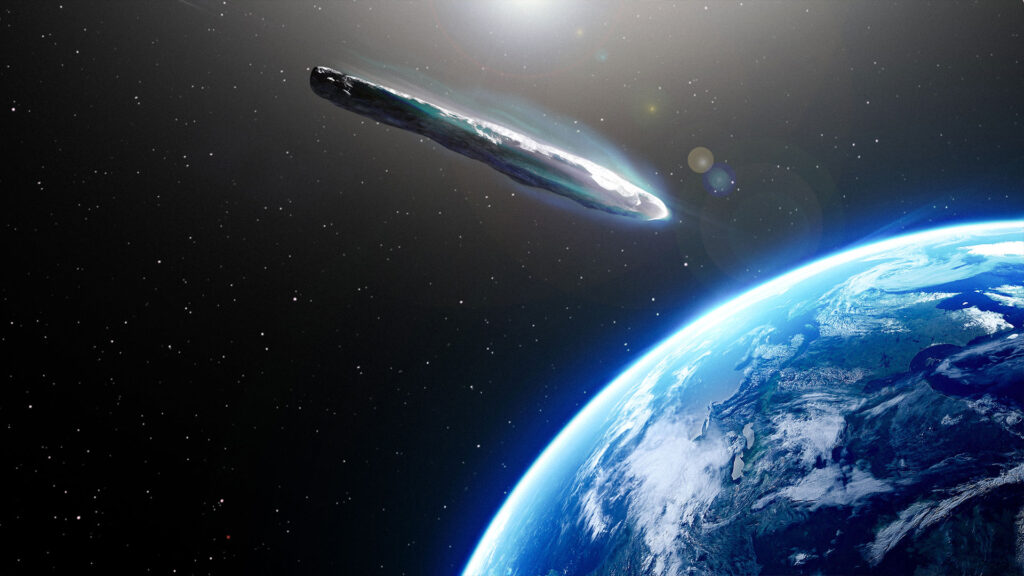
It came through in 2017, and astronomers knew almost immediately that something was off. The shape was wrong. The way it moved was wrong. Nothing in our own neighborhood behaves like that, and researchers said as much at the time.
Theories piled up quickly. One of them is strange enough to stay with you.
Computer simulations raised the possibility that Oumuamua used to be part of a planet. The idea goes like this: a world drifted too close to its own star, gravity ripped it apart, and the debris got flung out into space. One piece of it then spent millions, maybe billions of years wandering before it happened to pass by us.
If that’s what it was, we watched a fragment of a dead alien world go by and never got to touch it.
That’s the whole frustration in a sentence, really. Telescopes only tell you so much. Actually having a piece of another star system in a lab is a completely different kind of knowledge.
The catch, obviously, is catching one.
These things move fast, and by the time anyone identifies one, it’s usually already on its way out. You cannot build a spacecraft that quickly.
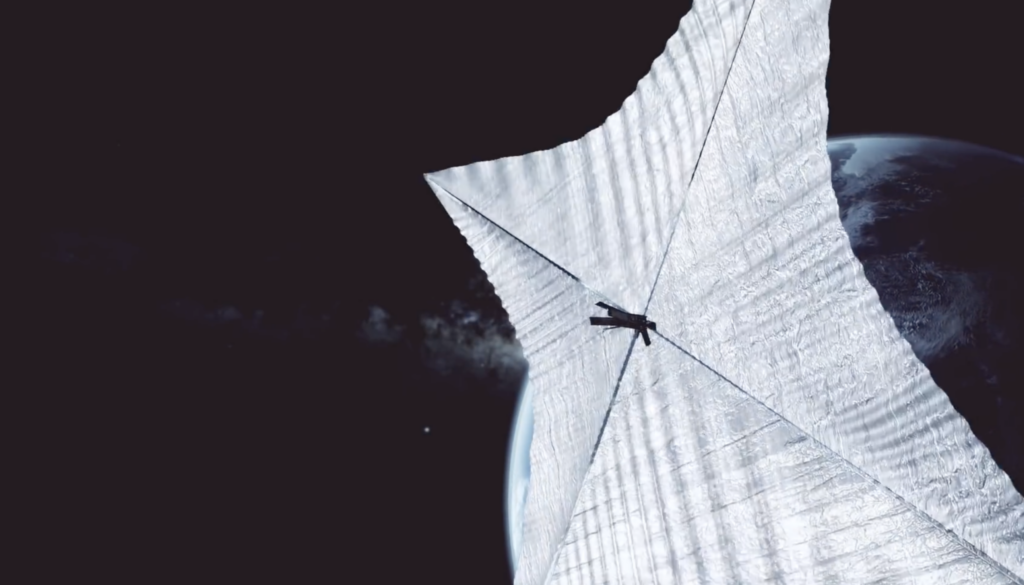
Richard Linares at MIT has floated an interesting way around that. Instead of scrambling to launch after the fact, you park spacecraft in advance and wait.
His concept uses solar sails, which push against sunlight for propulsion. Balance that push against the pull of the Sun and a satellite can hold position for a very long time without burning fuel. Sentries, essentially, sitting out there doing nothing until something worth chasing shows up.
Then you launch. Approach it, study it properly, and maybe someday bring a piece home.
What would that actually tell us? Quite a lot. How often material moves between star systems. What conditions look like around other stars. How planets form and fall apart.
And there’s the bigger question sitting underneath all of it, the one people always want answered. Nobody is claiming these objects are spacecraft, and there’s no evidence any of them carry life. But an ISO could still hold chemistry from another planetary system, and that’s not nothing.
There might even be practical value. These objects could contain minerals and compounds that are rare or absent here, which is the sort of thing that occasionally turns into new technology decades later.
Then the awkward part starts.
Who owns it? An object that formed around another star doesn’t fit neatly into anyone’s legal framework. Would the data be published openly, or would governments start competing over access to the most significant sample in scientific history?
That argument would get loud fast. Capturing an ISO wouldn’t stay a science story for a week.
None of this is possible yet. The technology isn’t there.
But we’re getting much better at spotting these things, and every new detection teaches us more about how they move and where to look. Sooner or later the odds tip in our favor.
The next one is already out there somewhere, heading our way, carrying whatever it’s carrying.