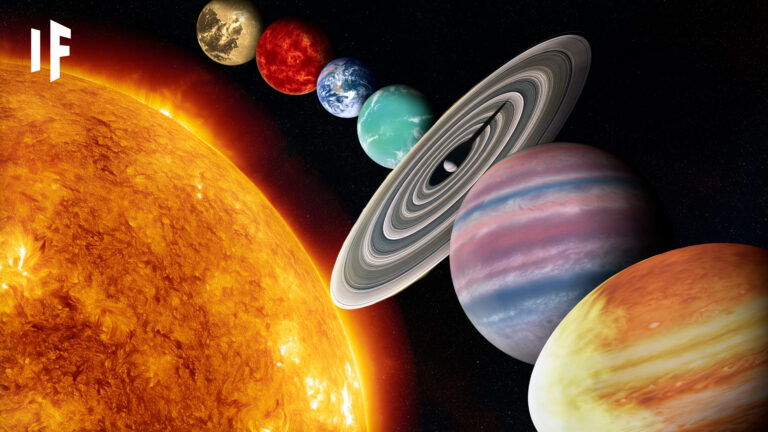
Our galaxy is full of strange worlds, but what would happen if we could bring some of them into our own Solar System? Moving exoplanets closer helps us imagine how different stars, atmospheres, and gravities shape planetary environments.
Some would instantly become frozen wastelands, while others would turn into scorching infernos. And in many cases, their gravity alone could slowly rewrite the architecture of our planetary neighborhood. Let’s explore what would happen if a few famous exoplanets suddenly appeared around our Sun.
TRAPPIST-1 e
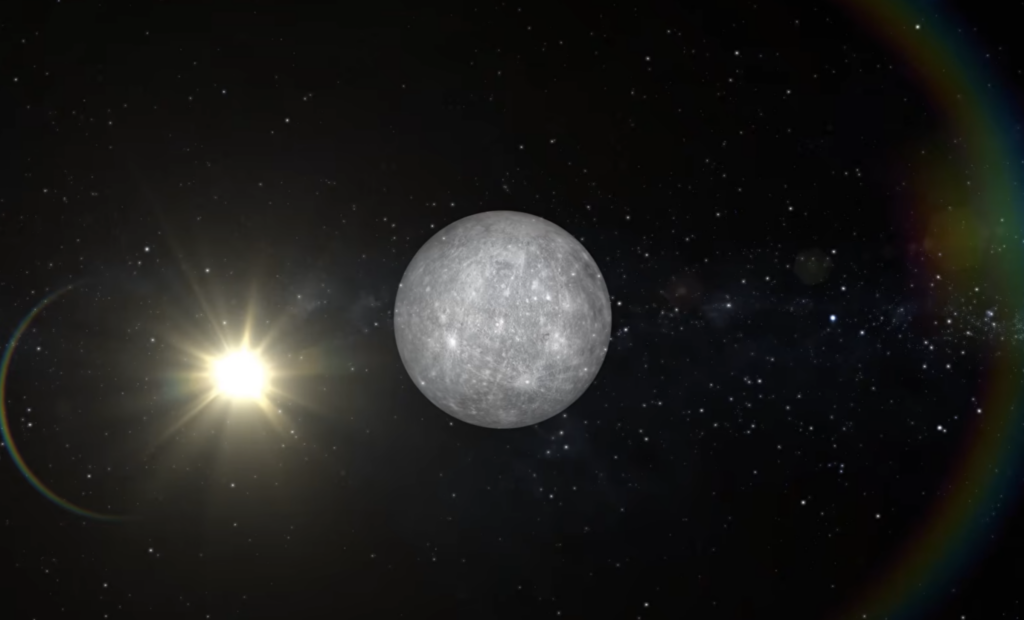
TRAPPIST-1 e is one of the most promising Earth-like worlds discovered, slightly smaller than our planet and located about 41 light-years away. In its home system, it orbits extremely close to a tiny ultra-cool red dwarf star, yet still sits comfortably in the habitable zone. If we moved it to Mercury’s orbit, the stronger sunlight from our hotter Sun would quickly overheat the planet, boiling away any oceans within years. Even though it would appear as a bright star-like point in our sky, its chances of supporting life would vanish almost immediately.
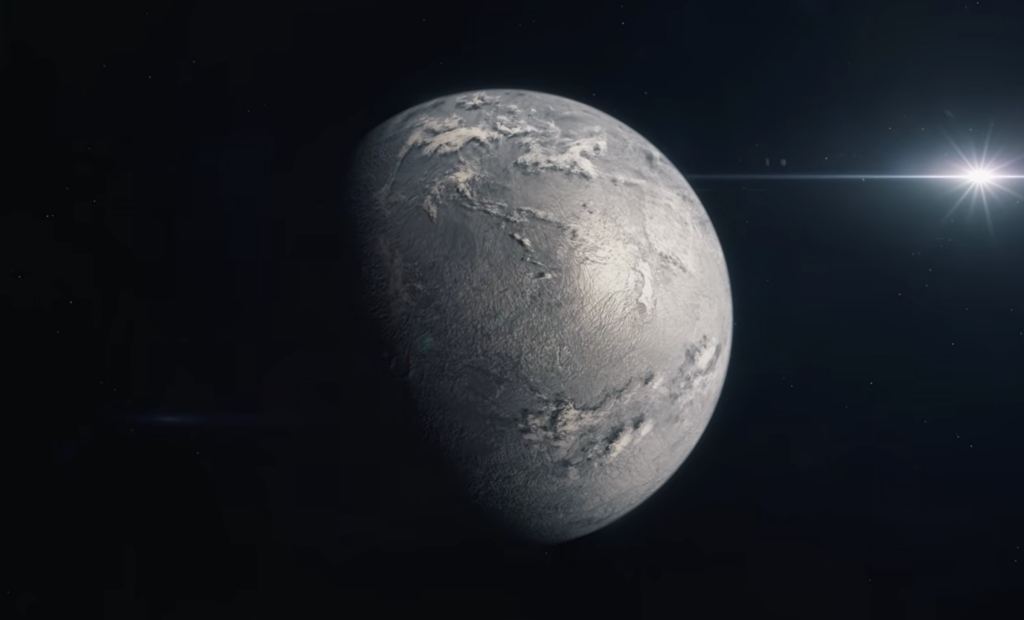
Placing TRAPPIST-1 e in the asteroid belt would flip the problem in the opposite direction. There, it would receive only a fraction of Earth’s sunlight and freeze into a global ice world. Over millions of years, its gravity could destabilize the asteroid belt and subtly alter the orbits of Mars and Earth. So while the planet might survive the move, our Solar System would slowly become a far more dangerous place.
Kepler-442 b
Kepler-442 b is a classic “super-Earth,” about 1.3 times wider and more than twice as massive as our planet. Around its cooler orange dwarf star, it sits in the habitable zone and could potentially host life. But if we dropped it into our Solar System closer to the Sun, the extra heat would trigger a runaway greenhouse effect. Oceans would evaporate, thickening the atmosphere and turning the planet into a super-charged version of Venus.
Its strong gravity would allow it to hold onto that dense atmosphere, making the surface unimaginably hostile. Over thousands to millions of years, its gravitational pull could shift the orbits of the inner planets, including Earth. While any catastrophic collisions would take far longer than human timescales, the long-term stability of our planetary system would be at risk.
OGLE-2005-BLG-390Lb
OGLE-2005-BLG-390Lb is an extremely cold and distant world discovered through gravitational microlensing. It likely has a mass more than five times that of Earth and surface temperatures near −223 °C, making it one of the coldest known planets. Moving it into our asteroid belt would warm it slightly, but it would still remain a frozen, inhospitable landscape. Over time, some surface ice might sublimate to form a thin atmosphere, but it would remain far from habitable.
Because of its large mass, OGLE would dramatically disturb the asteroid belt within a few million years. Asteroids could be flung inward toward Mars and Earth, dramatically increasing the risk of impacts. Eventually, the gravitational ripple effects might even destabilize planetary orbits, making the inner Solar System far more chaotic than it is today.
J1407b
J1407b is often called a “super-Saturn,” but that barely captures how extreme it is. The planet is about 20 times more massive than Saturn and surrounded by a colossal ring system hundreds of times larger than Saturn’s. If placed between Saturn and Uranus, its rings would dominate the outer Solar System and could even be glimpsed from Earth with a telescope.
However, its enormous gravity would slowly tug on nearby planets, destabilizing moons and reshaping ring systems over millions of years. Debris from the outer Solar System could be scattered inward, increasing the number of comets and asteroid impacts on Earth. Even a small disturbance to Jupiter’s orbit,the gravitational anchor of the Solar System, could cascade into long-term orbital chaos for the inner planets.