Would you go to space if you had the chance? What if you could make the journey aboard a giant hydrogen balloon instead of a rocket? It might sound unusual, but this kind of space tourism is already being developed.
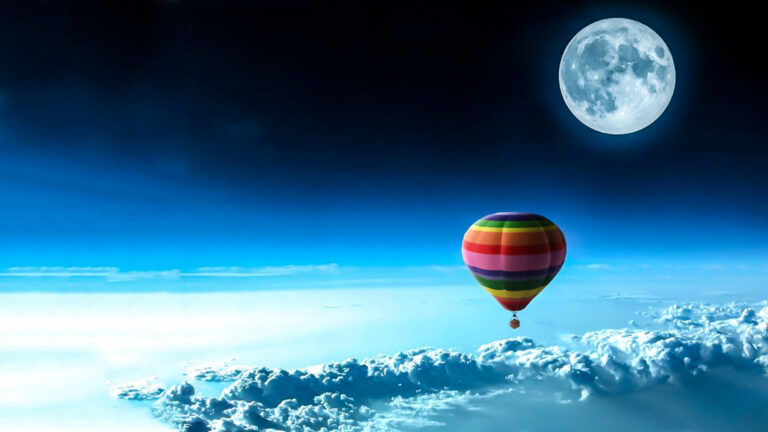
The idea is to use a massive balloon, roughly the size of a football stadium, to carry a pressurized passenger capsule high above Earth. Instead of blasting off at incredible speeds, you’d gently float toward the edge of the atmosphere.
The company behind this concept is Space Perspective, which is developing a spacecraft called Spaceship Neptune. Its founder and co-CEO, Taber MacCallum, says balloon flights have been carrying people into the atmosphere since the 1950s and 1960s. Now, the idea is making a comeback.
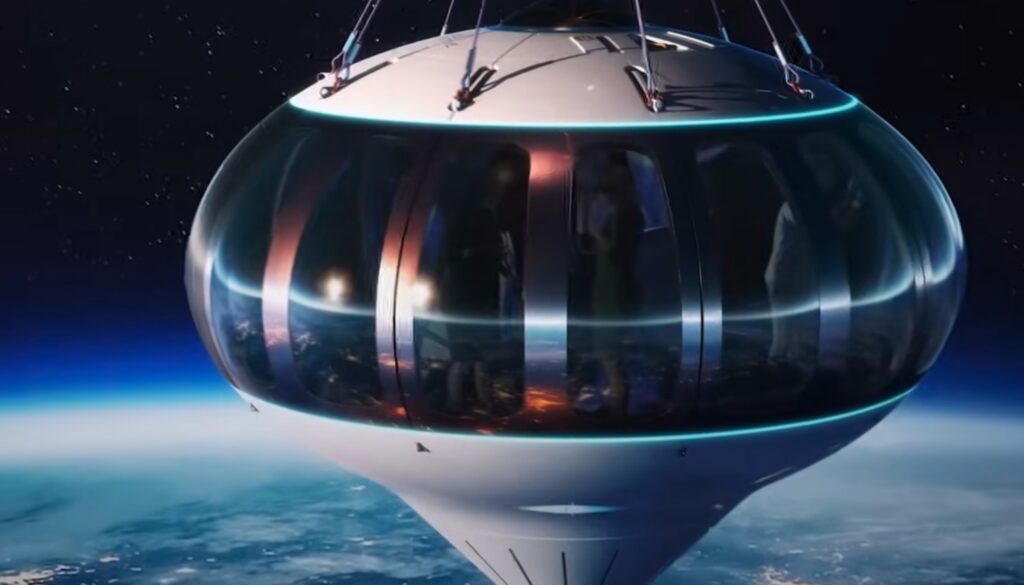
Three hours before liftoff, you’d arrive at the launch site for a training session with your instructor. Fortunately, you wouldn’t need months of physical preparation. According to MacCallum, the physical requirements are minimal. If you can fly on a commercial airplane, you should be able to handle the experience.
While you prepare, the launch team would unfold the enormous balloon and begin filling it with hydrogen. This process would require approximately one ton of gas and take some time to complete.
Finally, you’d step inside the pressurized cabin, and your journey would begin.
The balloon would slowly lift the capsule into the sky, carrying you and seven other passengers alongside a pilot. Unlike a traditional rocket, which accelerates rapidly and follows a steep trajectory, Spaceship Neptune would climb gradually. The entire ascent would take around two hours, traveling at approximately 19 km/h (12 mph).
And the cabin wouldn’t exactly be uncomfortable. It would feature enormous windows, comfortable seats, a bathroom, and even a bar. You could relax, enjoy a drink, and watch the planet become smaller beneath you.
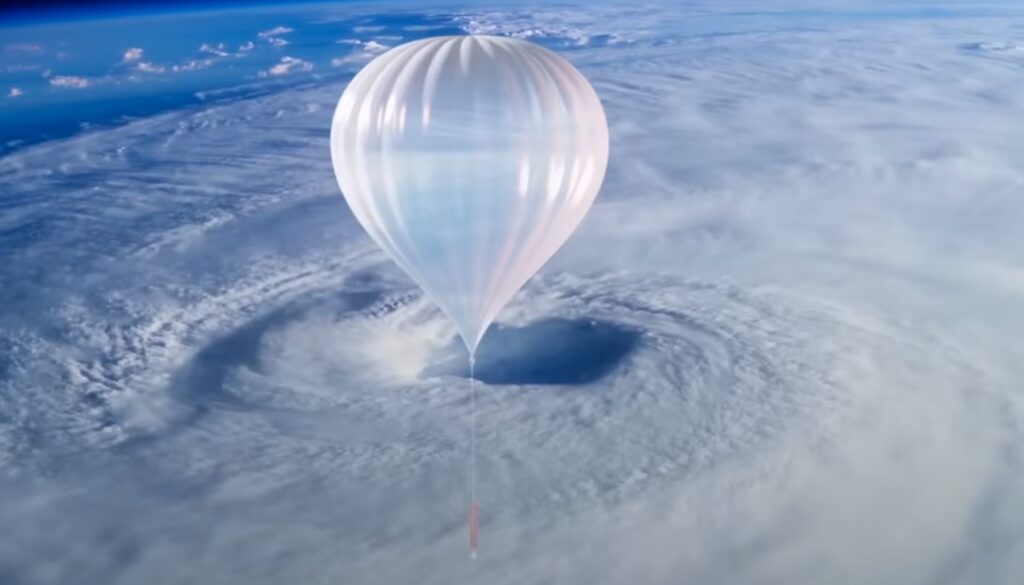
Two hours after liftoff, you’d reach an altitude of approximately 30 km (19 mi) above Earth’s surface. From there, you’d spend another couple of hours enjoying the view from the stratosphere.
But here’s the catch. You wouldn’t actually reach outer space.
Stratospheric balloons can climb to altitudes of around 50 km (31 mi), which is still only halfway to the commonly recognized boundary of space, known as the Kármán line, approximately 100 km (62 mi) above Earth.
The reason comes down to buoyancy. A balloon rises because the surrounding air pressure creates an upward force. As you climb higher, the atmosphere becomes thinner and the balloon eventually loses its ability to rise further. At that point, it cannot carry you any higher.
Still, at 30 km above the surface, you’d have an incredible view. You could see the curvature of Earth, the darkness of the upper atmosphere, and the thin layer separating our planet from space.
After approximately four hours of enjoying the scenery, it would be time to return. The pilot would begin the descent, and the crew would eventually deploy a parachute. The capsule would gently splash down in the ocean, where a recovery ship would pick you up.
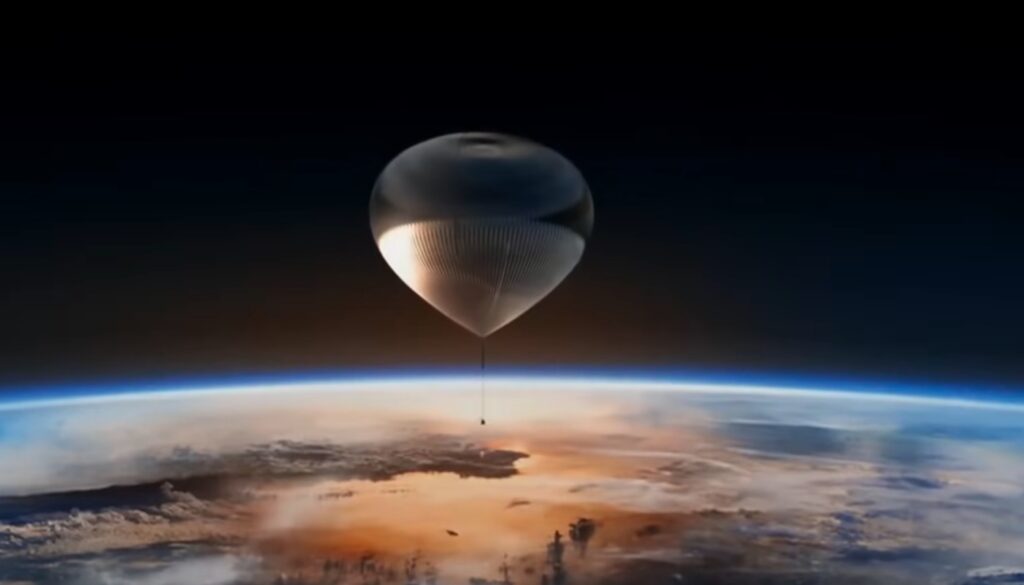
The entire adventure would cost approximately $125,000, although the company has discussed ways to bring the price down.
But what if you really wanted to reach space using a balloon? One theoretical possibility would be a vacuum balloon, filled with nothing instead of hydrogen. However, building one would be extremely difficult because its structure would need to withstand the enormous pressure of the surrounding atmosphere.
You could also imagine attaching rockets to a balloon and launching from the stratosphere. But escaping Earth’s gravity would still require enormous amounts of energy.
So, while a balloon might not take you all the way into space, it could offer something almost as extraordinary: a slow, peaceful journey high above Earth, without the violent acceleration of a rocket.