The pace of modern life feels overwhelming. With artificial intelligence advancing by the day and environmental shifts altering our landscapes, we often wonder what life will look like just a few decades down the road. But what if we cast our eyes much further down the timeline of human history? What if, instead of fifty years, we fast-forwarded a staggering five centuries?
Traveling 500 years into the future takes us completely out of the realm of predictable tech upgrades and drops us into a world that would look like absolute magic or mythology to a person living today. If humanity manages to survive its current growing pains, the year 2526 will redefine what it even means to be human, reshaping our planet, our biology, and our place in the cosmos.
The Dawn of Post-Biological Humanity
Looking at our current smartphones, it is easy to see how quickly we have become tethered to our technology. Over the next few decades, screens will likely merge with our vision via contact lenses or neural implants. But by the 26th century, the very boundary between human biology and digital technology will have completely dissolved.

Five hundred years from now, hand-held devices will be ancient history, viewed the same way we look at stone tools today. Humanity will have entered a post-biological era. Genetic engineering, nanorobotics, and synthetic biology will allow people to completely redesign their physical forms. Concepts like aging, biological illness, and natural death will have been virtually engineered out of existence. Instead of worrying about a slight increase in average life expectancy, future humans might possess indefinite lifespans, with their minds seamlessly integrated into a global planetary network.
The Collapse and Rebirth of Global Society
When tracking population dynamics over long periods, the structural shifts are dramatic. The traditional population pyramid that defined the 20th century will long ago have shattered. In a world where aging is cured and artificial reproduction is the norm, the concept of generations, retirement ages, and traditional family trees will be entirely obsolete.
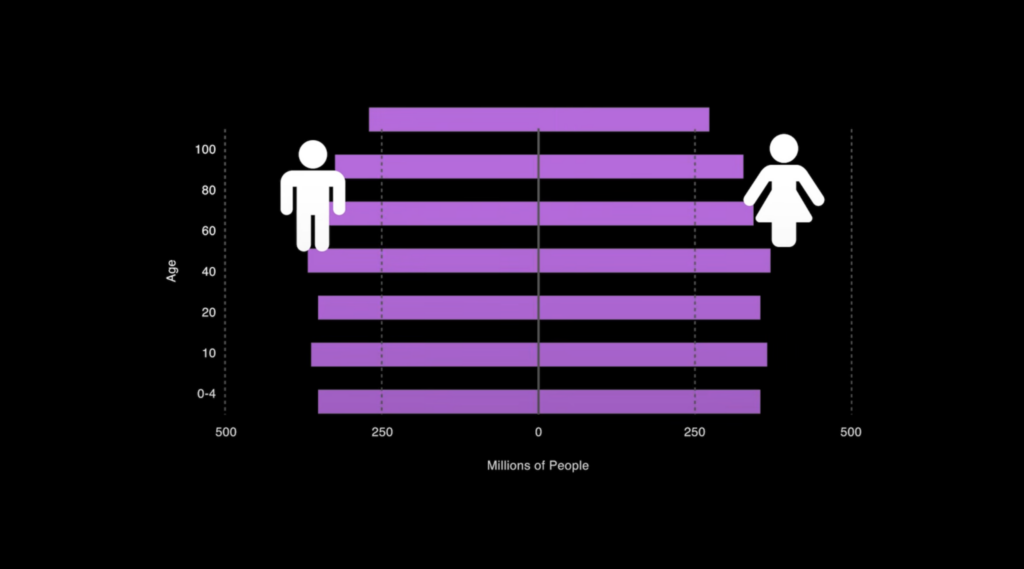
This demographic transformation will completely rewrite the global economy. Automated labor, driven by hyper-intelligent systems that surpassed human capability centuries ago, will mean that “jobs” as we understand them no longer exist. The economic struggles of the 21st century, like youth unemployment or crowded senior homes, will be artifacts of a distant past. Humanity will have transitioned into a post-scarcity society, where planetary resources are managed by super-intelligent networks, allowing sentient beings to pursue creative, philosophical, or exploratory endeavors rather than working for survival.
A Completely Engineered Biosphere
The environmental crises of our present era will reach their critical tipping points long before the 26th century. The natural biomes we know today, such as the Amazon rainforest or the polar ice caps, will have gone through profound destabilization, forcing the humans of the future to become active managers of the global climate system.

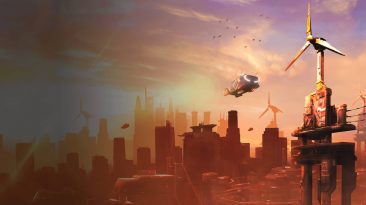
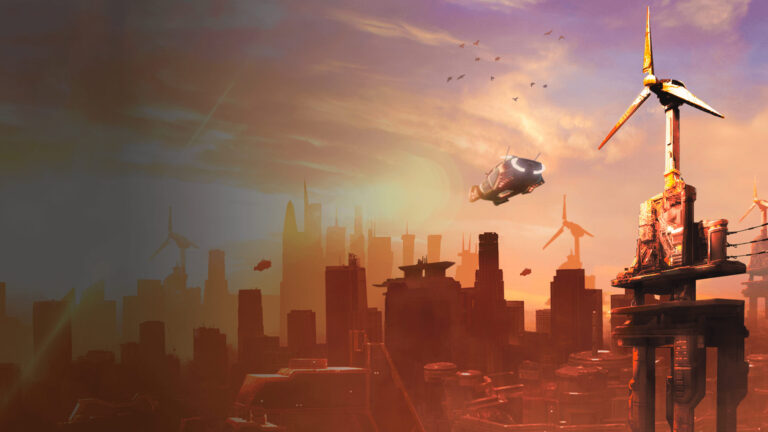
By the year 2526, Earth will no longer feature purely “wild” weather or unmanaged ecosystems. The planet will effectively function as a mega-engineered spaceship. Massive geoengineering projects, such as orbital sunshades, atmospheric carbon-capture networks, and synthetic coral reefs, will have stabilized the climate into a perfectly modulated state. Ancient coastal cities abandoned to rising sea levels in the 21st and 22nd centuries will either exist as protected underwater archaeological preserves or will have been rebuilt as floating, self-sustaining modular metropolises that move with the ocean currents.
The Multi-Planetary Human Diaspora
While Earth will remain the cradle of civilization, it will no longer be humanity’s only home. The early, fragile steps of Martian colonization taken in our near future will have blossomed over 500 years into a sprawling, independent interplanetary civilization.
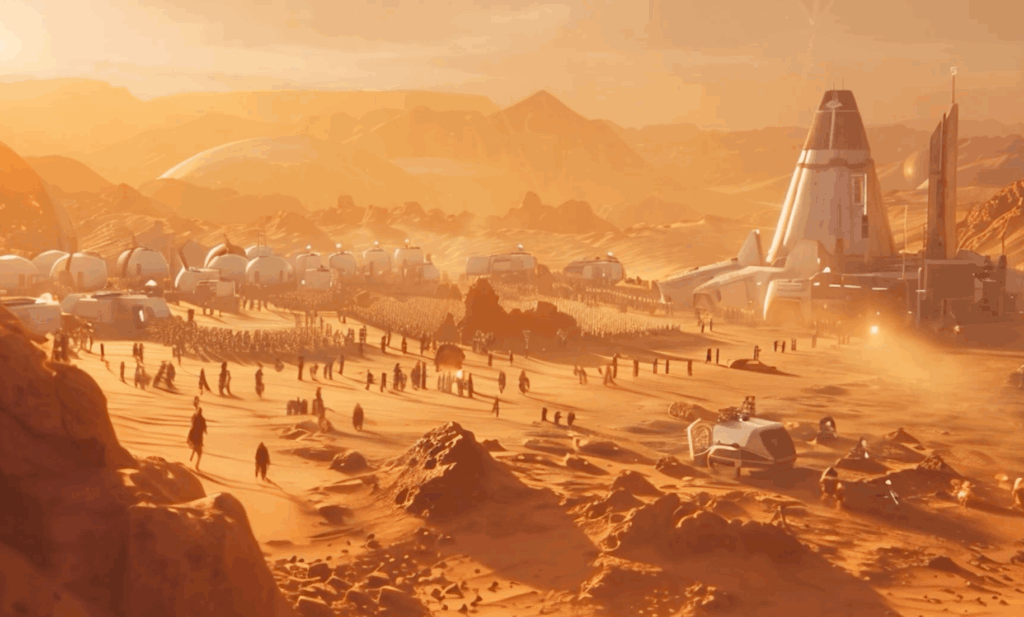
Mars will be well on its way through a multi-century terraforming process, sporting a thickening atmosphere and engineered lakes. Beyond the red planet, human habitats will span the cloud tops of Venus, the icy moons of Jupiter and Saturn, and thousands of artificial space habitats hollowed out from asteroids. Furthermore, the dream of interstellar travel will have been realized. Using advanced propulsion systems like antimatter engines or massive laser-driven sail fleets, automated probes and generational sleeper ships will have reached Alpha Centauri and other nearby star systems, establishing the very first outer-system colonies.
The Era of Divine Technology
In our time, we marvel at artificial intelligence that can mimic human writing or art. But 500 years of exponential technological growth will create an intelligence landscape that is entirely godlike by modern standards.

The technological singularity, the point where AI surpasses human intelligence and begins improving itself at an uncomputable rate, will be a historic event buried deep in the past. In 2526, these super-intelligences will not be competing with humans for jobs; they will be the architects of reality itself, manipulating matter at the molecular and atomic levels. Describing the future from our current perspective is like a caveman trying to comprehend a quantum computer. The choices we make today regarding sustainability, ethics, and technology are the foundational stones for this unbelievable future. We are the ancestors of a sci-fi epic that is just beginning to unfold.