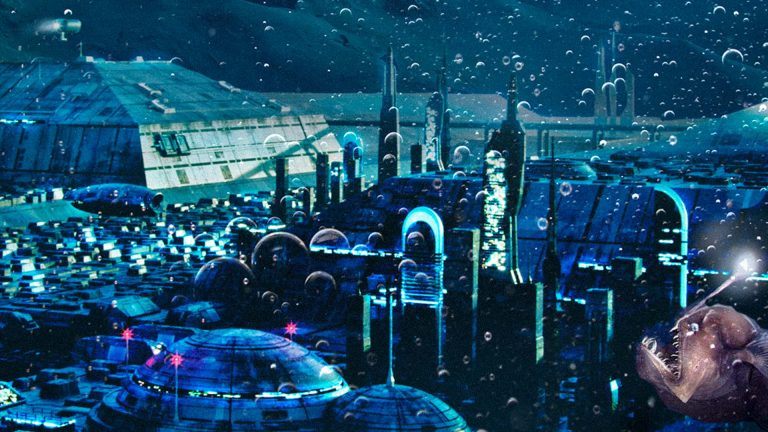
There’s a reason why the idea of aliens living at the bottom of the sea keeps popping up in popular culture. Many of us are far more afraid of what lies down there than whatever is looking at us from up in space.
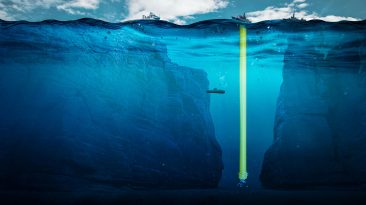
The most mysterious part of our oceans is the Mariana Trench. Its deepest point, the Challenger Deep, stretches 11 km (7 mi) down. The Mariana Trench is anything but a great vacation spot. No light is able to reach its bottom, and temperatures are just a few degrees above freezing. Not to mention its crushingly high water pressure.
The water pressure at the bottom of the Mariana Trench is over 1,000 times the atmospheric pressure that you’re used to at sea level. This kind of pressure would crush anything, even the toughest deep-sea robots we’ve ever built.
But some living things managed to adapt and thrive under such pressing conditions. Like translucent snailfish and sea cucumbers.
The hadal snailfish, known as the deepest living fish, flourishes at depths of over 8 km (5 mi).
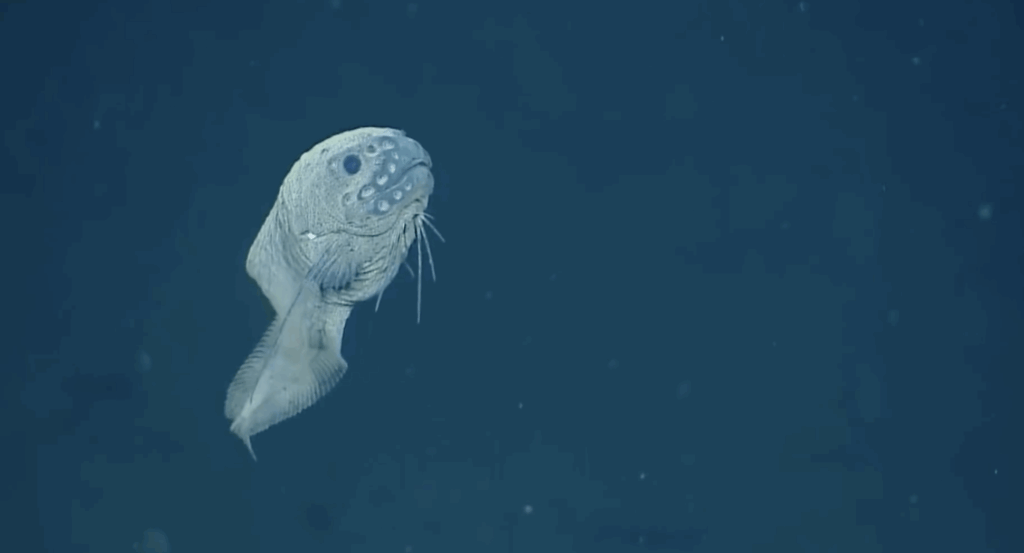
Unlike you, deep-sea fish don’t have pockets to store air in their bodies. That oxygen inside your lungs is what gives you the feeling of pressure whenever you take a dive. No air means this fish has a higher tolerance to the weight of all that water above it.
Whatever aliens were lurking down below would also share the same characteristic. Storing air just wouldn’t be their thing. Any extraterrestrial life down at the pit of the trench would probably eat similar food.
They would burrow into the biggest carcasses they could find and consume what’s left from the inside out, like a giant hagfish does. Or, they might possess enormous mouths and expandable stomachs, allowing them to catch and digest large quantities of food as they move. And those big mouths of theirs would also be filled with long fangs pointed inward. This would enable them to catch and hold on to other deep-sea creatures or, you know, any prey that just so happens to dive a little too far from the surface.
Like fireflies, deep-sea creatures are able to produce and emit their own light thanks to a process called bioluminescence. With it, aliens would be able to connect with each other through specific lighting patterns.
For long-distance communication, they could send out sound waves across enormous distances in the water. Like the humpback whale, who’s able to sing in the Caribbean and be heard off the west coast of Ireland 6,400 km (4,000 mi) away.
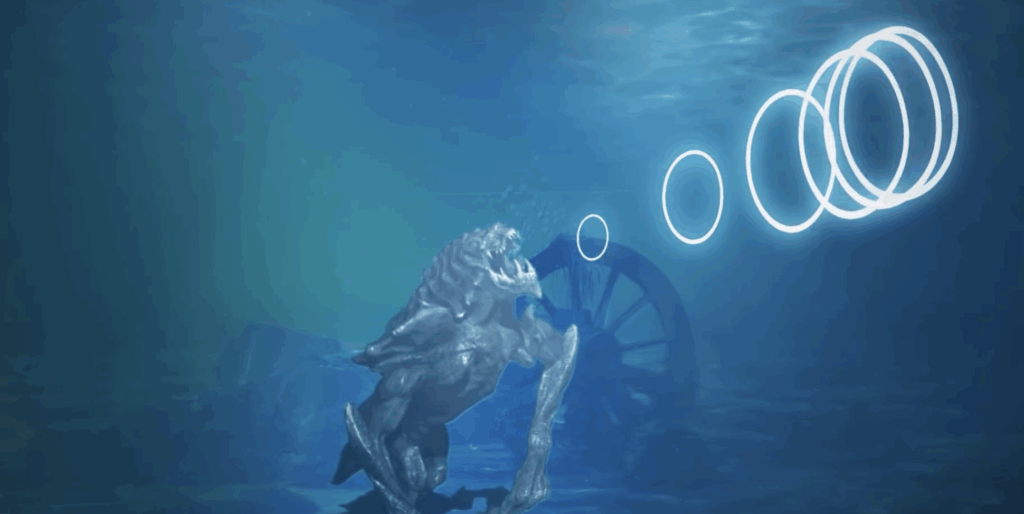
Now, what would first contact with this underwater species look like for us?
Well, we’d have to get there first.
We would need a vessel strong enough to withstand the constantly intensifying pressure. The tiniest of cracks would squash you and your submarine faster than you can say “human jam”.
Once there, we’d have to take into account that living at the bottom of the sea would be like living on another planet. If aliens existed in the other-worldly depths of the Mariana Trench this entire time, they might not want to be friendly neighbors.
Before approaching these extraterrestrials, we’d have to assess their communication style first, slowly and patiently. We’d need to understand how they interact with their environment too.
That is assuming they don’t feel threatened by our presence and decide to do something about it. Trust goes both ways when you’re trying not to be crushed or eaten in the name of science.