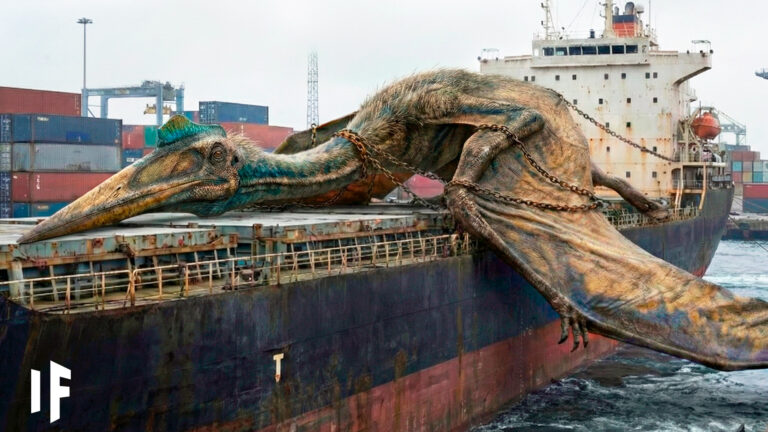
Quetzalcoatlus lived around 72 to 66 million years ago during the Late Cretaceous period, when it blocked out the sun with its 12 m (40 ft) wingspan.
When it landed on the ground, it stood at a towering 5 m (16 ft), with its enormous neck taking up most of that height.
Quetzalcoatlus had a long, pointed beak between 2 and 2.5 m (6 ft) in length. Basically… this thing was as big as a giraffe, with a giant spear sticking out of its head.
A nightmare that ruled the skies of the Late Cretaceous, a warm, temperate period with shallow seas, rainforests, hardly any snow. It was a pretty sweet time period, temperature-wise, lots of oxygen in the atmosphere. And plenty to eat.
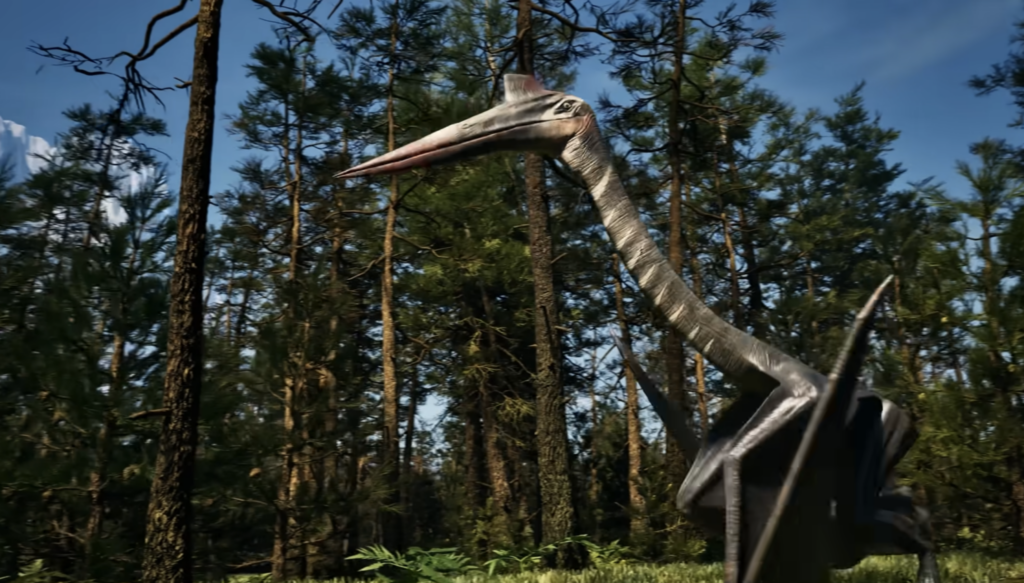
Scientists have debated Quetzalcoatlus’ exact habitat and diet since it was first discovered. The working theory today is that Quetzalcoatlus was a ‘terrestrial stalker’. Which means that even though it was a flying creature, it hunted on the ground or in shallow waters.
Suddenly, Quetzalcoatlus espace their captivity and their core population expands throughout South America, then quickly spreads North through Mexico, Cuba, all the way to California.
Further north than you think. Quetzalcoatlus are warm-blooded, and insulated with hair-like fibers, so they can regulate their body temperature even in today’s colder climates.
So what happens when Quetzalcoatlus and humans collide? Well… murder hornets, Burmese pythons and feral boars got nothing on these things. It turns into absolute MAYHEM.
It starts, as it often does with dangerous wild animals whose habitat runs adjacent to humans. With conflict on farms and ranches.
Local farmers in South America leave their flocks of lambs or goats untended for a few minutes… followed by a hellacious screaming. And then… silence. And return to find their flocks decimated, most of the youngsters gone, the adult sheep and goats terrified, the sheepdog missing… and a silhouette of the biggest heron they’ve ever seen, soaring across the farm.
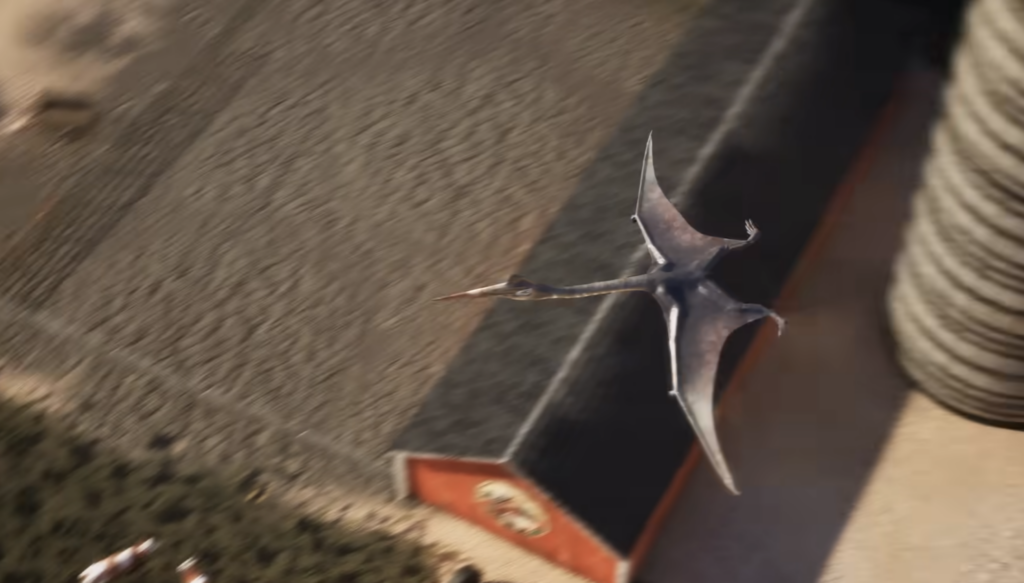
After millions of years surviving on crabs and fish… penned up farm animals present the easiest buffet a skybound super-predator could ever imagine. The giant reptiles devour entire herds.
Quetzalcoatlus eat whatever wild animal of a certain size they encounter. Animals in the neighbouring forests suffer the most, like young deer, capybara, crocs. Basically anything big enough to attract the giant reptile’s attention and light enough to get snapped up into their gullets.
How do you fight a flying, predatory giraffe?
We quickly realize we may have to rethink almost every aspect of open gathering areas without a roof, like parks and farms. But let’s face it, we’re not great at changing our infrastructure in a hurry.
A lot of pesty urban wildlife would quickly… disappear. Raccoons, or stray cats and dogs, or iguanas or rats. Yum.|
And in their place… there’s a mess. Uh, if you’ve ever been, how do I put this delicately… defecated on… by a pigeon, you know it’ll ruin your day. Wait til a Quetzalcoatlus drops a load while flying overhead.
Any human trying to shield their pet from being a prehistoric snack without weilding a flame thrower would likely get stomped on.
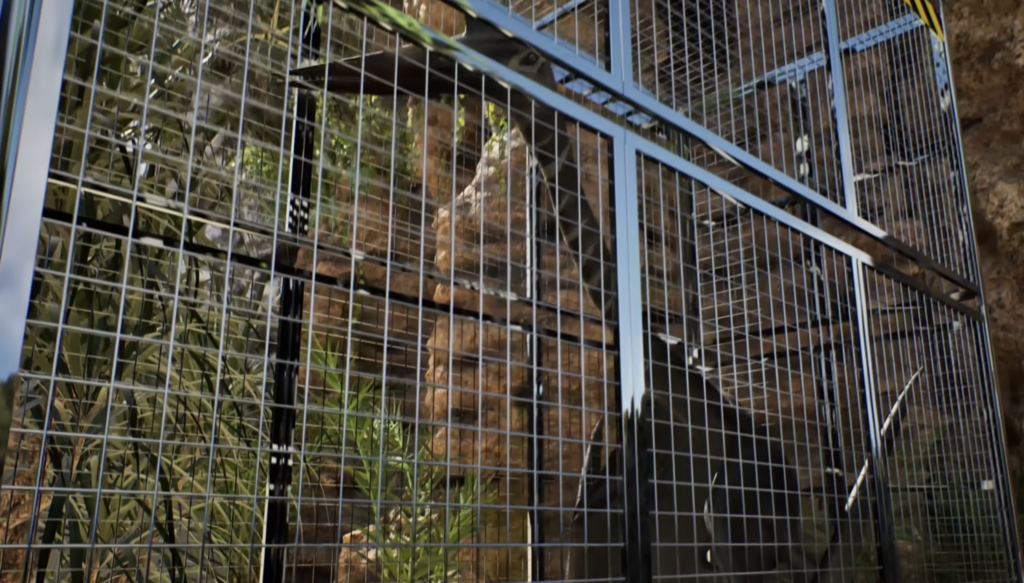
One day… Quetzalcoatlus goes too far.
Humans band together for the first time in history to drive the reptile threat from the skies. Hunting them down relentlessly, until every playground, farm and school is safe. Until the giants survive only on their home territory of Christmas Island… closely surveilled, hunting crabs in the Indian Ocean.
That would leave the Quetzalcoatlus exactly where they started, 66 million years ago. Surviving and thriving in an odd window back to a time of the dinosaurs… and giant flying reptiles.