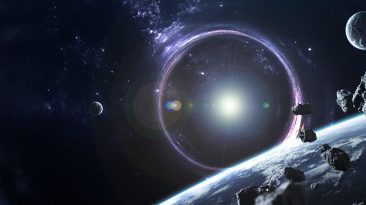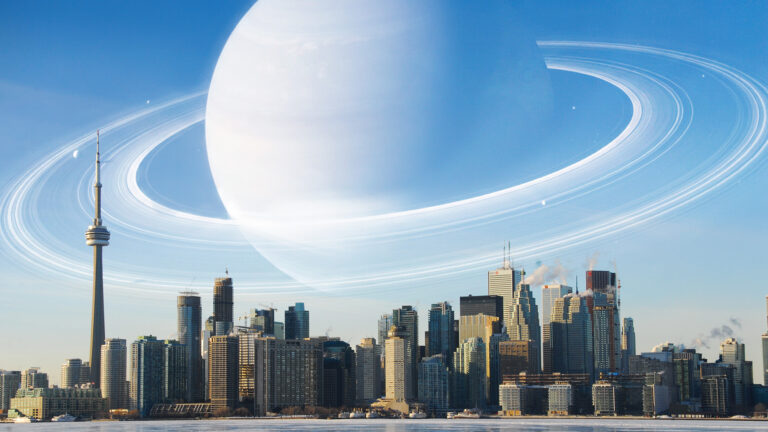
A huge gas giant suddenly appears in the sky. You look up in wonder. It’s beautiful.
The second Saturn replaces our Moon in its orbit, Earth would just as suddenly stop being a planet. We would become a moon.
This gas giant is about 95 times more massive than Earth, and remember, Earth is 81 times more massive than the Moon. And, according to my calculations, this would make Saturn 7,700 times more massive than the Moon.
And, of course, you know what massive objects have, don’t you? Enormous gravitational pull. Yeah, the moment Saturn appeared in the sky, it would start pulling our planet toward itself.
1 HOUR LATER
Just like the Moon pulls at the Earth’s oceans and causes tides, so would Saturn. But on a scale that would be hard to imagine. The gravitational pull would be thousands of times that of what we’re used to.
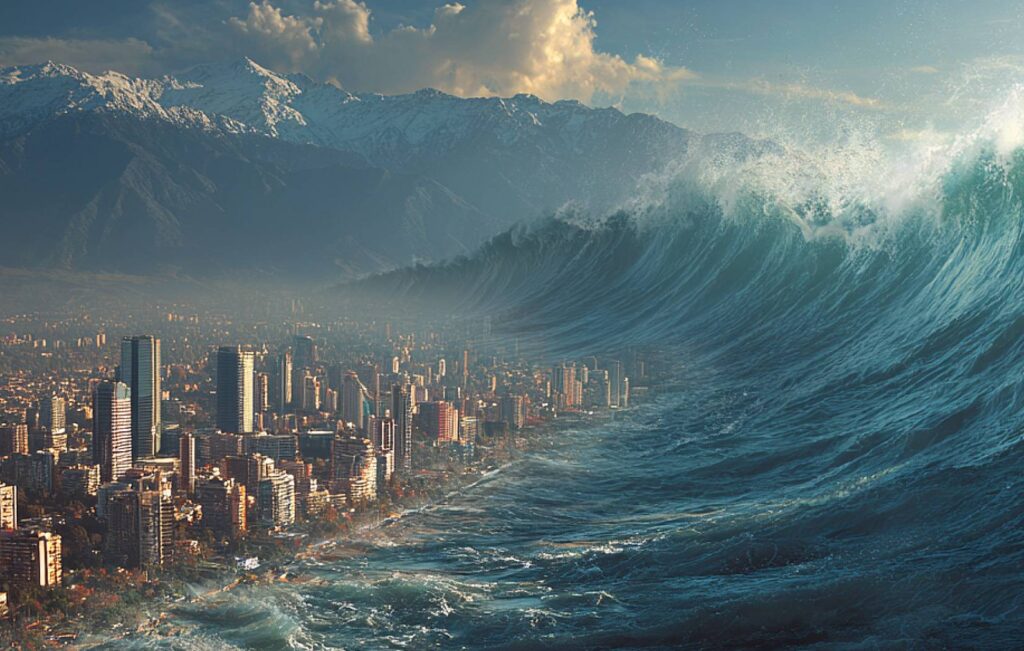
These extreme tidal forces would create enormous bulges in the oceans and seas. Tides would run out to sea like raging rivers – and rush back as waves hundreds of meters high. Ships would be left stranded on the ocean floor, then smashed by the returning water. Cities by the sea would be drowned and decimated.
And those gravitational forces wouldn’t just be pulling on the Earth’s surface water. They’d be tugging at land, too. The Earth’s surface might seem sturdy to you, but it’s actually quite delicate when it comes to planetary forces. There would be mega-tsunamis and mega-quakes.
6 HOURS LATER
In the unlikely event that you were still alive, you’d witness Saturn getting bigger and bigger in the sky, blocking out everything else. Quite a sight. But just because we snuck by one moon doesn’t mean we’re out of immediate danger.
Saturn has 274 confirmed moons in its orbit, more than any other planet. Some, like Titan, are as big as planets themselves, but others are just 20 km (12.4 mi) across, like Pan.
A close flyby would cause whatever was left of our oceans to slosh around. Waves hundreds of meters high would smash ocean shores.
24 HOURS LATER
At 180,000 km (110,000 mi) away, we would be getting close to another moon of Saturn, Mimas. A small moon, a mere 392 km (244 mi) wide.
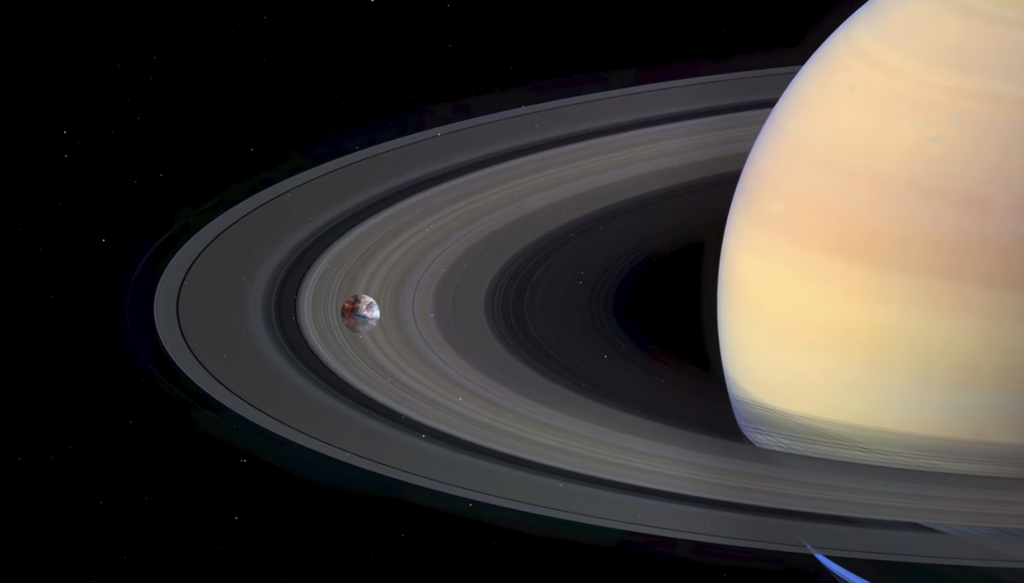
An impact or scrape with Mimas would further agitate our atmosphere and stress the surface. It might even tear a strip off the atmosphere as it glided by.
48 HOURS LATER
Imagine peering out the window of your space station and watching as Saturn’s rings got closer and closer – and suddenly you’re in them!
By this point, even a surviving space station would be pulverized, being hit by thousands of ice chunks as it passed through the rings. Nothing humans have built for space exploration could survive that.
As Earth gets in to the 120,000 km (74,565 mi) range, well, then its trajectory would start to resemble a true orbit. As Saturn’s immense gravitational force continues to pull on Earth, it would swing around the massive gas ball. And, as it did, it would sink into darkness for hours at a time – thanks to Saturn’s enormous shadow. But this cozy orbit wouldn’t last very long.
72 HOURS LATER
About three days into this nightmare, Earth would be at a distance of 71,000 km (44,000 mi) from Saturn. In this case, Saturn’s gravity VS Earth’s will hardly be a fair fight. Saturn is just so much more massive than Earth. Like we said at the beginning – 95 times more massive.
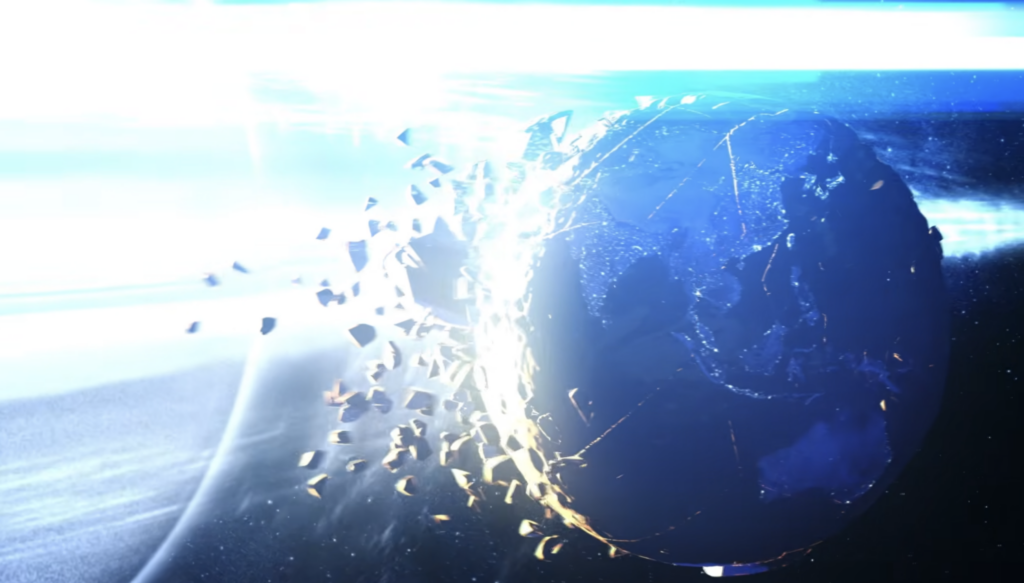
And it would be approaching a force even greater than crashing through Saturn’s rings or colliding with one of its moons.
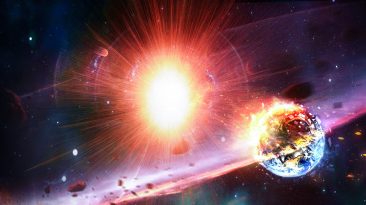
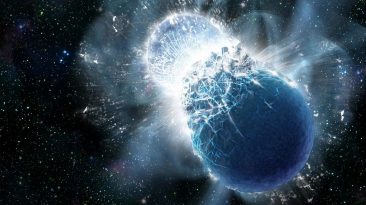
The gravitational forces holding the Earth together in its spherical shape won’t be able to resist the force of Saturn’s gravity pulling on the side of the Earth that’s facing Saturn. At this point, so close to Saturn, the Earth would literally be pulled apart.