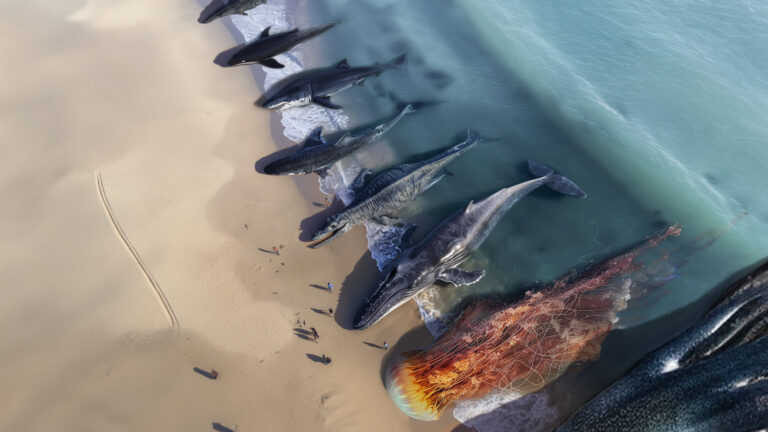
The ocean is home to some of the most extraordinary creatures on the planet. From tiny deep sea hunters to massive gentle giants, its waters hide animals that are both fascinating and terrifying. In this article we explore some of the most impressive sea creatures, how they live, and how they compare in size and behavior.
Some are harmless to humans while others demand serious respect in the wild.
The Deep Sea – Nightmare Anglerfish
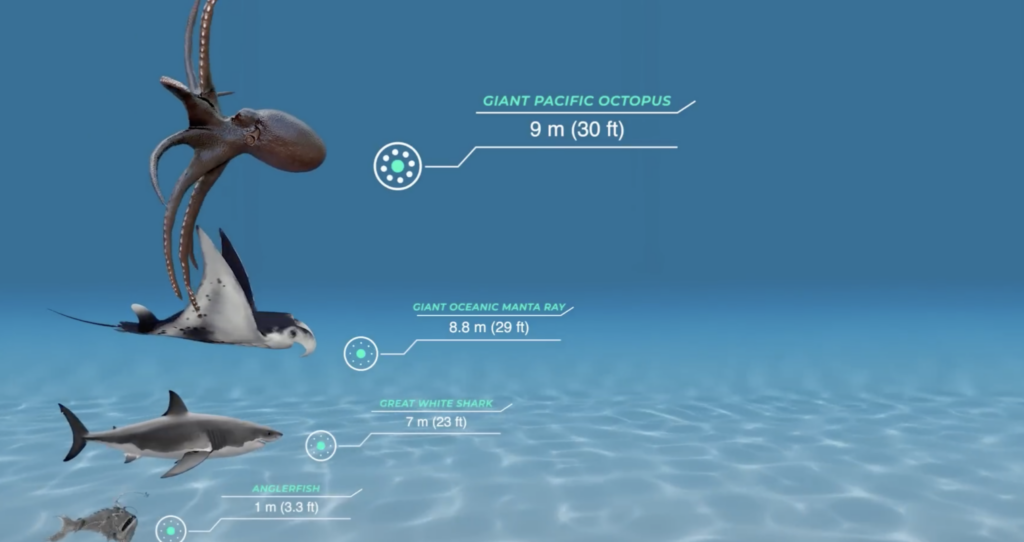
Lurking in the darkest depths of the ocean is one of the most unusual looking creatures in the sea, the Anglerfish. Reaching lengths of around 1 meter (3.3 ft), it may be small compared to others on this list, but its appearance is unforgettable.
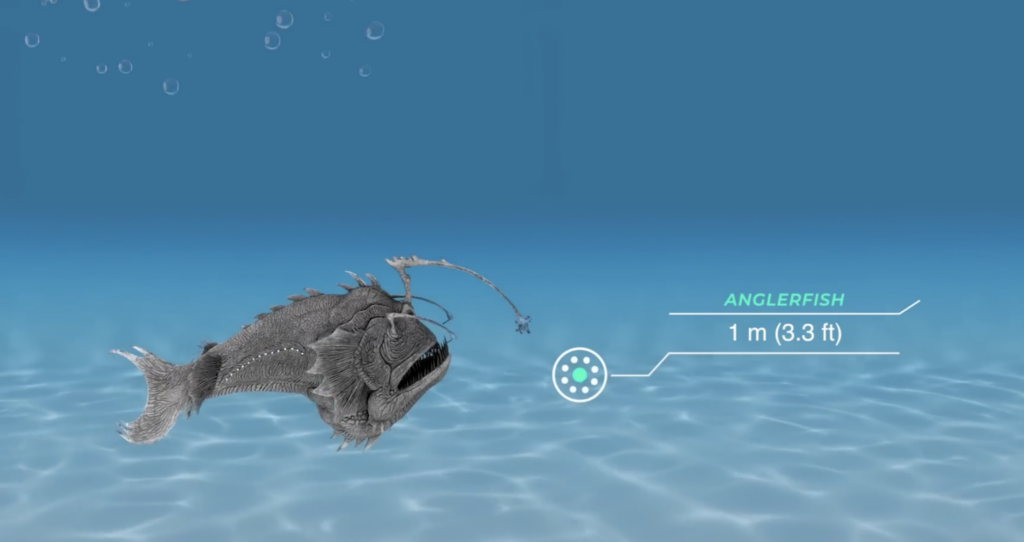
With razor sharp teeth, tiny eyes, and a glowing lure that dangles in front of its head, the anglerfish survives in complete darkness. It uses bioluminescence to attract prey in the deep sea, feeding on anything it can overpower, including small fish and crustaceans.
Despite its terrifying look, humans are not part of its diet. Still, it remains one of the ocean’s most iconic deep sea predators.
The Apex Predator – Great White Shark
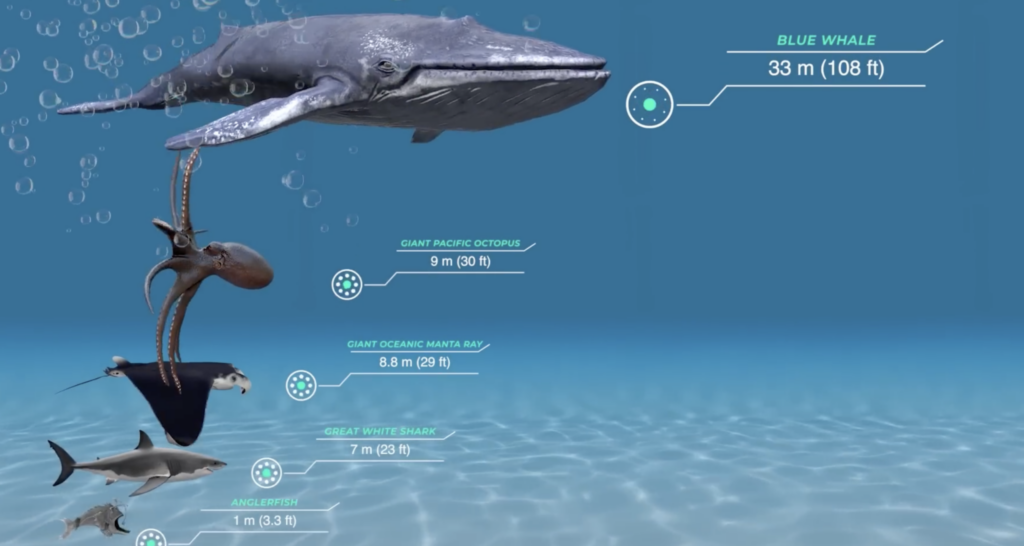
The Great White Shark, reaching up to 7 meters (23 ft), is one of the most well known ocean predators. Found in coastal waters around the world, it is built for speed, power, and precision hunting.
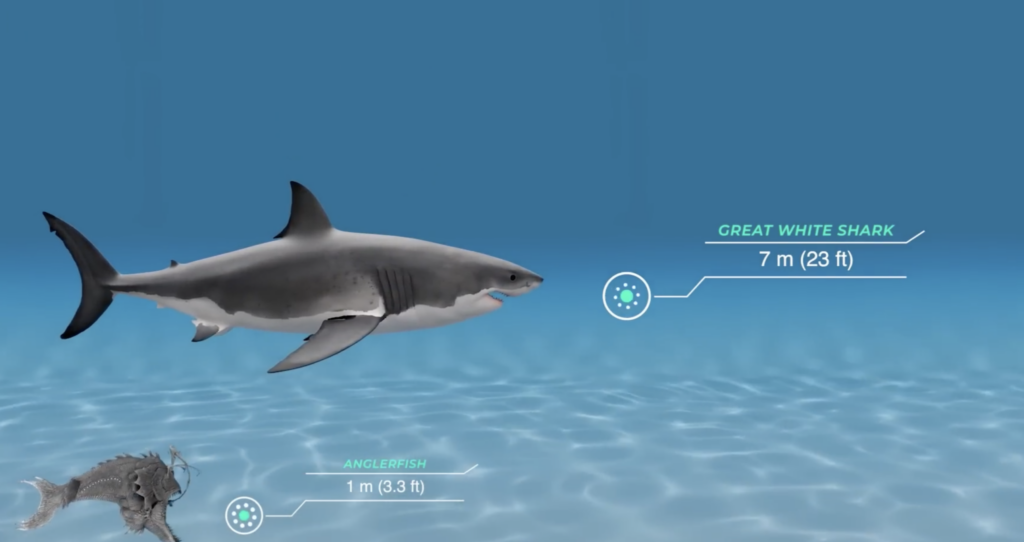
With rows of sharp teeth and incredible bite strength, the great white sits at the top of the marine food chain. While attacks on humans are rare, its size and strength make it one of the most feared ocean animals. Experts recommend staying in groups while swimming in known shark areas, avoiding seals or schools of fish, and remaining calm if a shark is spotted nearby. Sudden movements can attract attention, so slow, steady actions are advised.
The Gentle Giant – Giant Oceanic Manta Ray
Gliding gracefully through tropical waters, the Giant Oceanic Manta Ray can reach an impressive 8.8 meters (29 ft) in wingspan. Despite its enormous size, it is completely harmless to humans. Manta rays feed mainly on plankton, filtering it as they swim through the ocean. They are peaceful creatures that rarely interact with people.
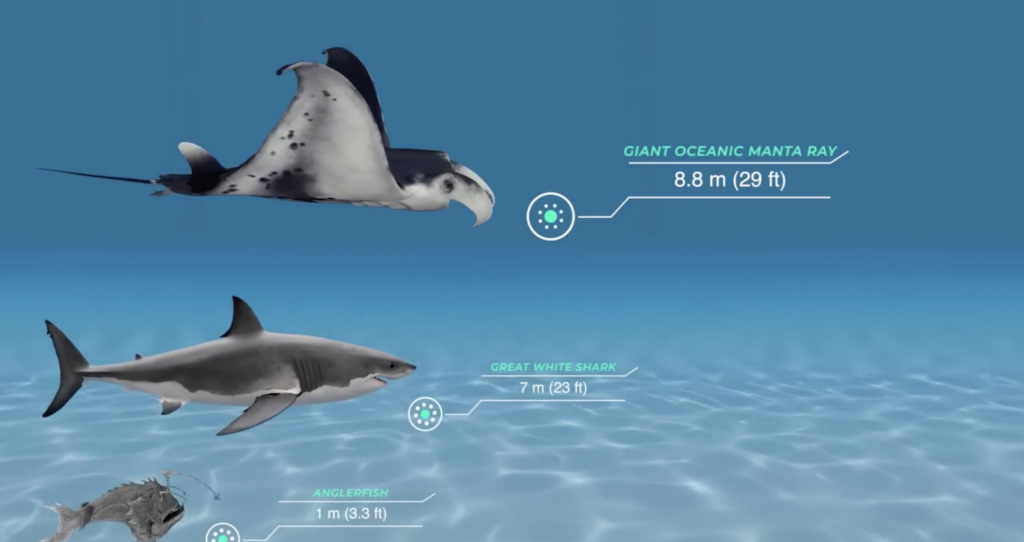
However, their smaller relatives stingrays can deliver painful stings if stepped on. This is why divers often use the stingray shuffle, sliding their feet along the seabed to avoid accidental contact.
The Intelligent Hunter – Giant Pacific Octopus
The Giant Pacific Octopus is one of the most intelligent invertebrates in the ocean, with an arm span reaching up to 9 meters (30 ft) and a weight of around 272 kg (600 lb). Found in the cold waters of the North Pacific, it is known for problem solving skills, camouflage abilities, and curiosity. These octopuses can open containers, escape enclosures, and blend perfectly into their surroundings.
Although generally shy, they can defend themselves if threatened. They may release ink or, in rare cases, bite. Still, they prefer to avoid human contact whenever possible.
The Largest Animal on Earth – Blue Whale
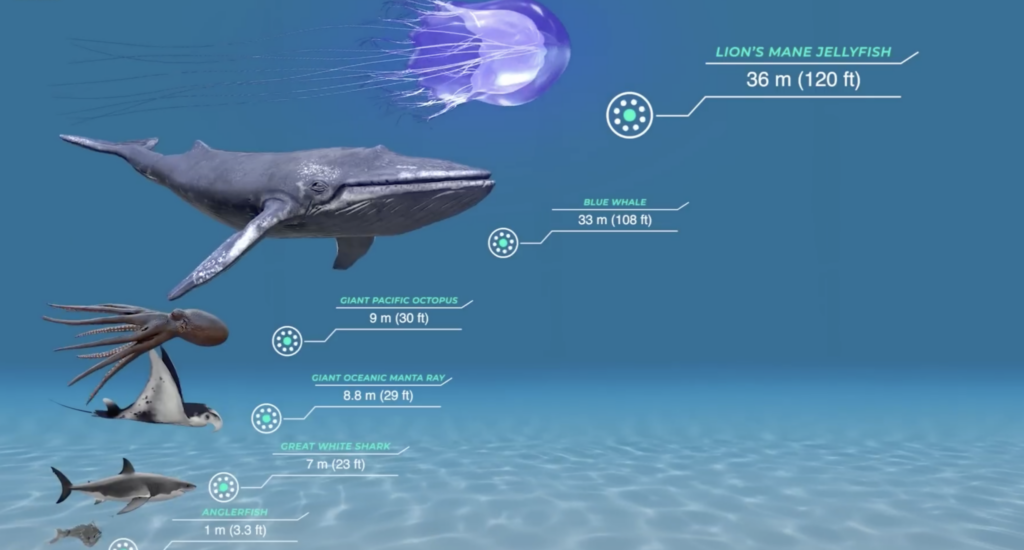
The Blue Whale is the largest animal ever known to exist, reaching lengths of up to 33 meters (108 ft) and weighing around 200 tons. Despite its massive size, the Blue Whale is a gentle filter feeder that survives on tiny krill. It has no interest in humans and lacks the ability to swallow large objects accidentally or otherwise.
Encounters with blue whales are extremely rare, and they are considered peaceful giants of the ocean, moving slowly through open waters.
The Ocean’s Longest Giant – Lion’s Mane Jellyfish
The Lion’s Mane Jellyfish is famous for its extraordinary size, with tentacles that can stretch up to 36 meters (120 ft), longer than a blue whale. Found in colder waters like the Arctic and North Atlantic, this jellyfish uses venomous stinging cells to capture prey. Its sting can cause pain, irritation, and muscle cramps in humans.
If stung, experts recommend rinsing the area with vinegar, carefully removing tentacles, and applying heat to reduce pain. Severe reactions require immediate medical attention.