What if humanity’s next giant leap isn’t just a dream, but a countdown already in motion?
Using current space agency plans, technological trends, and projected development timelines, this scenario explores a possible future where humans finally set foot on Mars. This is not a prophecy. It is a structured look at how our progress today could shape tomorrow’s biggest milestone.
Phase 1: The Return to Deep Space (2026 to 2030)
The journey to Mars does not begin with Mars itself. It begins with the Moon.
In this early phase, space agencies and private companies intensify lunar missions. The Moon becomes a testing ground for survival systems, long duration habitats, and resource extraction. Water ice in lunar craters is converted into oxygen and fuel, proving that humans can live off Earth.
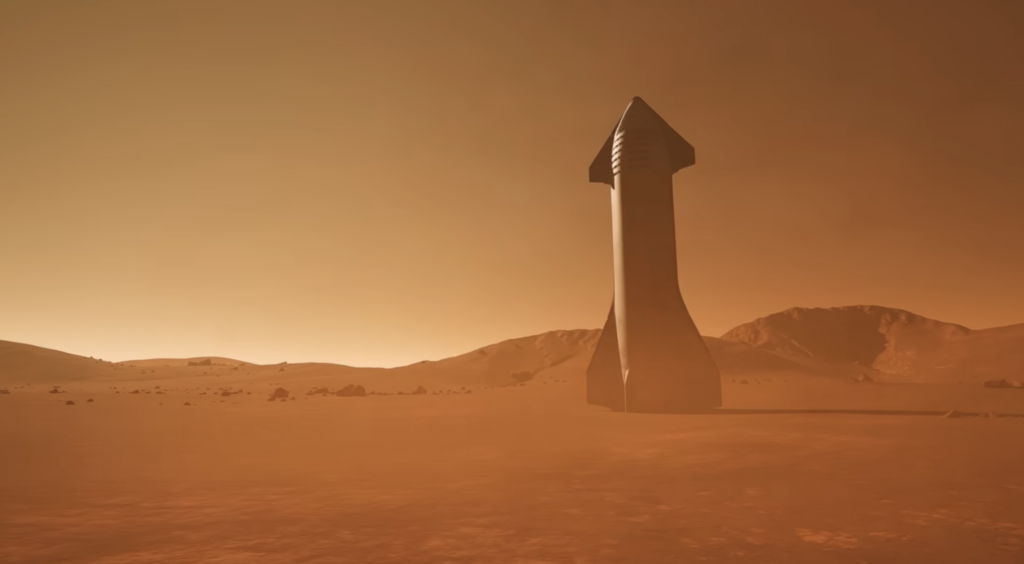
At the same time, spacecraft technology rapidly evolves. New heavy lift rockets, reusable boosters, and nuclear propulsion research push mission capabilities further than ever before. Mars is no longer a distant fantasy. It becomes a realistic engineering target.
Robotic missions also take center stage. Orbiters map landing zones. Rovers search for underground ice. Weather stations on Mars begin collecting high resolution climate data to prepare for human arrival.
By the end of this phase, the question is no longer “if,” but “how soon.”
Phase 2: The First Human Missions Prepare (2030 to 2033)
This is the decade where Mars transitions from theory to planning.
Space agencies finalize crewed mission architectures. Multiple spacecraft are assembled in orbit instead of launching as a single unit. This modular approach allows missions to be larger and safer.
Crew training becomes more extreme. Astronauts spend months in isolation habitats on Earth that simulate Mars conditions. Communication delays are introduced artificially to mimic the real time lag between planets, which can reach up to 22 minutes one way.
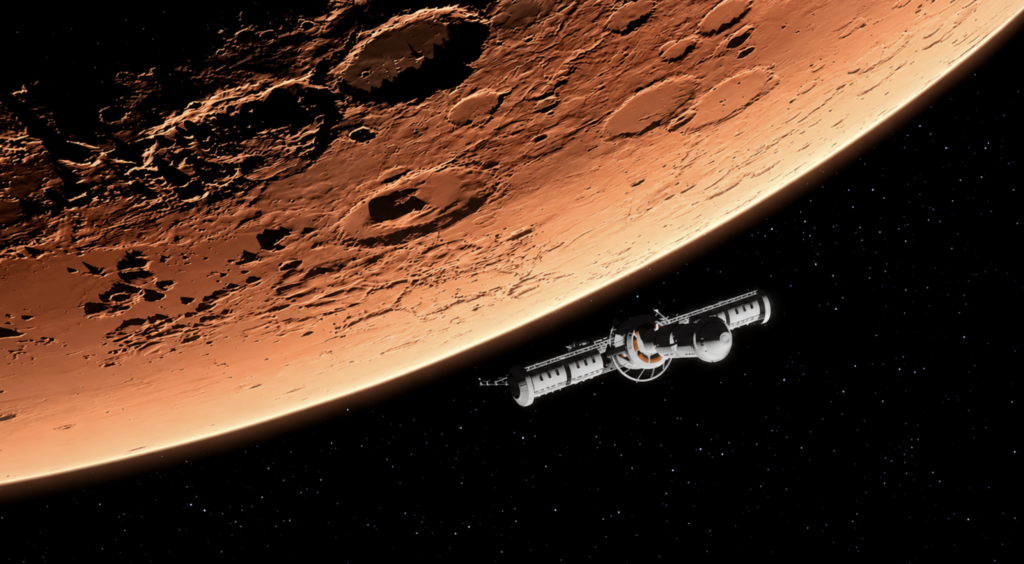
Private companies also join the effort, building cargo ships designed to deliver supplies ahead of human arrival. These automated missions land habitats, energy systems, and oxygen production units on the Martian surface before any humans depart Earth.
Meanwhile, propulsion technology improves. Nuclear thermal engines reduce travel time, making the journey to Mars potentially as short as 3 to 4 months instead of half a year.
Everything is now aligned for departure.
Phase 3: The First Launch Window (2033 to 2035)
Mars missions operate on a planetary schedule. Every 26 months, Earth and Mars align in a way that minimizes fuel use. One of these windows becomes historic.
The first crewed mission launches.
Multiple spacecraft depart Earth carrying astronauts, supplies, and landing modules. The journey is long, silent, and unlike anything humans have experienced before. For months, the crew lives inside a sealed environment, relying entirely on onboard systems for survival.
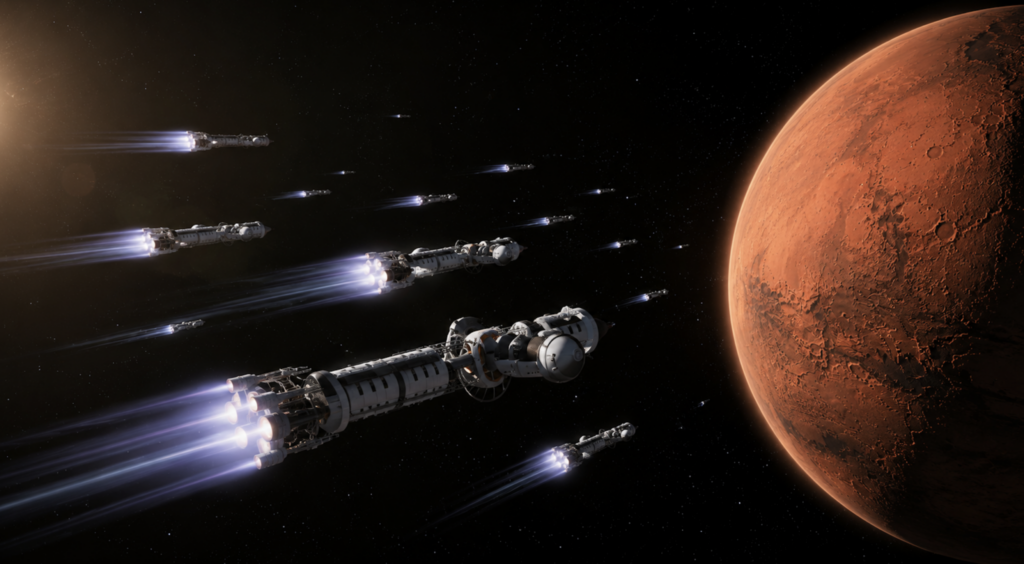
Communication with Earth becomes delayed and limited. Every message takes minutes to arrive. Real time conversation is impossible. Humanity is, for the first time, truly separated by interplanetary distance.
As Mars grows from a red dot into a visible world outside the window, anticipation reaches its peak.
Then comes descent.
Landing on Mars is one of the most dangerous parts of the mission. The thin atmosphere provides little braking assistance, meaning spacecraft must rely on precision engineering, heat shields, and retro rockets. Any error could be fatal.
But in this scenario, the systems work.
Humans land on Mars.
Phase 4: The First Martian Settlement (2035 to 2040)
The initial mission is not about exploration alone. It is about survival.
The first habitat is small, pressurized, and heavily dependent on automated support systems. Solar panels stretch across the dusty surface. Oxygen is extracted from the Martian atmosphere using advanced chemical processors. Water is mined from underground ice deposits.
Outside the habitat, astronauts experience gravity that is only 38 percent of Earth’s. Every step feels lighter, every movement slower. The landscape is silent, frozen, and vast.
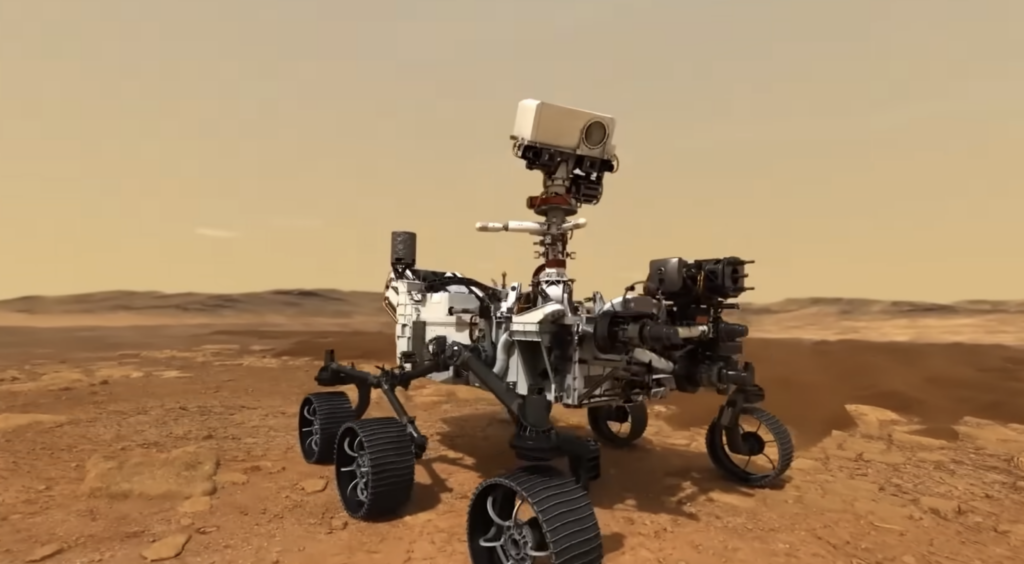
Scientific work begins immediately. Samples are collected. Soil is analyzed. Subsurface drilling searches for signs of past microbial life. Each discovery reshapes humanity’s understanding of whether life once existed beyond Earth.
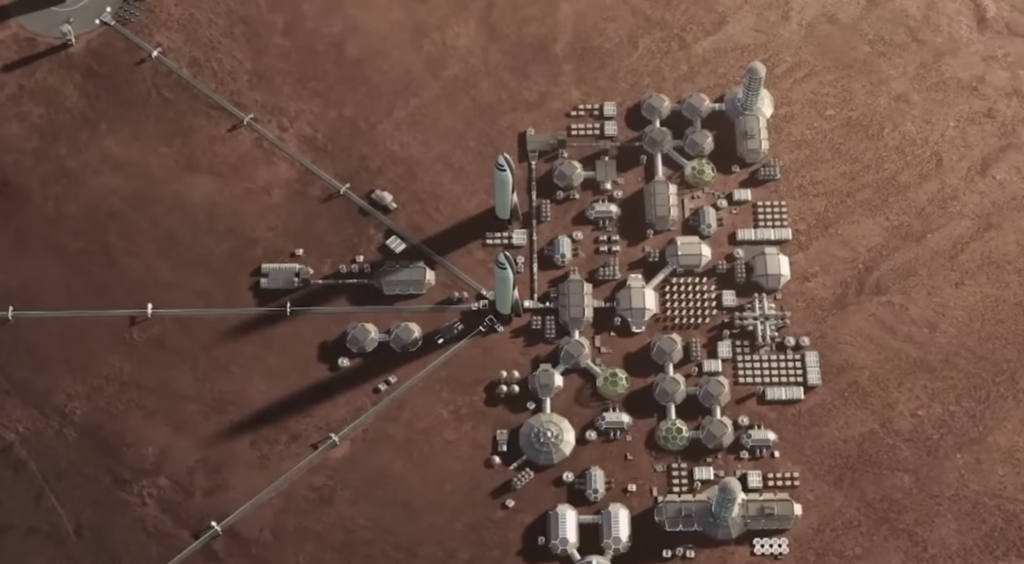
At the same time, expansion begins. Additional modules arrive, slowly transforming the outpost into a growing settlement.
By the late 2030s, Mars is no longer just a destination. It is a second working base for humanity.
Phase 5: A Permanent Human Presence (2040 and Beyond)
As missions become routine, Mars transitions into a semi permanent colony.
Larger habitats are built underground to protect against radiation and dust storms. Greenhouses begin producing food locally using Martian soil and controlled environments. Fuel production plants convert carbon dioxide into usable rocket propellant, making return trips possible.
Travel between Earth and Mars becomes more regular. Cargo ships operate on scheduled routes. Scientific teams rotate in and out. Communication improves as relay satellites are placed across the Solar System.
By this stage, humans are no longer limited to one planet.
Mars becomes a stepping stone for deeper exploration, including missions to the asteroid belt and potentially the moons of Jupiter and Saturn.
The New Frontier
In this timeline, the first human footprint on Mars likely happens sometime in the 2030s or early 2040s, depending on technological progress and funding stability.
But the deeper truth is not about a single date. It is about a shift. Humanity is moving from a single planet species to a multi world civilization. Mars is not the end goal. It is the beginning of something far larger.
And when that first boot finally presses into Martian dust, it will not just mark a landing.
It will mark a turning point in human history.