Life on Mars would be nothing like life on Earth. The first settlers would probably spend most of their time inside sealed habitats protected from radiation and the freezing cold. Crops would grow inside carefully controlled greenhouses, and every trip outdoors would require a bulky spacesuit with a limited air supply.
But what if we could change Mars instead of adapting ourselves to it? One idea that has sparked debate for decades is surprisingly simple: use nuclear weapons to warm the planet. Could detonating nuclear bombs actually make Mars more suitable for human life?
The concept has been discussed by scientists for many years, and it gained widespread attention after Elon Musk suggested that nuclear explosions near the Martian poles might help speed up the process of terraforming the planet.
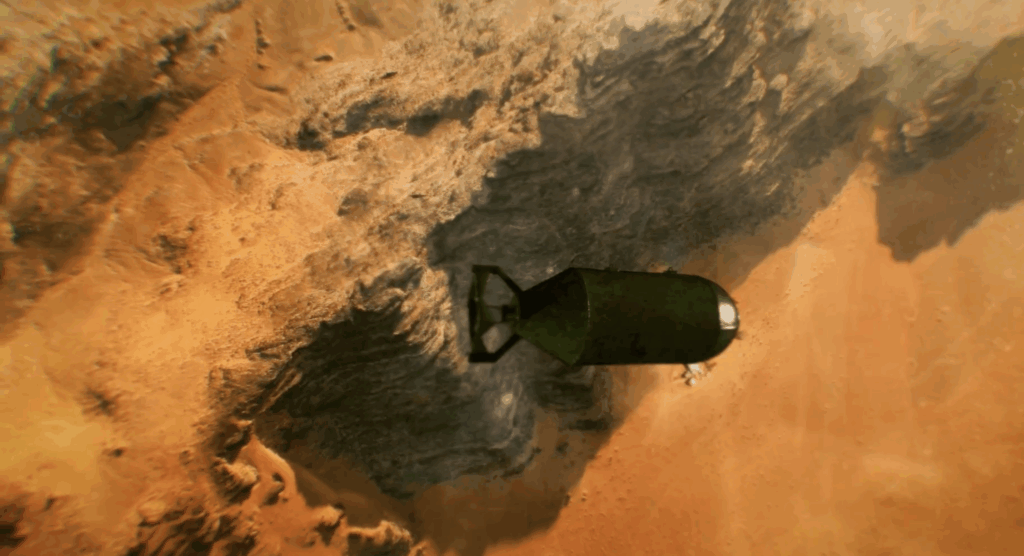
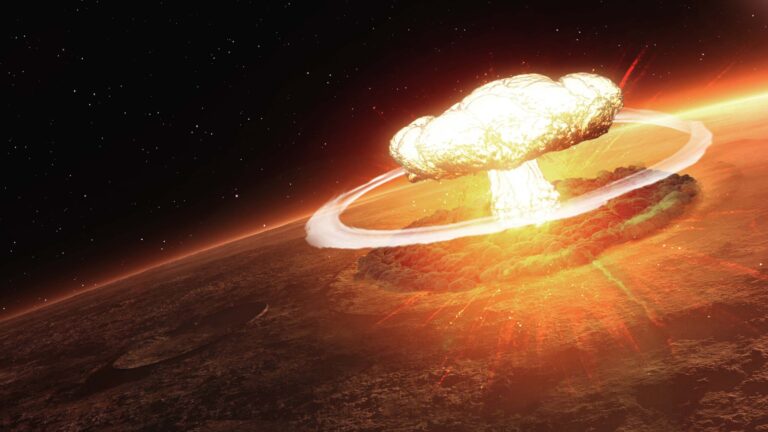
The proposal involves detonating powerful thermonuclear bombs high above Mars’ polar ice caps. The intense heat could vaporize frozen carbon dioxide and water trapped in the ice. If enough greenhouse gases entered the atmosphere, they might trap additional heat and gradually raise the planet’s temperature.
At first glance, it sounds like a shortcut to transforming Mars into a more Earth like world. Unfortunately, the reality is far more complicated.
The biggest obstacle is that nobody knows whether the idea would actually work. Mars has been losing its atmosphere for billions of years, leaving it with only a tiny fraction of the air pressure found on Earth.
For humans to survive without constant life support, Mars would need a much thicker atmosphere. Some researchers believed the frozen carbon dioxide stored near the poles could provide enough gas to make a significant difference. However, a study published in 2018 in Nature Astronomy concluded that even releasing every accessible carbon dioxide reserve would increase atmospheric pressure to only about seven percent of Earth’s.
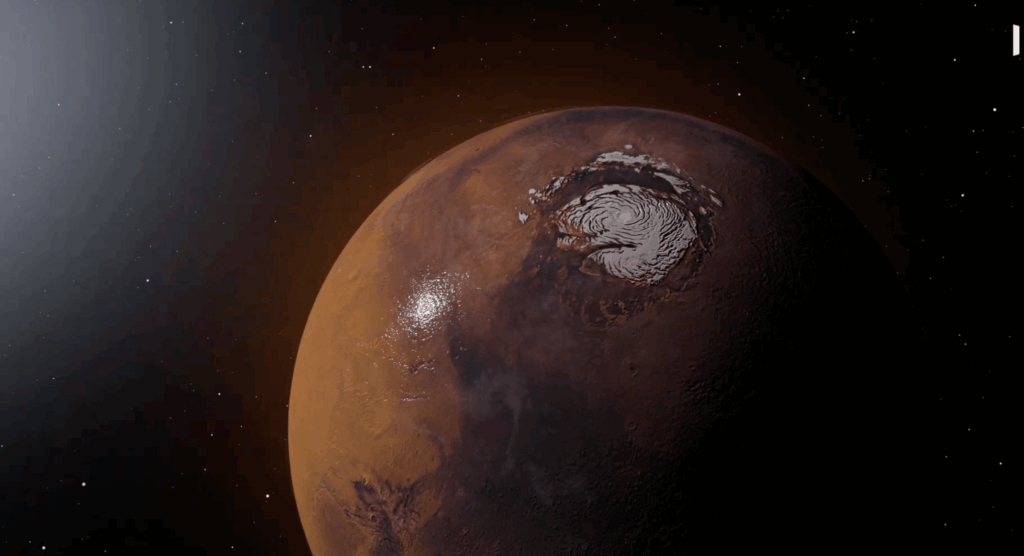
Even with that additional carbon dioxide, Mars would still remain far too cold. The planet’s average surface temperature is around minus 63 degrees Celsius, making liquid water almost impossible to maintain for long periods. Any warming would likely take decades or even centuries, meaning future missions would still need to rely on habitats and protective equipment.
There is also another major problem. The entire plan assumes every nuclear explosion happens exactly where intended. Thermonuclear weapons are incredibly destructive, and even a small mistake could have enormous consequences.
The devices proposed for terraforming would be vastly more powerful than the atomic bombs used during the Second World War. If one exploded on the surface instead of high above the poles, it could blast away huge sections of terrain while spreading radioactive material across the surrounding area. Rather than making Mars safer, it could create even more hazards for future explorers.
Some scientists also warn that repeated nuclear explosions could produce an effect similar to a nuclear winter. Massive amounts of dust and debris thrown into the thin Martian atmosphere could block sunlight for extended periods, causing temperatures to drop instead of rise.
Instead of creating a warmer, more welcoming planet, detonating nuclear bombs on Mars might leave it even colder and more difficult to explore. For now, the idea remains an interesting scientific debate, but it is far from being a practical solution for making the Red Planet humanity’s second home.