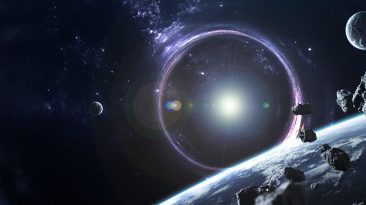
The Sun produces more energy in a single second than humanity has used throughout its entire history. Every day, it releases an unimaginable amount of power, but most of that energy disappears into the emptiness of space.
What if we could capture all of it?
Scientists have imagined a gigantic structure built around the Sun that could collect nearly every bit of solar energy. This theoretical megastructure is known as a Dyson sphere, and if humanity ever built one, it would completely transform our civilization.
But how could we construct a machine larger than an entire planet? Where would we find the materials? And what would we actually do with that much energy?

The idea of a Dyson sphere was introduced in 1960 by physicist Freeman Dyson. He imagined that an advanced alien civilization, millions of years ahead of humanity, might eventually run out of energy resources on its home planet. To solve the problem, they would redesign their entire solar system by surrounding their star with a massive structure capable of collecting its energy.
Instead of searching for new energy sources, they would simply capture the power their own star was already producing.
For a civilization like ours, the benefits would be almost impossible to imagine.
A fully completed Dyson sphere could theoretically provide around 400 septillion watts of energy. That is roughly a trillion times more energy than modern human civilization currently uses.
With that amount of power, humanity could run enormous supercomputers, create advanced artificial intelligence, develop new technologies, and potentially begin exploring distant star systems.

However, building a traditional Dyson sphere would be far more difficult than it sounds.
A solid shell completely surrounding the Sun would face enormous engineering problems. No known material could withstand the extreme radiation and heat exposure for such a massive structure. The sphere would also be gravitationally unstable. Even a small impact from an asteroid or meteor could push part of the structure toward the Sun, causing catastrophic damage.
There is another problem. A solid sphere would not naturally create a comfortable living environment. Without the right design, gravity from the Sun would pull the entire structure inward, making it impossible to maintain a stable position.
Because of these challenges, scientists believe a more realistic version would be a Dyson swarm.
Instead of one giant shell, a Dyson swarm would consist of millions or even billions of independent solar collectors orbiting the Sun. Each structure would gather energy and send it to wherever it is needed.

Building something like this would still require an unimaginable amount of material.
The first step could involve transforming Mercury into a giant construction site. As the closest planet to the Sun, Mercury contains valuable resources such as iron and oxygen that could be used to build solar collectors and space structures.
Robotic machines could gradually mine the planet, manufacturing enormous numbers of reflective panels and energy stations. These collectors could then send power through space using advanced transmission systems.
Over time, humanity could expand outward, using materials from asteroids, Venus, Mars, and other planets to continue building the swarm.
The process would effectively reshape the Solar System itself.
Although dismantling planets sounds extreme, the amount of resources gained would be extraordinary. Even using only Mercury’s materials could provide enough resources to power advanced computers and accelerate space exploration for thousands of years.
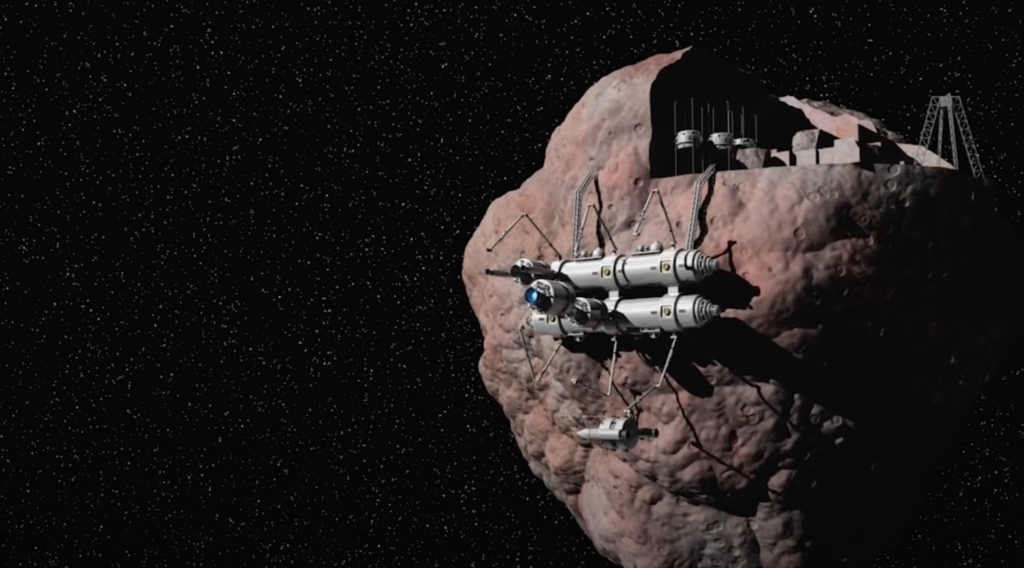
A civilization with access to this much energy could create enormous artificial habitats. Instead of living only on planets, humans could build giant rotating space colonies where people could live in Earth like conditions while orbiting the Sun.
These habitats could become new worlds, complete with forests, oceans, and cities floating in space.
A Dyson swarm would represent a completely different stage of civilization. It would mean humanity had moved beyond simply using the resources of one planet and had learned how to harness the full power of its star.
Of course, such a project is far beyond our current abilities. Humanity does not yet have the technology, resources, or space infrastructure required to begin construction.
But the concept shows what might become possible for a civilization that survives long enough and continues advancing.
Perhaps one day, humans will not only explore the Solar System but completely transform it, turning the Sun itself into the ultimate power source for a new era of space civilization.