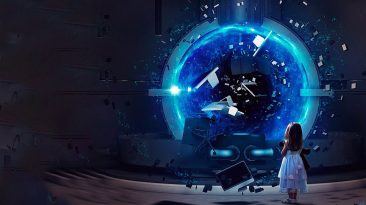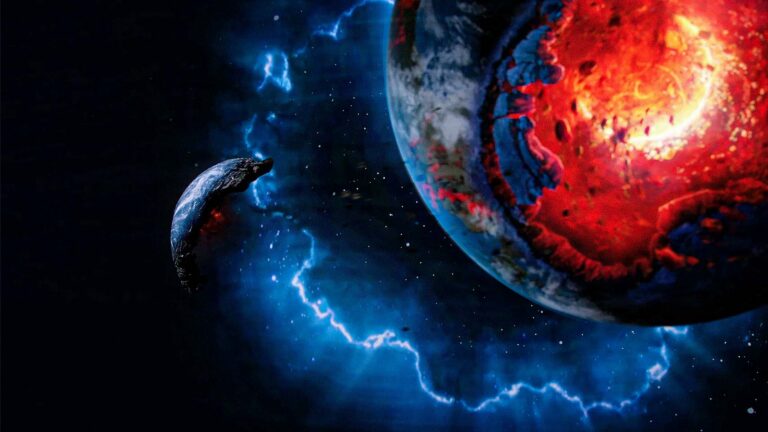
Imagine hearing a faint cosmic rumble. It isn’t a distant thunderstorm or the collision of two galaxies. It is the sound of reality itself beginning to unravel. Somewhere in the vastness of space, the Universe has started collapsing into a completely different state. There is no warning siren, no escape plan, and no way to stop it.
Could something like this actually happen?
Surprisingly, modern physics suggests it is possible, although extremely unlikely. The idea is known as vacuum decay, and if it ever occurred, it could instantly rewrite the laws of the Universe.
To understand why, we first need to look at something that fills every corner of space: the Higgs field.
Scientists confirmed the existence of the Higgs boson in 2012 at the Large Hadron Collider, providing strong evidence that the Higgs field is real. This invisible field gives many fundamental particles their mass and plays a crucial role in shaping the Universe as we know it.
Like every physical system, the Higgs field has energy. Ideally, it should exist in its lowest possible energy level, known as the true vacuum. In that state, the Universe would be perfectly stable.
But there is another possibility.
Some physicists think the Higgs field may actually be trapped in a false vacuum. It appears stable, but it is really sitting in a higher energy state, like a ball balanced on top of a hill instead of resting safely in a valley. It may remain there for billions or even trillions of years, but one tiny quantum event could send it rolling downward.
If that happened, disaster would unfold instantly.
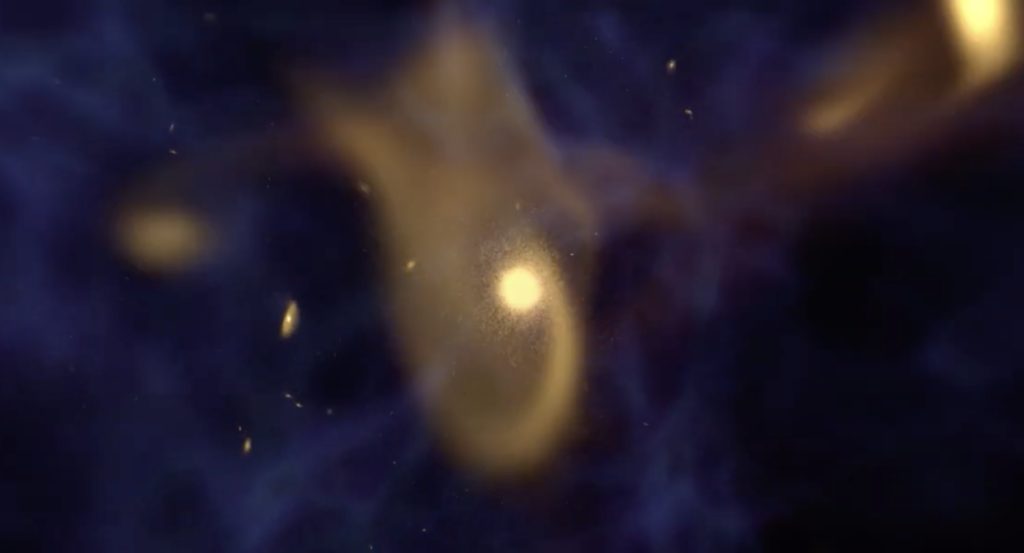
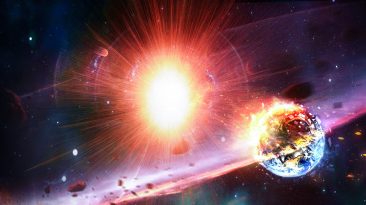
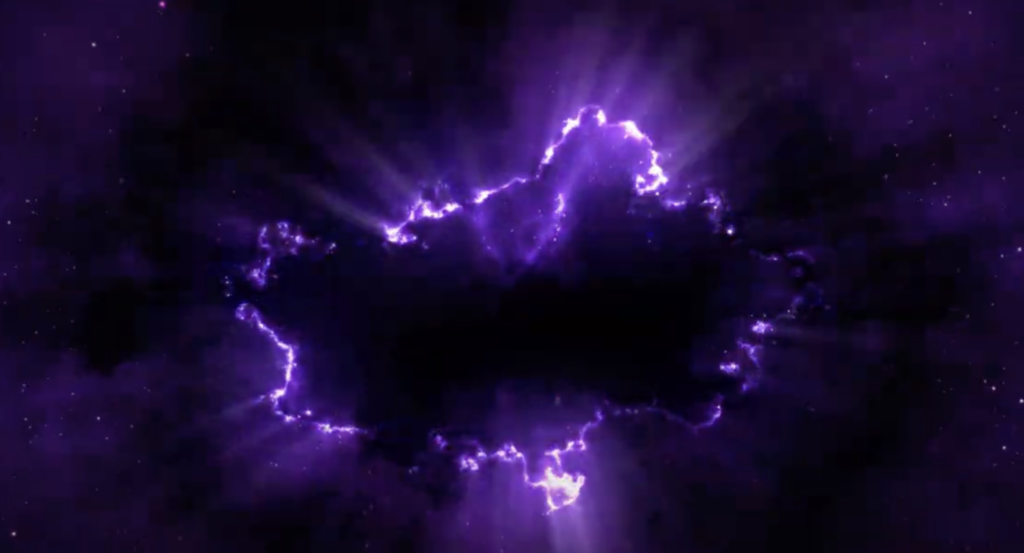
A microscopic bubble of true vacuum would suddenly form somewhere in space. As it expanded, it would race outward at the speed of light, consuming everything in its path.
Inside this expanding bubble, the laws of physics would no longer be the same.
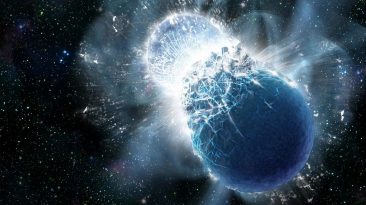
The fundamental constants that govern reality could change completely. Atoms might no longer hold together. Chemistry would cease to exist. Stars, planets, and galaxies would lose the physical rules that allow them to exist. Matter itself could be transformed into something entirely unfamiliar.
The terrifying part is that no one would see it coming.
Because the bubble expands at the speed of light, its arrival would be impossible to detect in advance. The first sign of vacuum decay would also be the last. There would be no opportunity to hide, escape, or even realize what was happening.
Could humanity prevent such an event?
Unfortunately, no. Vacuum decay would be driven by the deepest laws of quantum physics, far beyond anything humans could influence. Even our most powerful particle accelerators produce energies far lower than those naturally created by cosmic rays striking Earth’s atmosphere every day. If those immense natural collisions have not triggered vacuum decay, our technology almost certainly will not either.
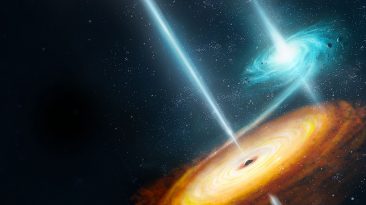
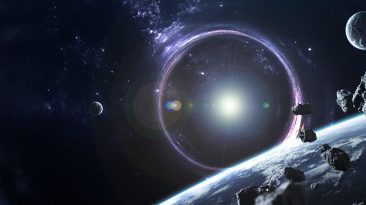
Some theories even suggest that after vacuum decay swept across the cosmos, the entire Universe might eventually collapse into an unimaginably dense state, perhaps even forming one enormous black hole. Others argue it would simply leave behind a completely different Universe governed by entirely new physical laws. No one knows for certain.
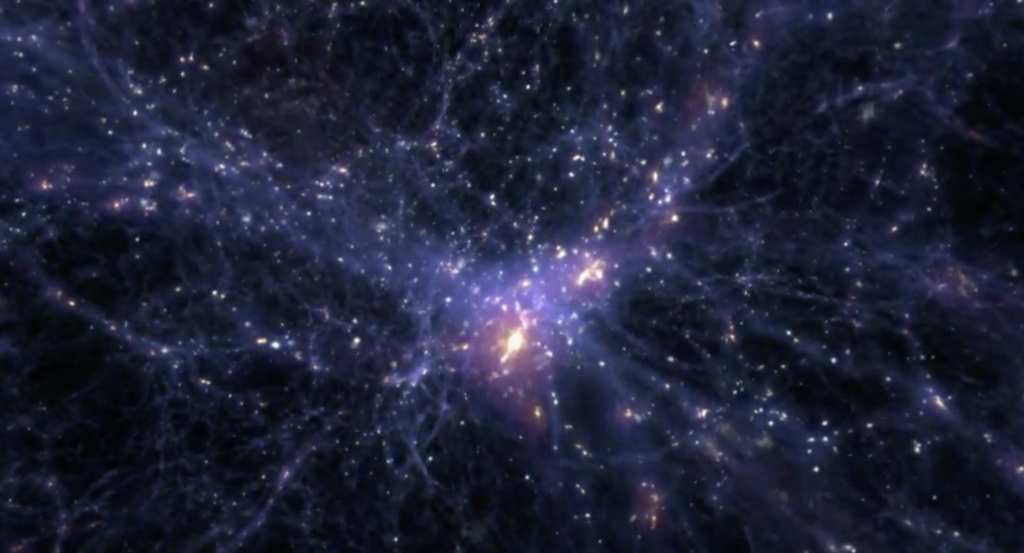
The good news is that this scenario remains highly speculative. Even if the Higgs field exists in a false vacuum, current calculations suggest the Universe is likely to remain stable for a period vastly longer than its current age of 13.8 billion years.
So while vacuum decay may represent one of the most dramatic ways the cosmos could end, it is not something we need to fear anytime soon. For now, the Universe continues expanding, galaxies continue forming, and the invisible Higgs field quietly holds reality together, one particle at a time.