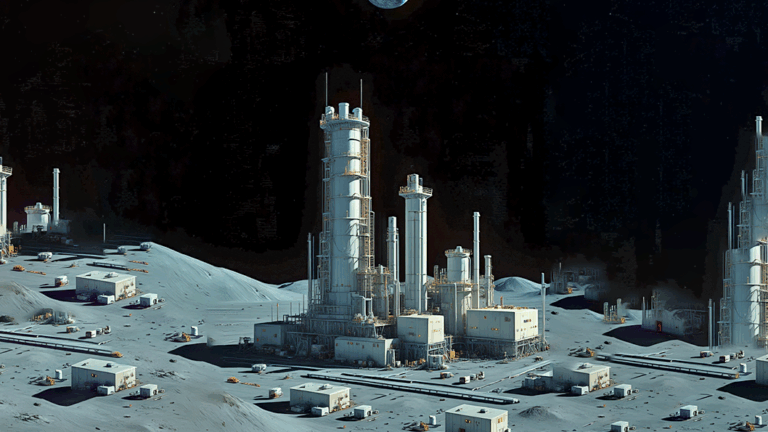
No country owns the Moon.
Existing agreements treat outer space as shared ground, meant to be used peacefully by everyone. That sounds settled until you imagine what happens when someone builds a power station up there capable of supplying electricity to entire nations.
Whoever gets there first would be holding the most valuable piece of infrastructure in human history, on land that belongs to nobody.
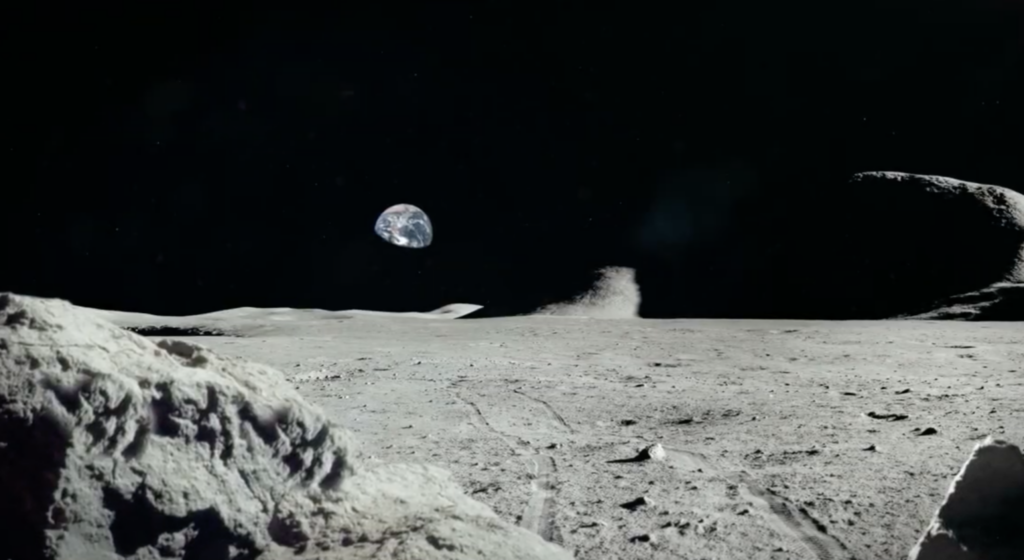
Picture looking up at night and knowing that bright object is doing more than reflecting sunlight. It is generating electricity, with a vast station stretching across the lunar surface, glimmering in the dark as it produces enormous amounts of energy.
Some scientists genuinely believe the Moon could become an energy hub for humanity.
The logic is simple. There is no weather up there, no clouds, no hurricanes, and certain regions near the poles receive sunlight for most of the year. Rather than blanketing Earth in solar panels, we could build one enormous plant on the Moon and generate power continuously.
Construction would be the first obstacle.
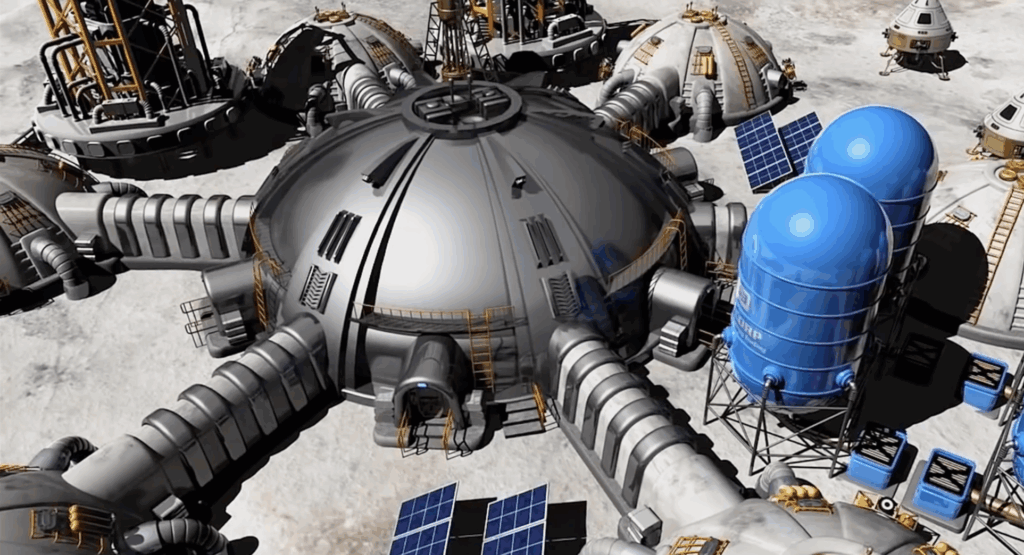
Building even a small lunar base ranks among the most ambitious engineering projects imaginable. A power plant on this scale would demand thousands of tons of equipment, with rockets launching constantly to deliver robots, machinery, and materials.
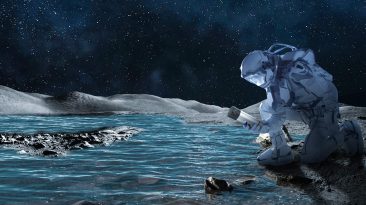
Eventually a settlement would grow around the project, with engineers supervising fleets of machines assembling energy facilities across the landscape until the station became one of the largest structures humanity has ever built.
Then comes the next problem. How do you get the electricity home?
One approach would convert the power into beams of energy fired toward receiving stations on Earth, where massive antennas would collect it and feed it straight into the grid.
If that worked, the results would be extraordinary. Countries struggling to meet rising demand would suddenly have reliable electricity. Fossil fuel use could fall dramatically. Industries would run cleaner, and the energy shortages affecting millions today could largely disappear.
Which is exactly when politics arrives.
Nations would race to establish their own lunar facilities nearby. International agreements would suddenly matter enormously, because every country on Earth would want access to a supply this powerful.
There would be practical dangers too.
A technical failure on Earth gets repaired quickly. On the Moon, every repair means launching equipment through space, and a damaged system could stay broken for months. Even a small fault could interrupt deliveries and leave millions without power.
Accidents are always possible as well.
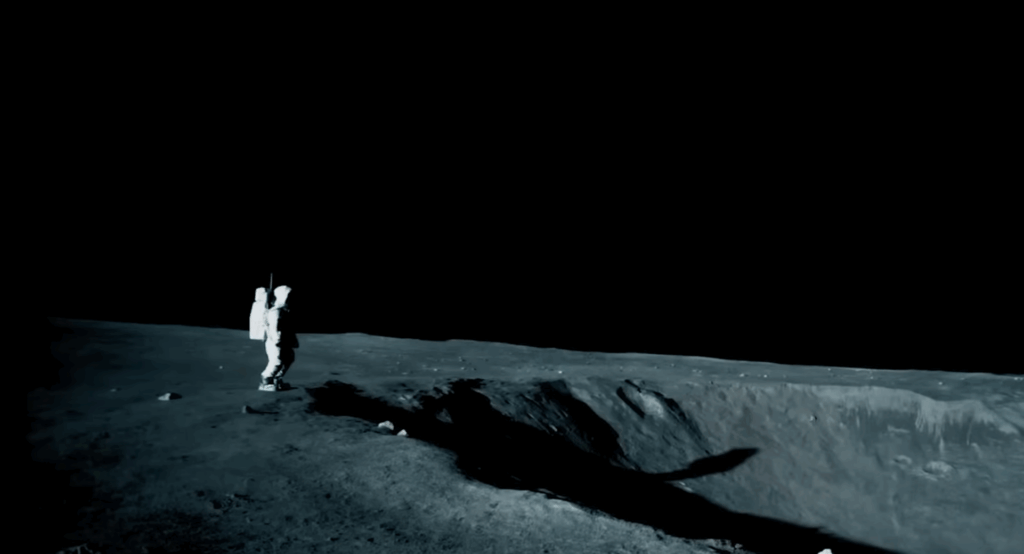
A facility this size would run complex machinery in one of the harshest environments known. Lunar temperatures swing between extremes. Dust damages equipment and clogs moving parts. Micrometeorites strike the surface constantly.
A single failure would not destroy the Moon or shift its orbit, since it is far too massive for that. It could still wreck sections of the plant and scatter dangerous debris across the construction site.
None of these obstacles are new in character, though.
Humanity has repeatedly done things that once sounded absurd. We built cities in deserts, crossed oceans, and put people on the lunar surface. A giant power station up there sounds unrealistic today, exactly like plenty of technology now woven into ordinary life.
One day the Moon might stop being just a bright object in the night sky.
It could become the largest power plant ever built, keeping civilization running long after the Sun goes down on Earth, owned by nobody and fought over by everybody.