Today, more people are alive on Earth than at any other point in human history. That sounds like an enormous number, but there is one figure that puts it into perspective: far more humans have died than are currently alive.
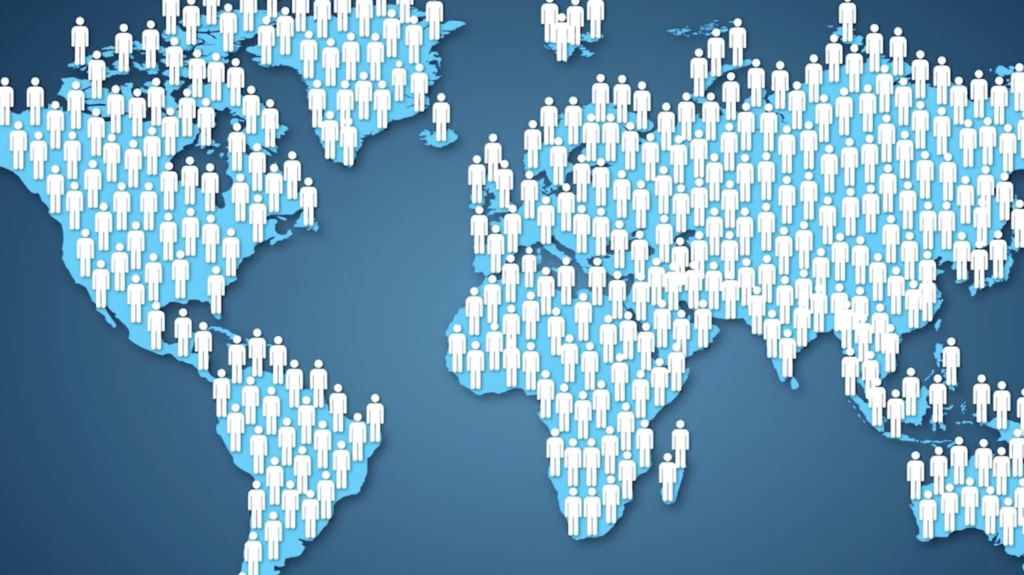
Scientists have estimated that roughly 100 billion or more people have been born throughout human history. Now imagine that every single one of them suddenly came back to life at the same time.
At first, it might sound like the greatest reunion in history. Families could meet relatives they had lost generations ago, ancient civilizations would suddenly return, and billions of people who had been dead for centuries would once again be walking the planet.
But the excitement would not last long.
The biggest problem would not be finding enough space. Earth has enormous amounts of land, and throughout most of human history, large portions of the population lived in rural areas. If everyone suddenly returned to life, many could theoretically be spread across different parts of the planet.
The real problem would be food.
Modern agriculture already uses a huge portion of Earth’s productive land to feed the current population. Bringing more than 100 billion additional people into existence would create a demand for food that the planet’s agricultural systems could not possibly meet.
There would also be an immediate shortage of clean water, medicine, fuel and other essential resources. Grocery stores would be emptied almost instantly, supply chains would collapse under the unprecedented demand, and governments would struggle to distribute what remained.

Even if farms could suddenly increase production, crops take time to grow. There would be no way to produce enough food overnight for a population many times larger than the one the planet currently supports.
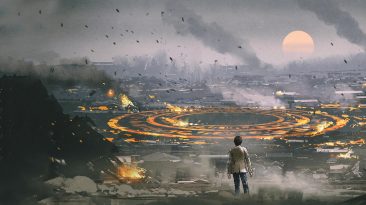
As supplies disappeared, desperation would spread. Competition for food, water and land could trigger enormous social unrest, and conflicts between communities and nations could become increasingly difficult to control.
Within weeks, the situation could become catastrophic.
A huge portion of the resurrected population would have no access to sufficient food, and starvation would become widespread. Diseases could also spread rapidly as sanitation systems, hospitals and other infrastructure became overwhelmed.
The strange part is that the world might eventually stabilize again, but only after an unimaginable population collapse.
The survivors would inherit a planet filled with abandoned homes, empty cities and enormous amounts of unused infrastructure. They would have access to more resources per person, but the civilization they knew would have been transformed by the crisis.
And there would be another enormous problem: the resurrected would have no idea how the modern world had changed.
Someone who died hundreds or thousands of years ago could suddenly wake up surrounded by skyscrapers, automobiles, airplanes, computers and technologies that would appear almost impossible. Languages, cultures, borders and social structures would also be completely unfamiliar.
The scenario is impossible with current science, but it raises a fascinating question about the limits of our planet.
Earth can support an enormous number of people, but population size is only part of the equation. Food production, water availability, energy, infrastructure and how efficiently resources are distributed all determine how many people can actually live comfortably.

Interestingly, global fertility rates have been declining in many parts of the world, meaning population growth may eventually slow or reverse in some regions.
So while a mass resurrection would turn into a disaster almost immediately, it highlights an important reality about humanity: the planet is not simply limited by how much land we have. What matters is how much food, water and other resources we can sustainably produce.
Bringing every human who ever lived back to life might sound like the ultimate family reunion, but without an equally miraculous supply of food, it would become one of the greatest survival crises imaginable.