Keeping clean matters, and that includes giving your feet regular attention with soap and water. Now picture the opposite. Starting today, no soap ever touches your feet again. How long before the smell becomes impossible to ignore? What sort of infections might follow? And could things eventually get bad enough that a doctor recommends amputation?
Even under the best hygiene habits, your feet already host a wide range of bacteria along with roughly 200 different types of fungi. That is not really their fault. Bacteria naturally gravitate toward warm, damp conditions, exactly what shoes, socks, and slippers provide all day long. In small numbers, most of these organisms are completely harmless and give off no smell at all. Trouble starts once they begin multiplying rapidly.
Before assuming this is purely bad news, it is worth knowing that some of these bacteria actually help your feet. Certain strains secrete oils that keep skin soft and produce enzymes that break down dead skin cells naturally. So would skipping soap entirely leave your feet healthier, or would it simply turn them into a magnet for fungus and odor?
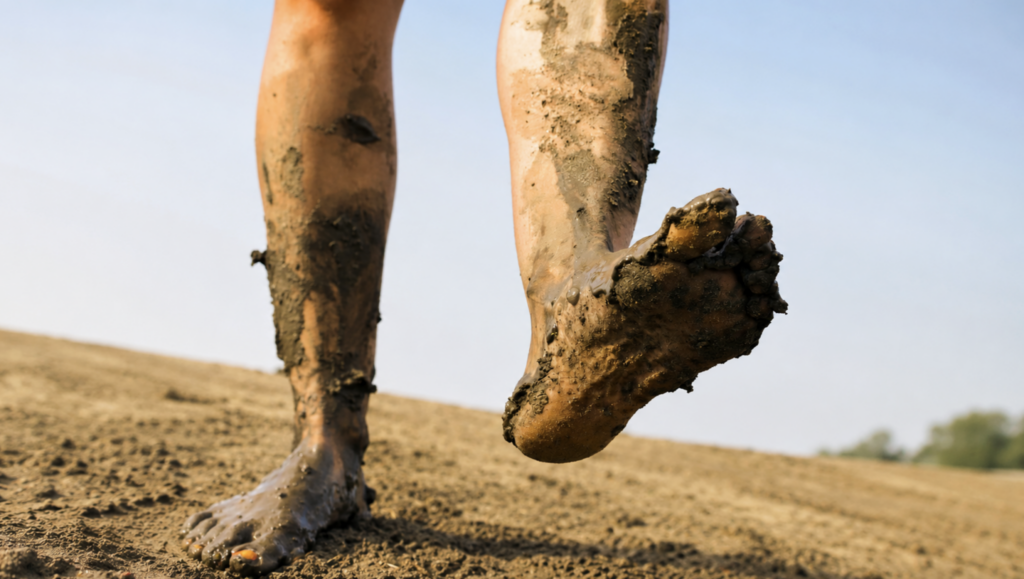
You would likely start with one final proper scrub, giving your feet a clean baseline before lacing up your shoes and heading into a normal day exactly as usual. By the time evening rolled around and you pulled those warm shoes off, you would already catch the first hint of odor beginning to build.
That smell traces back to Brevibacterium linens, a harmless bacteria that thrives inside tight, enclosed shoes and happens to be responsible for the scent developing on your feet. At this early stage the odor would still be mild, though it would carry a familiar note, oddly close to stinky cheese. That resemblance is not a coincidence at all, since it is genuinely the same family of bacteria involved in producing certain cheeses.
The next morning you would step into the shower as always, except this time your feet would stay completely untouched. You would simply let hot, soapy water run down your legs and past your feet without ever making contact. Plenty of people already shower this way without realizing it, and while you might feel clean afterward, the bacteria that built up the previous day would remain largely undisturbed.
A few hours later the smell would grow noticeably stronger than the day before, and you might even start picking out distinct notes within it, something like sweat, vinegar, or even cabbage, depending on which chemicals the multiplying bacteria happen to be producing. After several more days without any cleaning, discomfort would begin setting in, with the soles of your feet starting to crack.
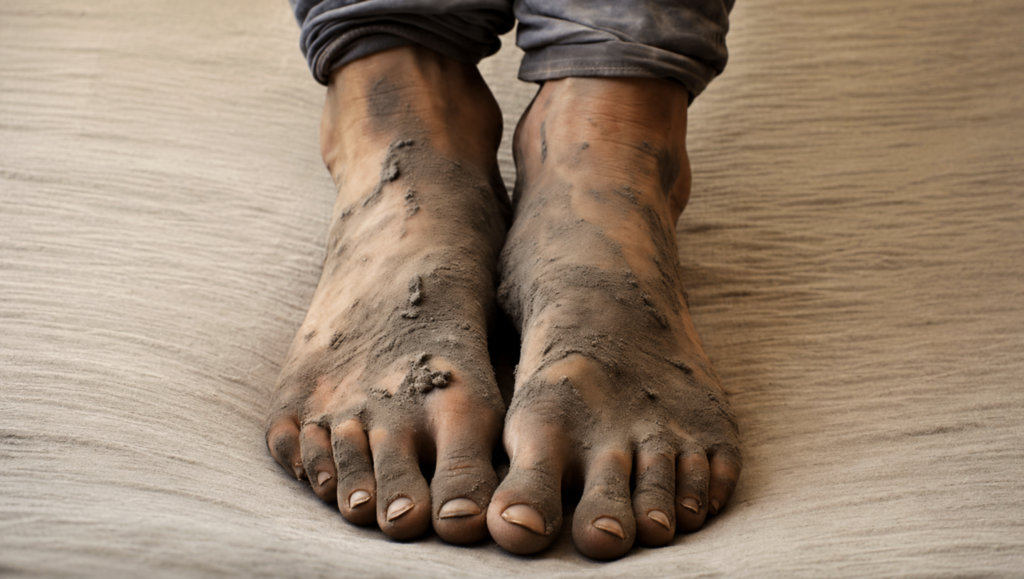
Itchy, flaking patches of skin would start showing up between your toes around this point, a telltale sign of athlete’s foot. That fungal infection could have originated somewhere as simple as a gym locker room floor, and without proper washing, it would find ideal conditions to spread inside the constant humidity trapped by your shoes and socks.
Skip ahead a couple of weeks and a new sensation would appear, a tenderness that feels almost like walking on small stones inside your shoes. This would signal a plantar wart forming, something entirely different from the bacterial and fungal issues you had already been dealing with. This one is viral, caused by human papillomavirus finding its way in through a small break in the skin, producing a growth that looks something like a thickened callus.
Typically appearing somewhere on the pressure bearing sole of the foot, plantar warts grow inward rather than outward. Between all these compounding problems, your walk would start to change noticeably, with nearly every part of your foot turning into its own distinct point of pain. Joint discomfort and stiffness through your back could easily follow as your body compensates.
From here, matters could take a genuinely dangerous turn. Untreated wounds on the feet can develop into serious staph infections such as MRSA, and left unchecked further, necrotizing fasciitis, commonly known as flesh eating bacteria, could begin destroying skin, fat, and the tissue surrounding your muscles.
Should that infection reach your bloodstream, the consequences escalate quickly toward sepsis, organ failure, or even death, turning what began as simple neglect into something genuinely life threatening.
At that stage, amputation might be the only remaining option to save your life. Worth noting, close to 28 percent of people already believe daily foot washing is not really necessary. If that sounds like you, this might be a good moment to reconsider.