Jupiter dominates the outer part of the Solar System with an enormous collection of moons, and many of its largest satellites are worlds unlike anything found on Earth. Some are buried beneath layers of ice, while others are covered with ancient craters or constantly reshaped by volcanic activity.
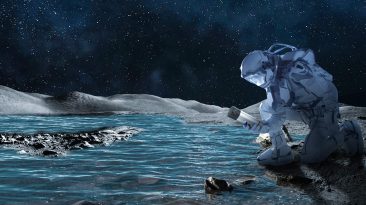
Imagine that humans somehow developed the technology to establish permanent settlements around Jupiter. Instead of landing on the gas giant itself, explorers would have several very different moons to choose from. Each one would offer resources and opportunities, but also dangers that could make ordinary life incredibly difficult.
From frozen landscapes hiding enormous oceans to a moon covered with active volcanoes, Jupiter’s largest satellites would provide some of the strangest places imaginable for a human colony. Here is what living on four of these remarkable worlds might actually be like.
Callisto: A Frozen and Surprisingly Quiet World
Among Jupiter’s major moons, Callisto sits farthest from the planet, traveling around it at a distance of roughly 1.9 million kilometers. It is nearly the size of Mercury and carries an ancient surface covered with enormous numbers of impact craters. A person walking across the landscape would encounter a world that looks more like a battered version of our Moon than a traditional planet.
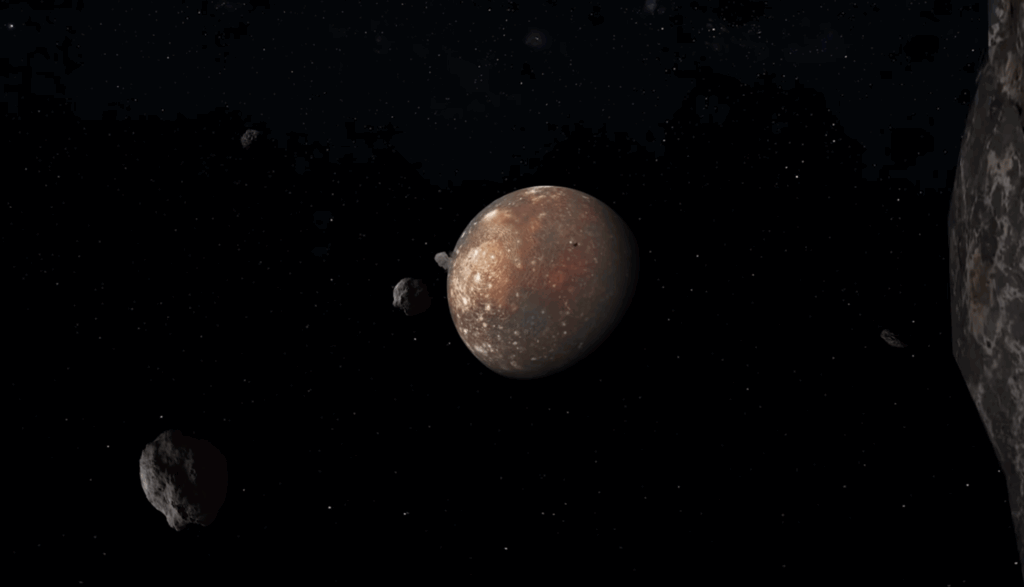
The temperatures would be one of the first major problems. Surface conditions can fall to about minus 140 degrees Celsius, or minus 220 degrees Fahrenheit, making an unprotected human completely unable to survive outside. Water exposed directly to the environment would freeze almost immediately. Low gravity would also make every movement unusual, allowing people to leap much farther than they could on Earth.
Callisto does have one important advantage. Unlike several of Jupiter’s other large moons, it is relatively far from the planet’s strongest radiation environment. The moon also appears remarkably quiet geologically, with no widespread volcanic activity constantly threatening a settlement. Underground facilities or heavily insulated structures could therefore provide a relatively stable place to live, although Jupiter would appear smaller in the sky than it would from closer moons.
Ganymede: The Solar System’s Largest Moon
Ganymede is an extraordinary place because it is larger than the planet Mercury, making it the biggest moon known to exist in our Solar System. It also has something most moons do not have: its own magnetic field. That feature provides some protection against the dangerous charged particles surrounding Jupiter and could become extremely valuable to future settlers.
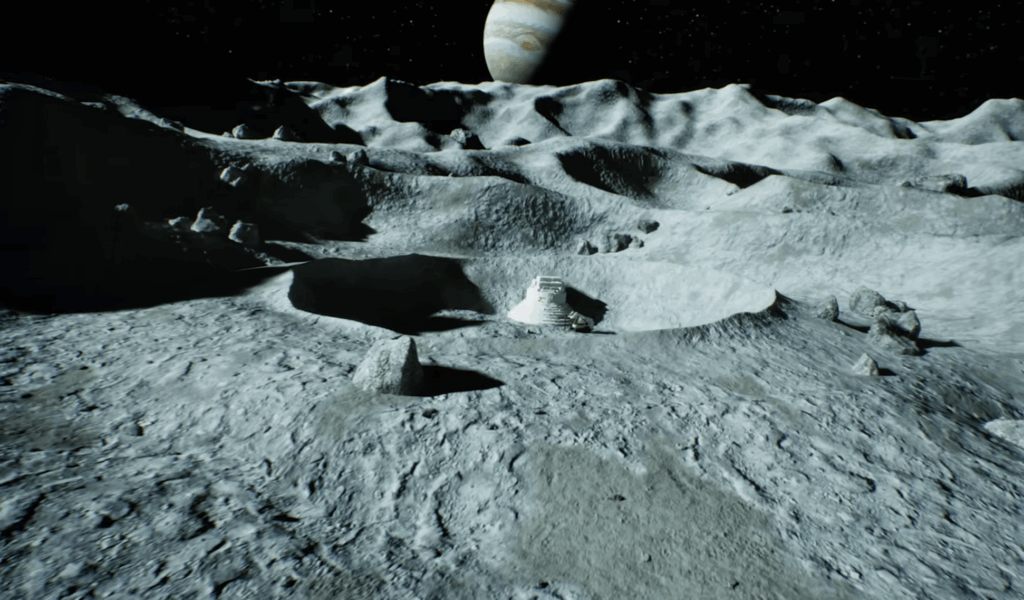
Another remarkable feature is hidden beneath the frozen exterior. Scientists believe Ganymede contains a gigantic underground ocean that may reach around 100 kilometers, or 60 miles, in depth. That would make the hidden body of water vastly deeper than Earth’s oceans. Accessing it would be extraordinarily difficult, however, because a thick layer of ice separates the surface from the water below.
Conditions above the ice would remain brutally cold, with temperatures capable of reaching roughly minus 180 degrees Celsius, or minus 290 degrees Fahrenheit. The atmosphere is also far too thin to support human breathing. Any colony would therefore need sealed habitats, powerful heating systems and substantial protection from the environment. Craters and naturally sheltered terrain could provide useful locations, while the buried ocean might eventually become an important source of water and scientific discoveries.
Europa: An Ocean Hidden Beneath the Ice
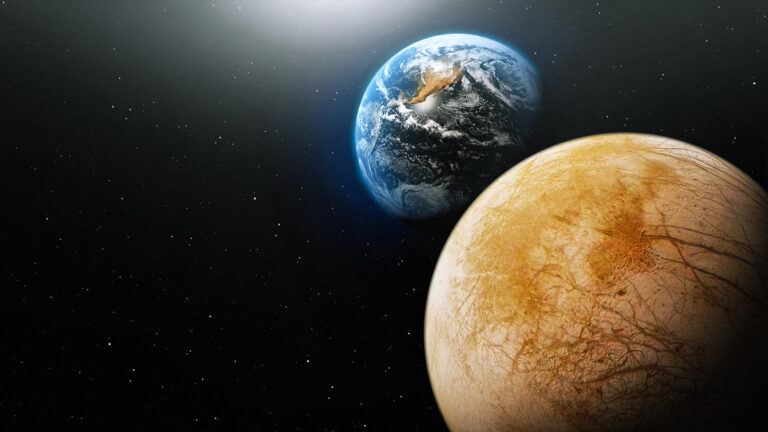
Europa is smaller than Ganymede, but scientists consider it one of the most intriguing worlds in the Solar System. Its exterior is dominated by an enormous sheet of water ice, yet beneath that frozen surface lies what is believed to be a vast salty ocean. The moon’s interior may remain active because Jupiter’s gravity repeatedly stretches and compresses Europa as it travels through its orbit.
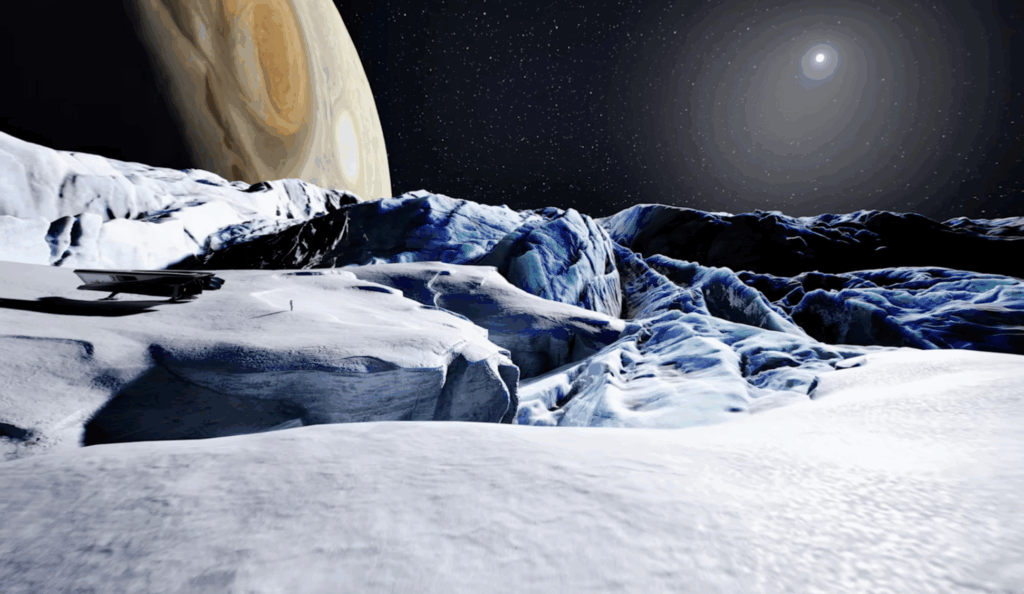
That constant tidal stress could generate heat inside the moon and may even support volcanic activity on the seafloor. If those conditions provide energy and nutrients, Europa could potentially have environments capable of supporting life. For human explorers, that possibility would make the moon scientifically priceless, even before anyone discovered whether organisms actually exist beneath its ice.
Establishing a permanent base would still be extremely challenging. The ice shell could be roughly 22 kilometers, or 14 miles, thick in some regions, meaning reaching the ocean would require technology far beyond anything humans currently possess. Surface temperatures would also be dangerously low, forcing settlers into sealed and heavily insulated structures. A future habitat beneath the ice could allow researchers to study the hidden ocean while remaining protected from the hostile surface environment.
Io: The Moon Where Volcanoes Rule
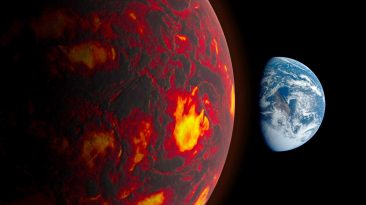
Io would be the most dangerous choice for a human settlement. This moon is the most volcanically active world known in the Solar System, with hundreds of volcanoes reshaping its surface. Some eruptions can send plumes hundreds of kilometers above the ground, creating an environment where the landscape can change dramatically over relatively short periods.
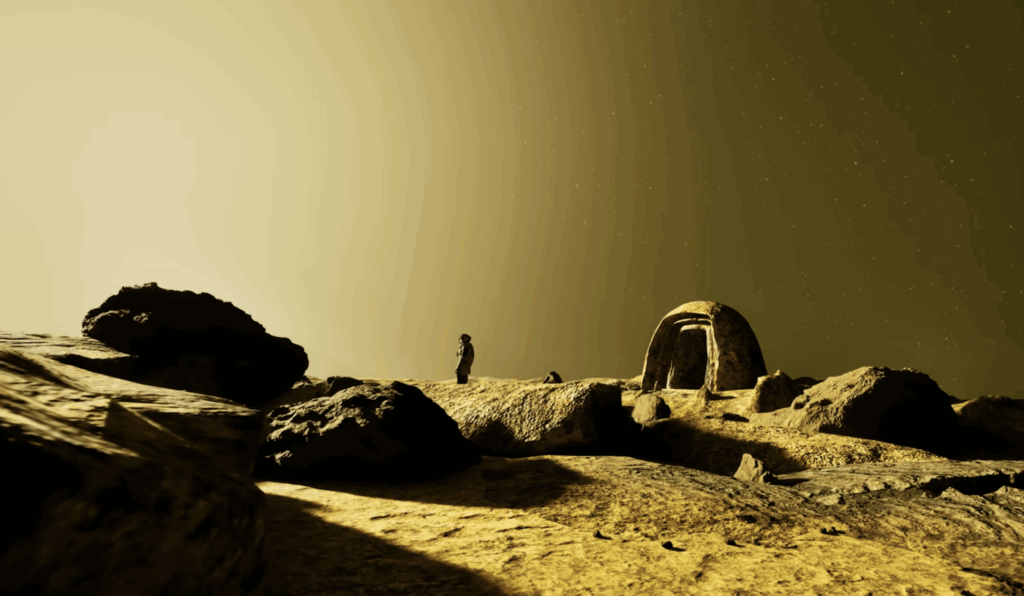
The extreme activity comes from Jupiter’s immense gravitational influence combined with the pull of neighboring moons. As Io moves through its orbit, these gravitational forces repeatedly squeeze its interior, producing enormous amounts of heat. That energy escapes through constant volcanic activity, covering parts of the surface with sulfur compounds and fresh lava.
Even away from an active eruption, survival would be difficult. Io has an extremely thin atmosphere, allowing nighttime temperatures to plunge to around minus 130 degrees Celsius, or minus 270 degrees Fahrenheit. A settlement would need powerful shielding, reliable heating and protection against volcanic hazards. Underground bunkers might offer the best chance of survival, while carefully selected locations could potentially use geothermal heat. Of Jupiter’s major moons, Io would offer perhaps the most spectacular scenery, but it would also be the least forgiving place to build a home.