
Imagine birthday balloons suddenly collapsing, medical scanners shutting down, and stars disappearing from the night sky. All of this could happen if every trace of helium in the Universe vanished for just five seconds. But what would happen to your body? How would our technology react? And could the disappearance of this element actually threaten our Solar System?
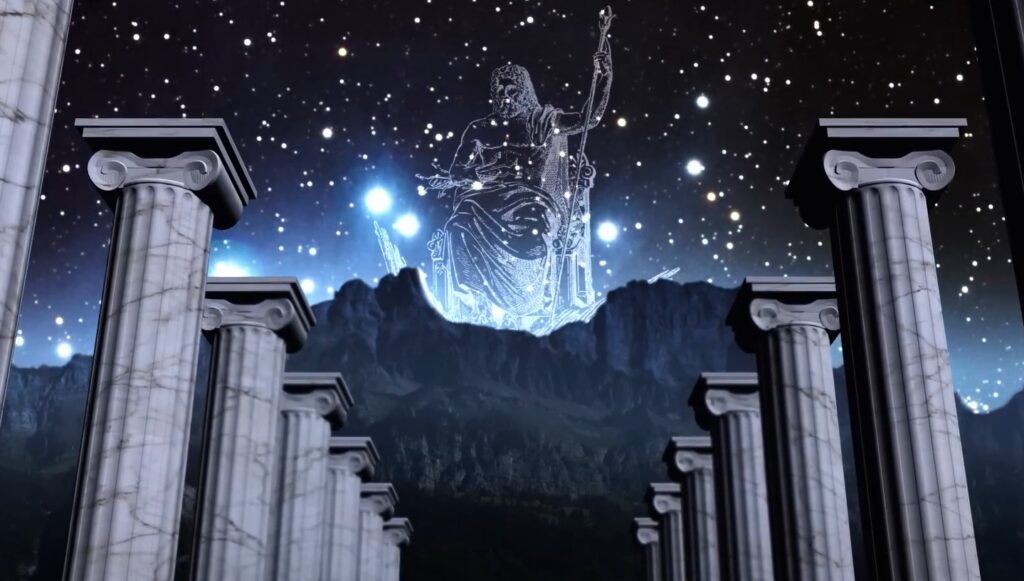
Helium is much more than the gas used to fill party balloons. It is the second most abundant element in the Universe and the second lightest, behind hydrogen. It can be found on planets, moons, and throughout stars. In fact, astronomers discovered helium in 1868 while observing a yellow glow in the Sun’s corona during a solar eclipse. Its name comes from Helios, the Greek god of the Sun.
Although your body doesn’t need helium to survive, modern technology depends on it. The element is used in barcode reader lasers, medical equipment such as MRI scanners, and scientific facilities like CERN’s Large Hadron Collider.
The moment helium disappeared, you probably wouldn’t notice anything unusual about your breathing. Earth’s atmosphere contains very little helium, so you could continue breathing normally.
However, things would quickly become dangerous inside hospitals. MRI machines rely on enormous superconducting magnets that must remain extremely cold. Liquid helium, which reaches temperatures of approximately minus 269 degrees Celsius, keeps these magnets from overheating.
Without it, the magnets could rapidly lose their superconducting properties and generate dangerous amounts of heat. Anyone undergoing an MRI scan at that moment could be exposed to serious risks, including burns.
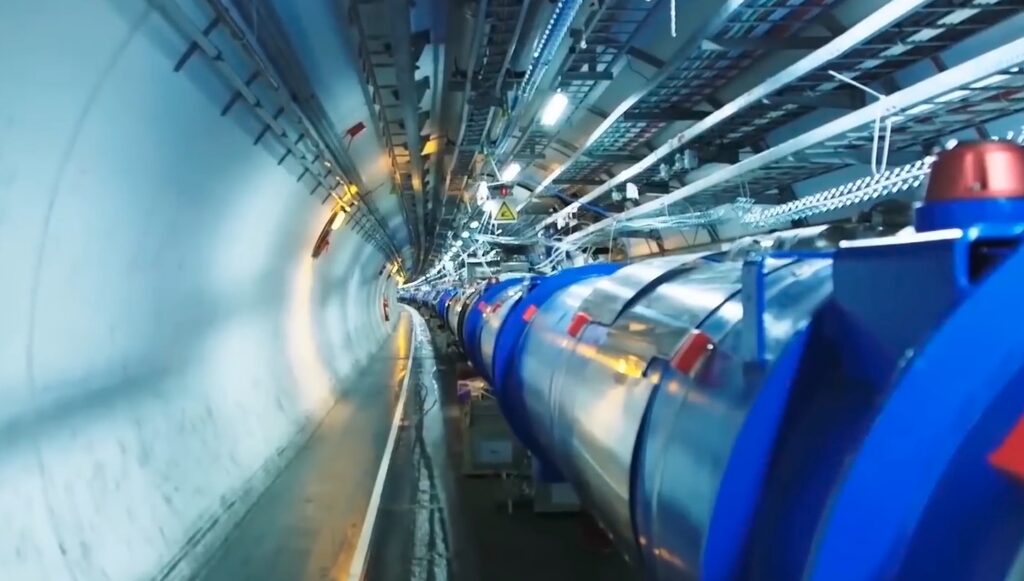
Scientists operating CERN’s Large Hadron Collider would face a similar problem. The facility relies on approximately 120 tons of liquid helium to cool its powerful magnets. Without it, the magnets could overheat, disrupting the particle beams and potentially damaging expensive equipment.
Meanwhile, every helium filled birthday balloon on Earth would suddenly collapse. Not exactly a scientific catastrophe, but certainly disappointing for children celebrating their birthdays. However, these problems would be relatively minor compared to what could happen throughout the Universe.
Inside the Sun, nuclear fusion constantly converts hydrogen into helium, producing approximately 700 million tons of helium every second. This process releases enormous amounts of energy and creates outward pressure inside the star.
The Sun remains stable because this outward pressure is balanced by the immense gravitational force pulling everything inward. Without that delicate balance, the star could become unstable.
If all helium suddenly disappeared, the Sun would lose a significant amount of mass. Its gravitational pull would weaken, potentially disrupting the balance that keeps its interior stable. The consequences could be catastrophic if the disappearance lasted long enough to affect the star’s structure.

Fortunately, the disappearance would only last five seconds. Once the helium returned, the Sun could regain the mass that had temporarily vanished, potentially avoiding a much larger disaster.
But not every star might be so fortunate. Some stars could experience serious instability, potentially triggering catastrophic changes. As the light from distant regions of space continued traveling toward Earth, we might eventually witness evidence of stellar explosions that occurred during those five seconds.
Back on Earth, MRI machines and particle accelerators might remain out of service while engineers assessed the damage. But at least our planet would still have its Sun.
The disappearance of helium might seem like a small change, but this lightweight element plays an enormous role in the Universe. From medical technology to the nuclear reactions powering stars, its importance extends far beyond party balloons.