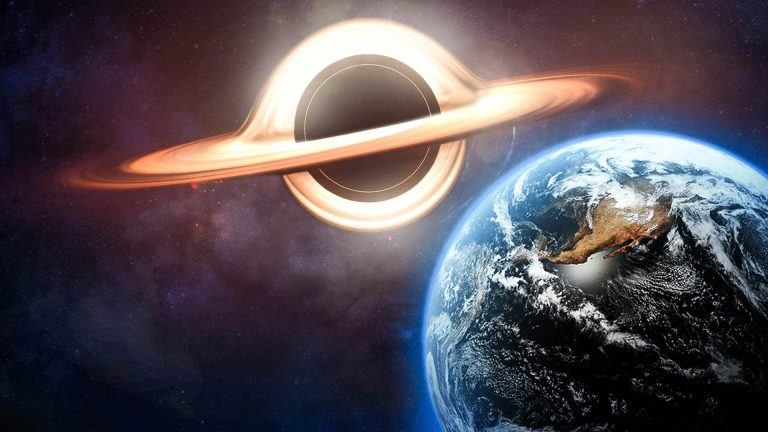
Something unusual seems to be lurking at the far edge of our Solar System. Some think it could be a hidden, oversized planet. Others suspect something far stranger, an actual black hole tucked away out there in the dark.
Just how large would an object like that need to be, what kind of influence would it exert across the Solar System, and what would actually happen to you if you somehow drifted too close?
Well beyond Neptune’s orbit lies a scattered population of small, icy bodies known as trans Neptunian objects, or TNOs for short. Oddly, these objects share a clustered orbital pattern that should not really occur on its own, which strongly suggests something massive nearby is quietly shaping their paths.
Whatever is responsible would need to carry at least 17 times Earth’s mass while sitting roughly 10 times farther from the Sun than Neptune does. Naturally, that has fueled speculation about the long theorized Planet Nine.
No direct evidence has actually confirmed a massive ninth planet as the culprit disturbing these orbits, though researchers have floated a second, considerably stranger explanation, one that could carry real implications for humanity if true. What if this mysterious mass is not a planet at all, but a black hole roughly planet sized instead?
Picturing a black hole that size, most people imagine some enormous void actively swallowing everything nearby, yet something this massive would actually be remarkably compact. All that mass would be crammed into a region no larger than a grapefruit.
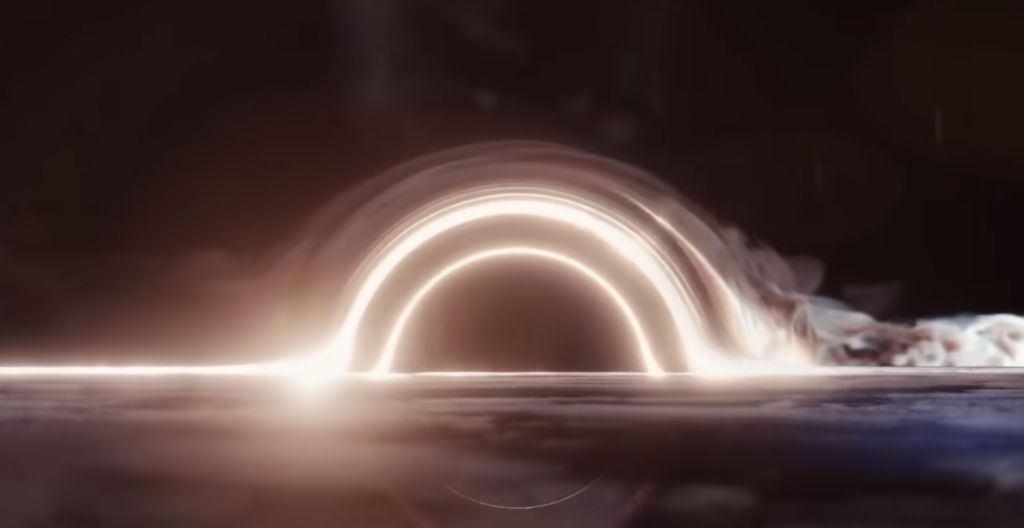
Black holes obviously come in far larger varieties too. Stellar black holes typically carry somewhere between 10 and 24 times the Sun’s mass, and they turn out to be fairly common throughout the galaxy, with astronomers estimating anywhere from 10 million to a billion of them scattered across the Milky Way alone. Were our own Sun to somehow collapse into a black hole, it would measure only about 5.8 kilometers, or 3.6 miles, across, a transformation that would obviously spell serious trouble for life on Earth.
Returning to our smaller, distant candidate lurking at the edge of the Solar System, even a modest sized black hole would carry enough mass to disturb the orbits of those TNOs from a great distance. Sitting that far from Earth in a stable orbit, though, it would leave daily life here completely unaffected.
Where is the excitement in that, though? In keeping with how these scenarios usually unfold, let’s imagine that stable orbit becoming disrupted instead.
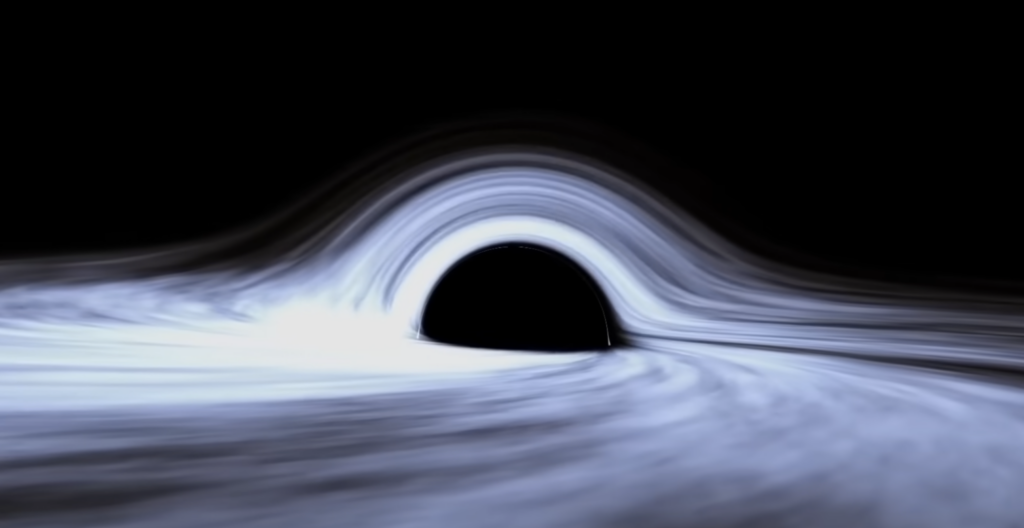
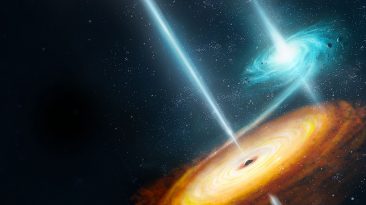
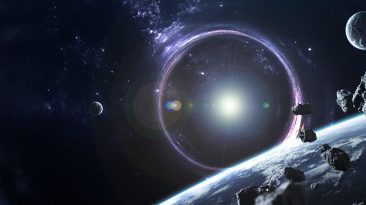
A black hole’s true danger only becomes apparent once something drifts near its event horizon, the boundary beyond which escaping would require moving faster than light itself, commonly referred to as the point of no return. For this particular object to become genuinely threatening to Earth, its gravitational pull would need to grow dramatically stronger, strong enough to start drawing in entire planets throughout our Solar System.
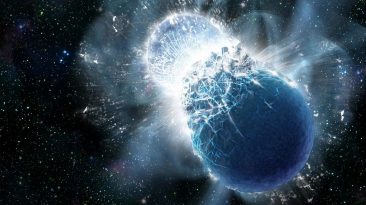
Pair that intensified pull with a disrupted orbital path, and suddenly you have an invisible gravitational force quietly consuming our planetary neighbors one after another. Anything crossing into the event horizon, whether planet or asteroid, would be torn down into subatomic fragments and compressed into an infinitesimally small point.
From Earth’s vantage point, we would watch Neptune, Uranus, Saturn, and Jupiter vanish one by one into nothingness, followed shortly by Mars. Earth itself would be next in line.
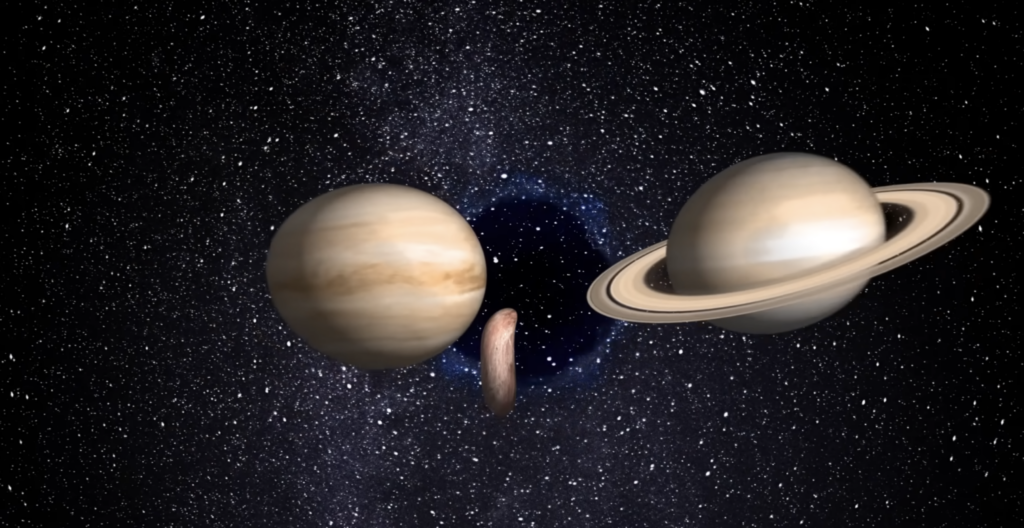
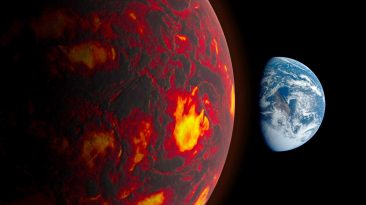
As the black hole drew nearer, Earth would begin to visibly bulge under the strain, triggering catastrophic earthquakes, volcanic eruptions, and tsunamis across the entire planet.
Anyone still alive at that point would be facing the very end. As Earth closed in on the black hole, the planet along with everything on it would be stretched apart in a process scientists call spaghettification. Realistically, though, death would arrive long before anyone got anywhere close to the actual event horizon.
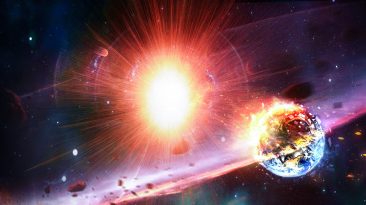
Eventually Earth would be pulled entirely into that tiny gravitational monster until nothing remained, leaving behind perhaps only a scattered trail of debris as evidence the planet had ever existed at all. This destruction would not happen instantly, either. Back in 2013, astronomers actually observed a planet somewhere between 14 and 30 times Jupiter’s mass being consumed by a black hole, with the entire process, from the first disturbance to complete destruction, stretching across two to three months.
As for the mysterious object at the edge of our own Solar System, its stable orbit around the Sun across billions of years remains a genuinely reassuring sign, and real concern would only be warranted if we started noticing actual changes in the orbits of other planets, moons, or asteroids nearby.