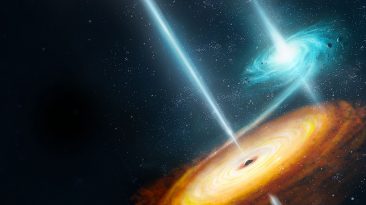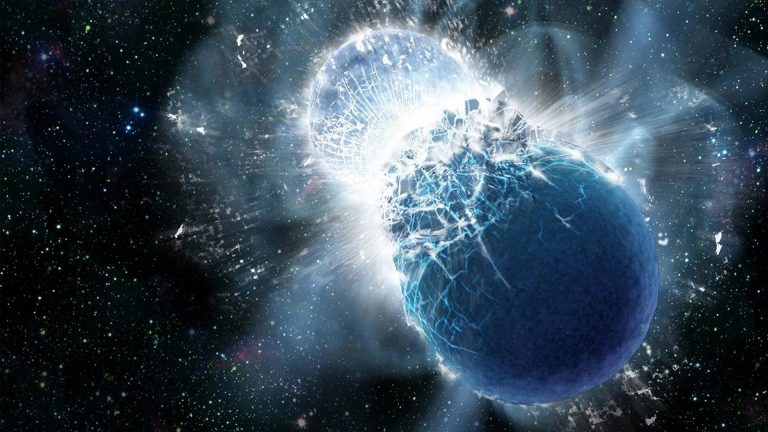
Nearly 800 million light years away, astronomers detected something that should not fit neatly into the known categories of the universe. The mysterious object had a mass roughly 2.6 times that of the Sun, placing it in a strange region known as the mass gap, where scientists have struggled to determine whether an object should become a neutron star or a black hole.
Normally, the death of a massive star can produce one of two incredibly dense remnants. A sufficiently massive collapsing core can become a black hole, while a lighter one may be crushed into a neutron star, an object so dense that a tiny amount of its material would weigh billions of tons on Earth.
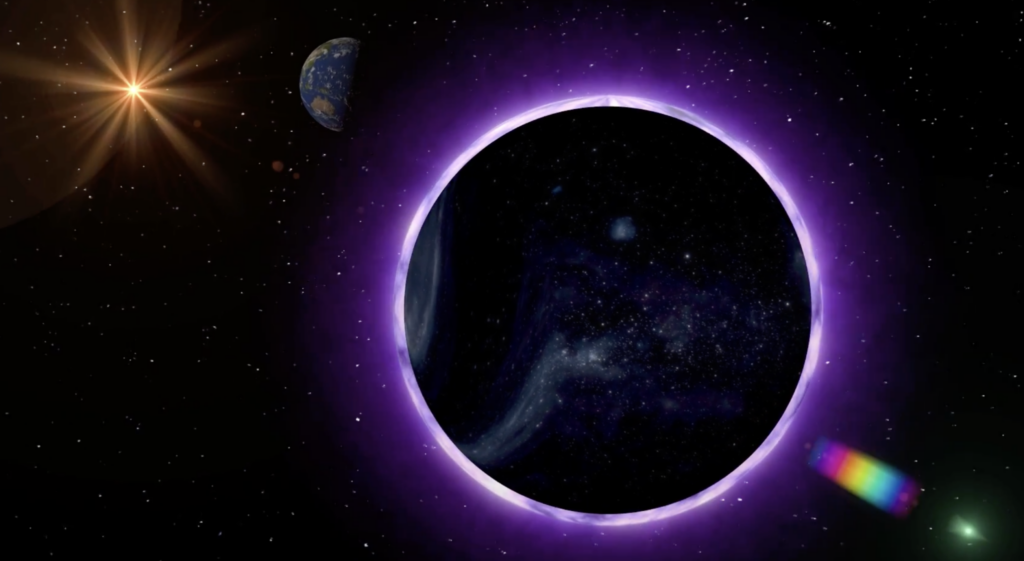
But this newly detected object appeared to sit between those possibilities. It may have been one of the heaviest neutron stars ever discovered, or one of the lightest black holes ever found, making its true identity one of the biggest mysteries surrounding the observation.
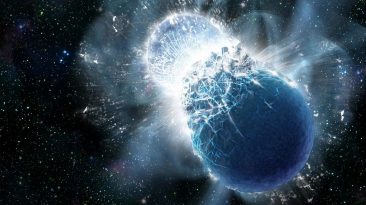
Scientists detected it when it collided with a black hole approximately 23 times the mass of the Sun. The violent merger sent gravitational waves racing across the universe, eventually reaching Earth hundreds of millions of years later, where instruments detected the tiny distortions they caused in space and time.
The real object is not heading toward our Solar System, but imagine a terrifying scenario in which an object with similar mass suddenly entered our cosmic neighborhood. Even before it reached Earth, its immense gravity could begin changing the delicate balance that keeps the planets moving in stable orbits.
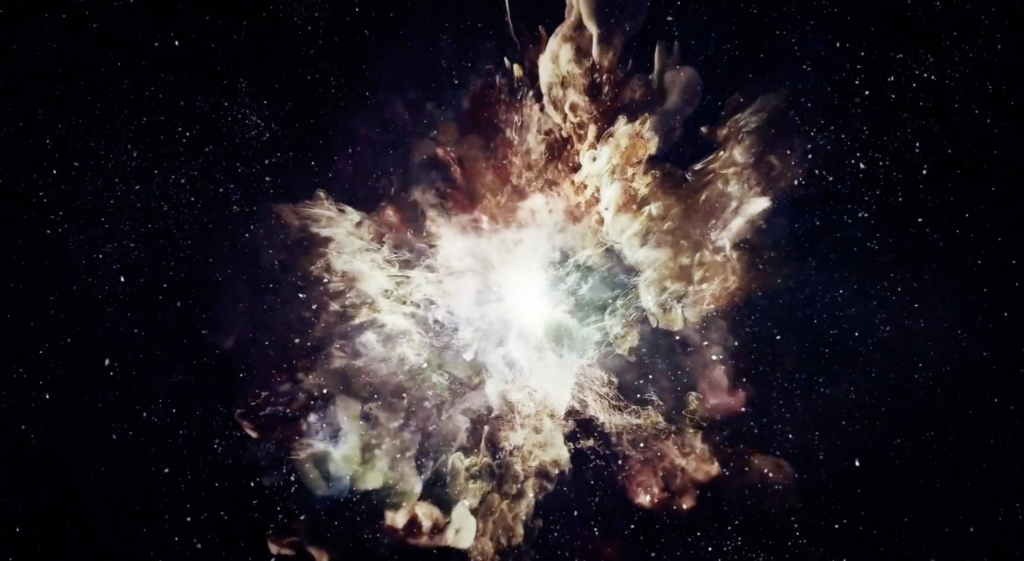
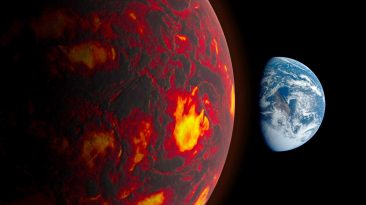
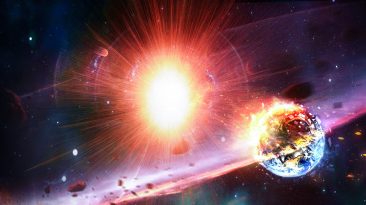
Comets, asteroids, and planets could be pulled onto entirely different paths as the intruder passed through the Solar System. Earth itself might be pushed closer to the Sun, sent farther away, or even thrown into interstellar space.
If our planet were forced far beyond its current orbit, the consequences would become increasingly severe. At first, the atmosphere and oceans could retain some heat, but as Earth moved farther from the Sun, temperatures would continue falling until much of the surface became covered in ice.
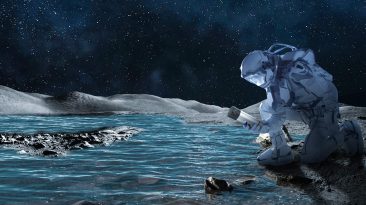
Human civilization would face a disaster unlike anything in history. Food production would collapse, ecosystems would disappear, and survival could eventually depend on protected environments capable of producing heat, food, and energy without support from the Sun.
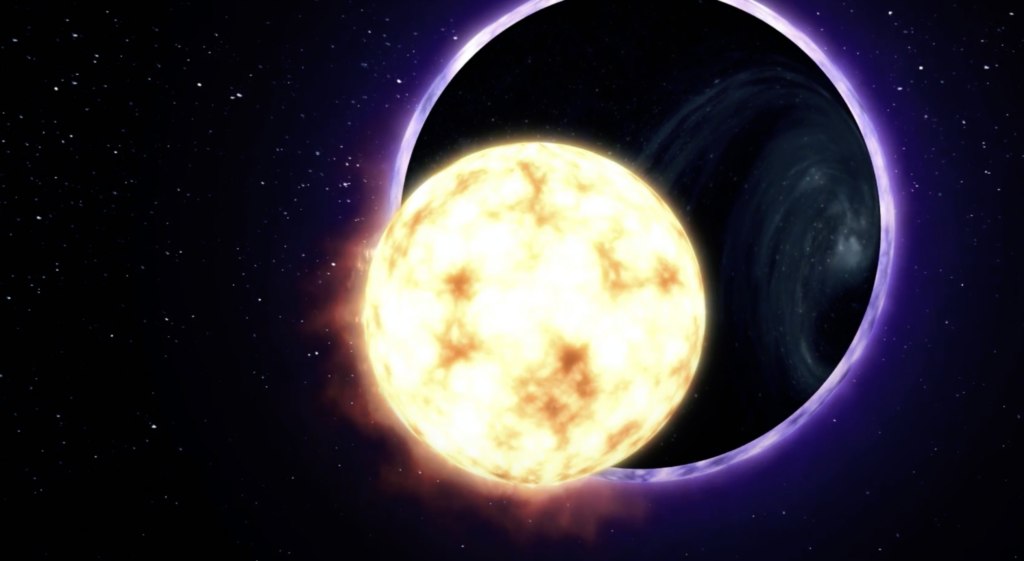
The situation could become even more dangerous if the mysterious object were an extremely magnetic neutron star known as a magnetar. Magnetars possess magnetic fields so powerful that they are among the most extreme objects known to science.
These stars can also produce enormous bursts of energy, releasing staggering amounts of radiation during violent events. If such an object came sufficiently close to Earth, its radiation and magnetic activity could create catastrophic effects long before the object physically reached our planet.
Its gravity would also produce another terrifying problem, tidal forces. As the object approached, the difference between its gravitational pull on Earth’s near side and far side could begin stretching and deforming the planet.
This process could generate enormous internal stresses, potentially triggering widespread earthquakes and intense volcanic activity. As Earth’s interior experienced increasing tidal heating, the planet could become geologically unstable while its surface was already struggling to survive the changing conditions.
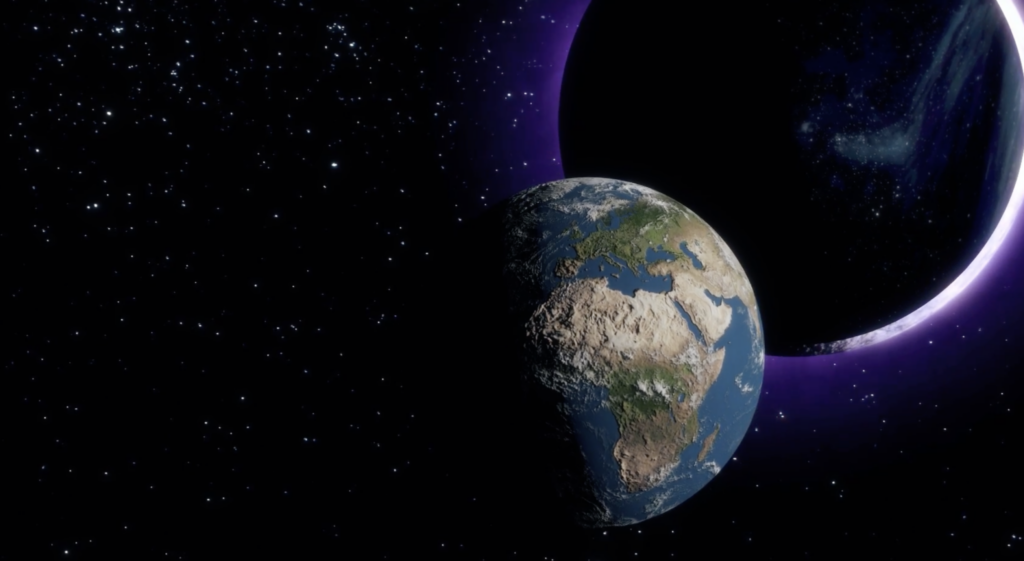
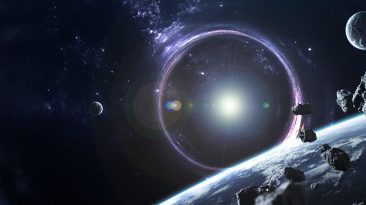
Now imagine that the object was not a neutron star at all, but an unusually small black hole. Contrary to the popular image of a cosmic vacuum cleaner, it would not instantly suck up the entire Solar System, but its enormous gravity could still destabilize planetary orbits and cause devastating encounters.
If Earth eventually passed close enough to the black hole, tidal forces would become overwhelming. The planet could be stretched and torn apart as gravity pulled much harder on one side than the other, reducing Earth to a stream of extremely hot debris.
There is also the possibility that an exceptionally massive neutron star could collapse into a black hole under the right conditions. In this imagined scenario, Earth could face the combined consequences of gravitational disruption before the object ultimately transformed into one of the most destructive objects in the universe.
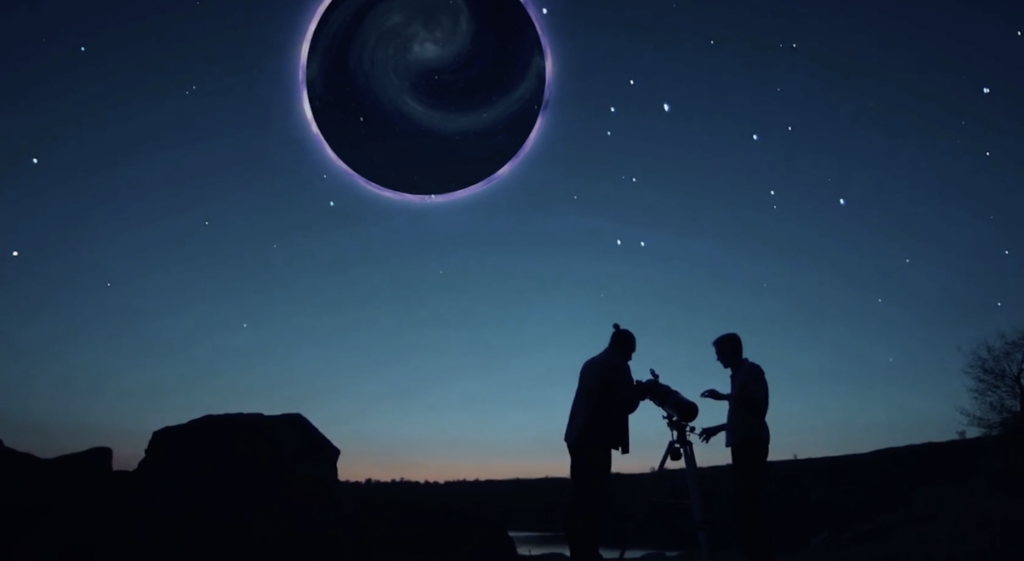
Fortunately, there is no black neutron star currently racing toward Earth from 800 million light years away. The real detection was an extraordinary cosmic collision whose gravitational waves simply traveled across space until scientists here were able to observe the event.
Still, the discovery reveals how much remains unknown about the universe. Somewhere between neutron stars and black holes may exist objects that challenge our understanding of how stars die, and if one of those cosmic monsters ever truly entered our Solar System, Earth’s carefully balanced existence could be destroyed in ways almost impossible to imagine.
And that raises another disturbing question. If an entire mysterious neutron star is terrifying enough, what would happen if something much smaller, perhaps only a spoonful of neutron star material, suddenly appeared on Earth?