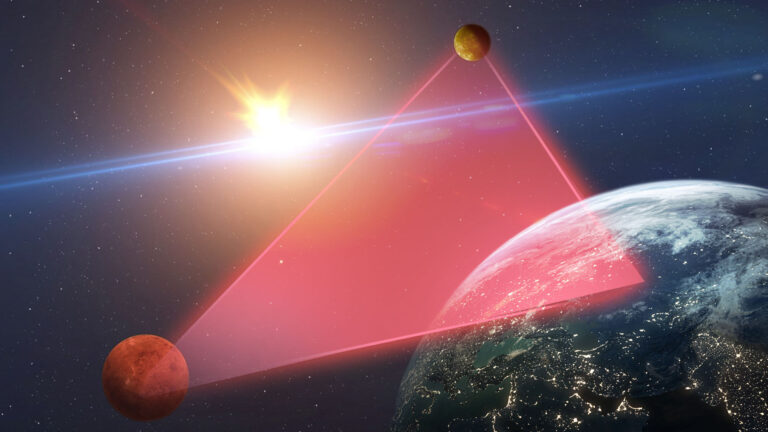
There is a weak spot in the magnetic shield protecting our planet, and it is not staying still. It drifts slowly westward, and measurements suggest it may be splitting into two separate regions.
Satellites passing through it glitch. Sensors return false readings. Onboard computers have shut down entirely, and at least one spacecraft never came back.
It sits above the South Atlantic Ocean, and people have taken to calling it the Bermuda Triangle of Space.
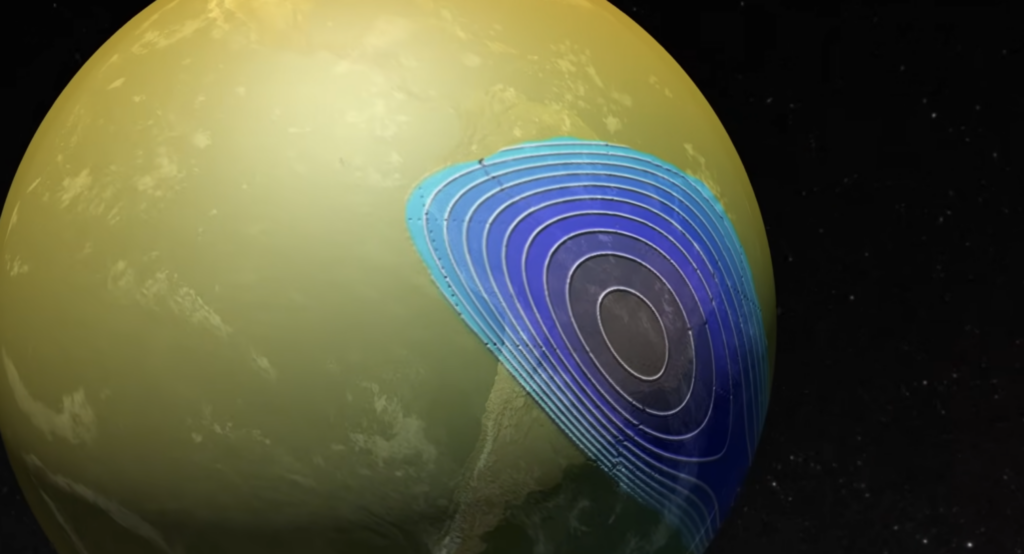
The nickname is dramatic, though the phenomenon is not supernatural at all. It is a real and measurable feature of Earth’s environment known as the South Atlantic Anomaly.
What the Anomaly Actually Is
The SAA is a large area of weakened magnetic field strength stretching between South America and southern Africa, roughly from Chile toward Zimbabwe.
Everywhere else, our magnetic shield holds high energy particles at a safe distance. Here it lets them come far closer to Earth than usual.
The reason involves the Van Allen radiation belts, two enormous zones of charged particles trapped by our magnetic field. They function as invisible protective rings against solar radiation and cosmic particles, and inside the SAA that protection thins out noticeably.
What Happens to Spacecraft
Satellites crossing the region run into a familiar list of problems. Electronics glitch, sensors produce incorrect readings, and in serious cases onboard computers temporarily shut down or malfunction.
The Japanese Hitomi satellite offers a stark example. Before its catastrophic failure in 2016, operators were receiving confusing and inconsistent data, with the spacecraft appearing to function normally even while serious system errors were unfolding in space environments influenced by the anomaly. Communication was eventually lost and the satellite broke apart.
Even the Hubble Space Telescope has to work around it. Hubble passes through the SAA regularly, so NASA schedules temporary shutdowns of its most sensitive systems during each crossing. Skip that precaution and high energy particles could corrupt scientific data or damage critical components outright.
How Astronauts Protect Themselves
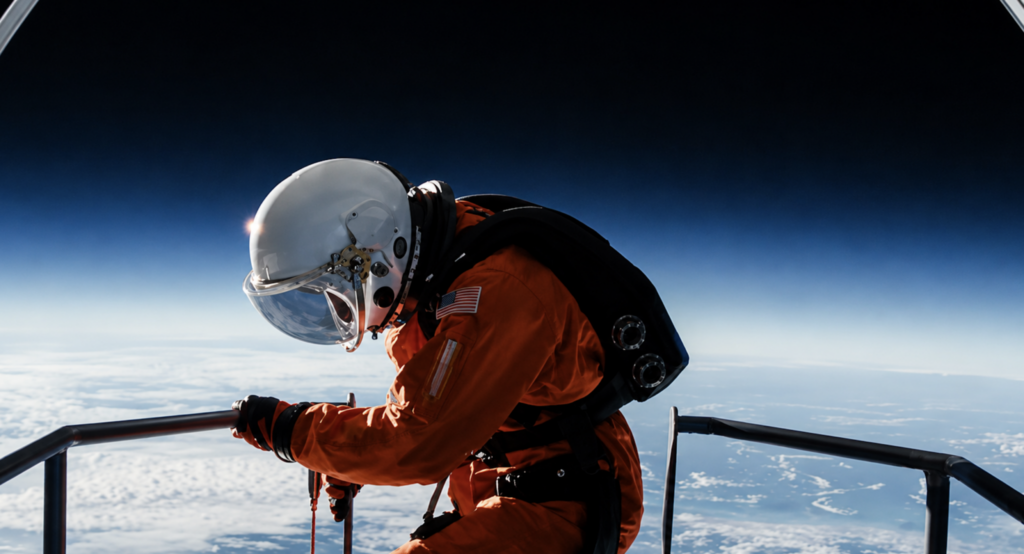
Radiation exposure in low Earth orbit is monitored constantly, and space agencies treat the SAA seriously when planning missions.
One protective method uses water. Certain areas of spacecraft are lined with containers or walls filled with it, since the hydrogen content makes water highly effective at absorbing and slowing energetic particles. Astronauts can move into those shielded areas during periods of heightened exposure.
Without precautions like these, prolonged exposure raises the risk of radiation sickness and long term health consequences including cancer.
Why the Anomaly Exists
Nothing mysterious causes it. The explanation lies in the structure of Earth’s magnetic field.
Our planet looks like a sphere but is slightly flattened at the poles and bulging at the equator. On top of that, the magnetic field is not perfectly aligned with the physical center of the planet, sitting offset by several hundred kilometers.
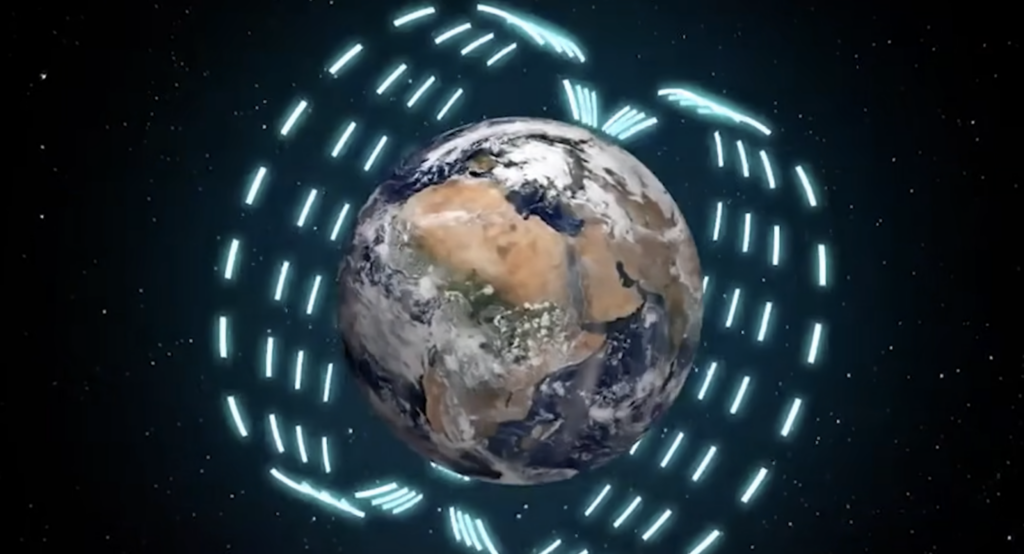
That misalignment creates a weak point. In the SAA region the protective shield dips closer to the surface, letting energetic particles reach deeper into the paths that spacecraft travel.
A Region That Keeps Changing
What makes the anomaly genuinely interesting is that it refuses to stay put.
Measurements from agencies including NASA show it gradually drifting westward. The data also suggests it may be weakening and beginning to divide into two separate regions.
That would complicate future satellite operations considerably, since spacecraft would face multiple zones of heightened radiation instead of navigating one.
The reassuring detail is the pace. Scientists stress that the SAA evolves across long geological timescales, so significant transformations would take thousands to millions of years.
Why It Matters for Space Travel
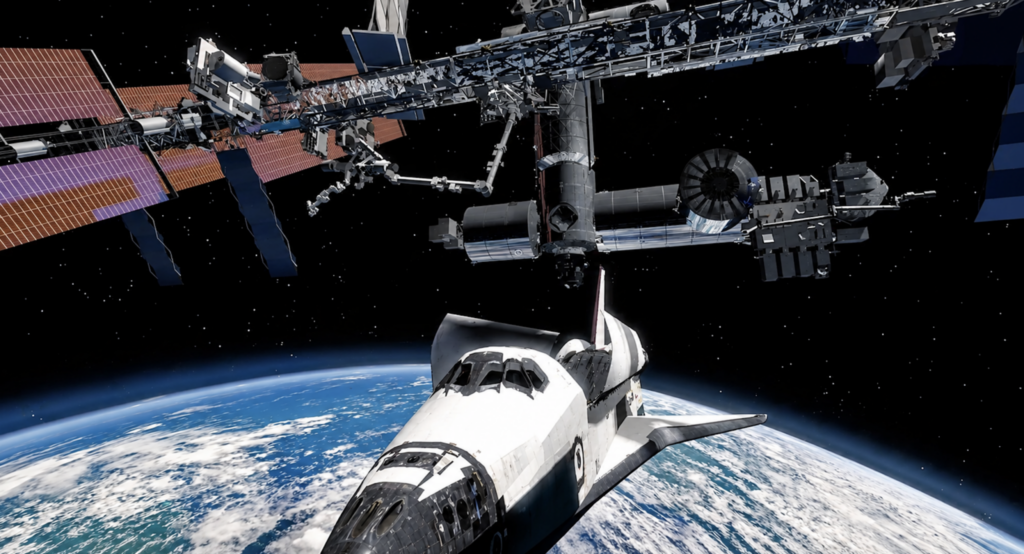
The anomaly poses no danger to anyone standing on Earth, but it shapes how missions get planned. Satellite operators, engineers, and astronauts all have to account for it when designing equipment, plotting orbits, and scheduling communications.
The bigger question is what happens if Earth’s magnetic field ever undergoes a major shift or reversal, since the effects on the SAA could grow far more serious, increasing radiation exposure in orbit and complicating everything we send up.
For now the Bermuda Triangle of Space is not a mystery at all. It is a reminder that the environment around our planet is constantly moving, and that the invisible forces protecting us are far less fixed than they appear.