Scientists may have just taken one of the biggest steps yet in the search for life beyond Earth. Meet K2 18 b, a distant exoplanet located about 124 light years away from us, and one of the most promising worlds ever identified for potential alien life.
This planet is not just another far away rock in space. It is 2.6 times larger than Earth and about 8.6 times more massive. It orbits a cool red M type dwarf star, very different from our Sun, and sits in a region where conditions might allow liquid water to exist.
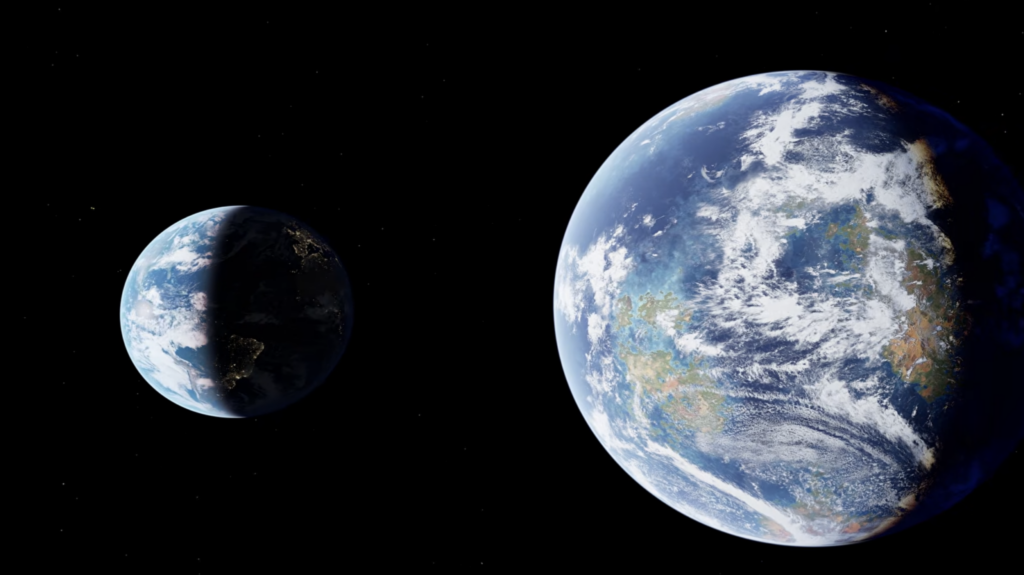
Already, scientists are debating what kind of world it really is. Some think it could be a super Earth with a rocky surface and shallow oceans. Others suggest it might be a mini Neptune with a thick atmosphere and no solid ground at all.
Either way, K2 18 b is now at the center of one of the most exciting questions in science. Could it actually support life?
The excitement comes from recent observations made using powerful space telescopes, including the James Webb Space Telescope. Researchers detected traces of chemicals in the planet’s atmosphere, including dimethyl sulfide and dimethyl disulfide. On Earth, these gases are often linked to biological activity from marine microorganisms.
This does not confirm life, but it does raise a serious possibility that something biological could be happening there.
Of course, reaching this planet is completely out of reach with current technology. Even traveling at the speed of the fastest spacecraft ever built, it would take over 100,000 years to get there. For now, K2 18 b can only be studied from a distance using advanced methods like transmission spectroscopy.
This technique allows scientists to analyze the starlight that passes through a planet’s atmosphere when it moves in front of its star. Different gases absorb different wavelengths of light, allowing researchers to identify what the atmosphere is made of, even across enormous distances.
In the case of K2 18 b, this method has opened a rare window into a world we may never physically reach.
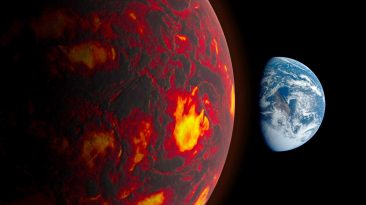
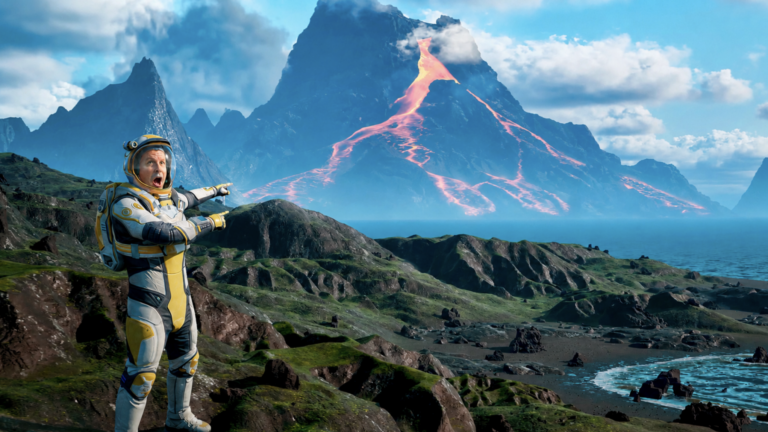
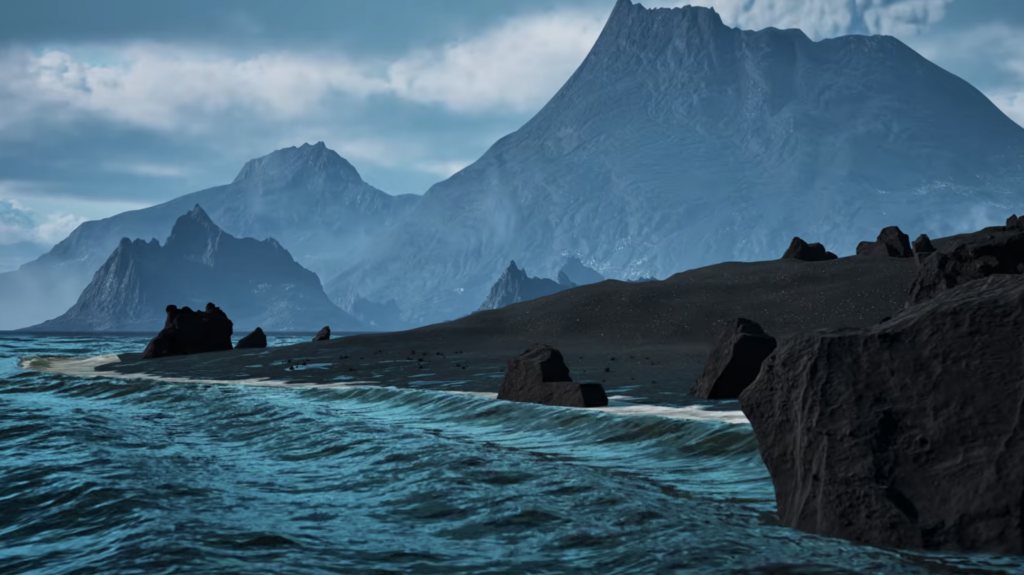
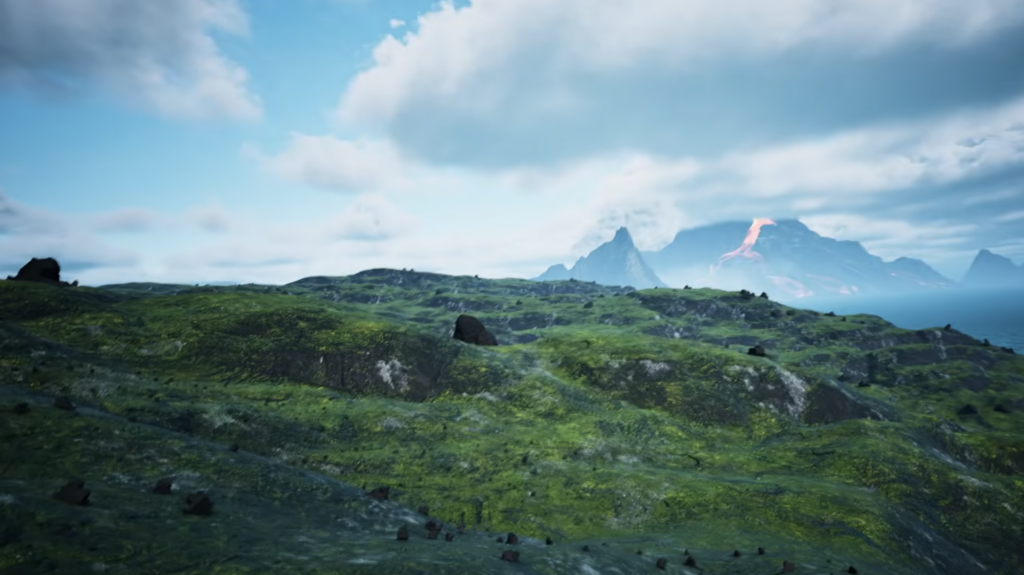
Conditions on the planet are still uncertain, but early estimates suggest it could have temperatures somewhat similar to Earth in certain regions. It may also have a thick atmosphere, possible ocean layers, and strong internal activity that could create volcanic or geological motion.
However, not everything about this system is friendly.
K2 18 b shares its star with another larger planet, K2 18 c, a massive Neptune like world that is far less likely to support life. Together, they form a system that challenges what we know about how planets evolve around red dwarf stars.
Despite the uncertainty, K2 18 b has become one of the strongest candidates yet in the search for biosignatures beyond our Solar System.
If even simple microbial life exists there, it would completely change our understanding of life in the Universe. It would mean Earth is not unique, and that life may be far more common than we ever imagined.
For now, scientists continue to study this distant world carefully, waiting for more data and clearer signals.
K2 18 b may be far away, but it is already bringing us closer to answering one of humanity’s oldest questions.
Are we alone in the Universe?