Earth feels permanent only because human lives are so short. On the scale of the cosmos, however, our planet is passing through a brief moment in an existence that stretches across unimaginable lengths of time.
The Sun will change, galaxies will merge, stars will disappear, and eventually even the matter that makes up everything around us may cease to exist in its familiar form. Some of these events are based on well understood physics, while others remain possibilities that depend on theories about the ultimate fate of the Universe.
What follows is a journey far beyond ordinary history, beginning roughly a billion years from now and continuing into times so distant that they are almost impossible to comprehend.
1 Billion Years from Today: Earth Becomes Uninhabitable
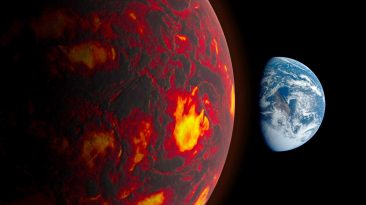
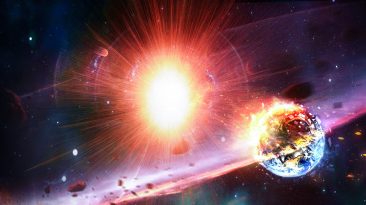
About one billion years from now, Earth could be almost unrecognizable. The Sun gradually becomes more luminous as it ages, increasing the amount of energy reaching our planet and pushing its climate toward conditions that are increasingly hostile to life.
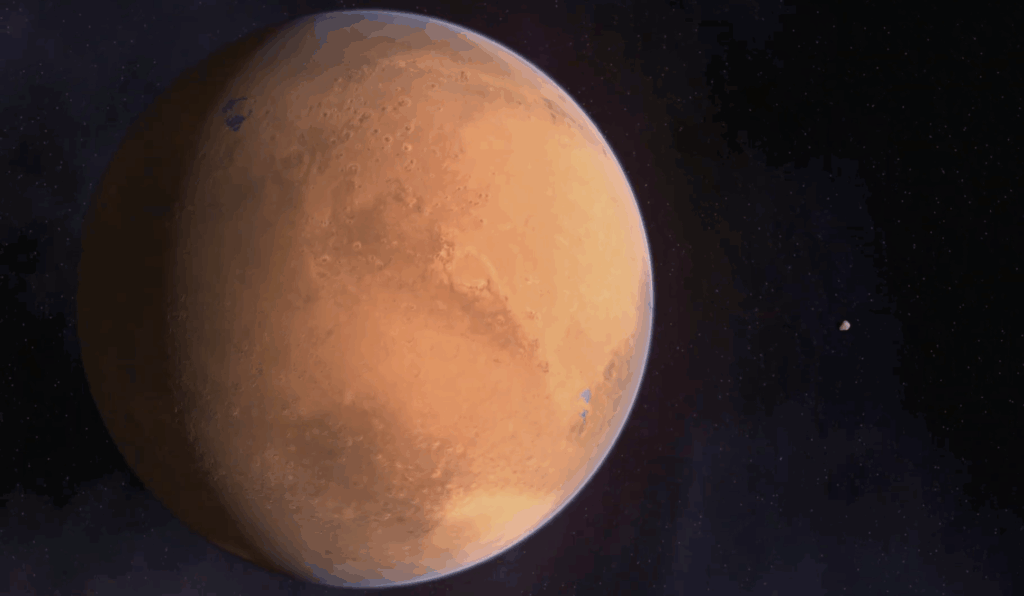
Higher temperatures would disrupt the carbon cycle and make it increasingly difficult for plants to survive. As vegetation disappears, animal life would also collapse, while the oceans could eventually lose much of their water through evaporation.
The planet could ultimately become a dry and barren world, with the lush ecosystems that exist today completely gone. Any surviving life would probably be restricted to increasingly extreme environments before eventually disappearing.
If humans still exist at that point, Earth would almost certainly no longer be their permanent home. Civilizations could have moved to other planets, moons, artificial habitats, or entirely different star systems. Some speculative scenarios even imagine humans existing partly through advanced machine based forms of consciousness.
10 Billion Years from Today: The Sun Dies and the Galaxies Merge
Several billion years later, the Sun will have undergone enormous changes. After exhausting the hydrogen available in its core, it will expand dramatically into a red giant, potentially engulfing Mercury and Venus and making Earth’s future even more extreme.
Earth could lose its atmosphere and oceans long before the Sun reaches its final stages. Eventually, the Sun will shed its outer layers and leave behind a white dwarf, a dense stellar remnant roughly comparable in size to Earth.
Meanwhile, something enormous will have happened on the galactic scale. The Milky Way and Andromeda are expected to interact and eventually merge into a new combined galaxy often referred to as Milkomeda.
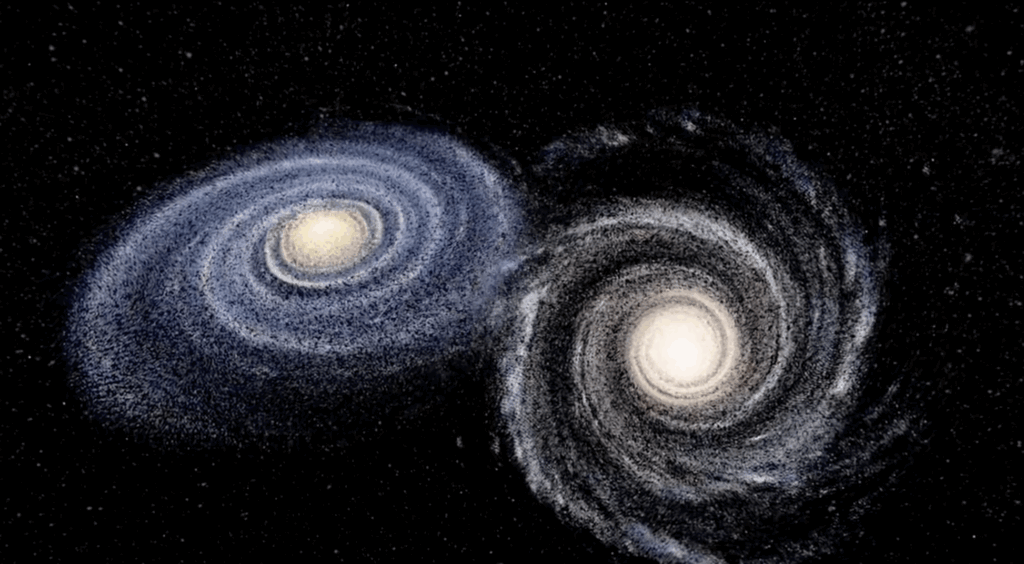
Despite the spectacular appearance of two galaxies colliding, individual stars are unlikely to smash directly into one another because the distances between them are enormous. The gravitational rearrangement could still dramatically alter the location of our Solar System.
Some models suggest that the Solar System could be moved much farther from the galactic center, while there is also a possibility that it could eventually be thrown outside the newly merged galaxy.
22 Billion Years from Today: The Possible Big Rip
One possible future depends on the mysterious force known as dark energy. If its properties are different from what current standard models assume, the accelerating expansion of the Universe could eventually become so powerful that even bound structures would be unable to remain together.
This hypothetical outcome is called the Big Rip. In such a scenario, galaxies would separate first, followed by smaller structures, stars, planets, and eventually atoms themselves.
However, this is far from a guaranteed prediction. Scientists do not currently know the ultimate nature of dark energy, meaning the Big Rip represents one possible future rather than an established destination for the Universe.
100 Trillion Years from Today: The Stars Go Dark
Long before the Universe reaches its most extreme stages, the era of normal star formation will gradually come to an end. Over enormous periods of time, stars will exhaust their available fuel and disappear from the cosmic landscape.
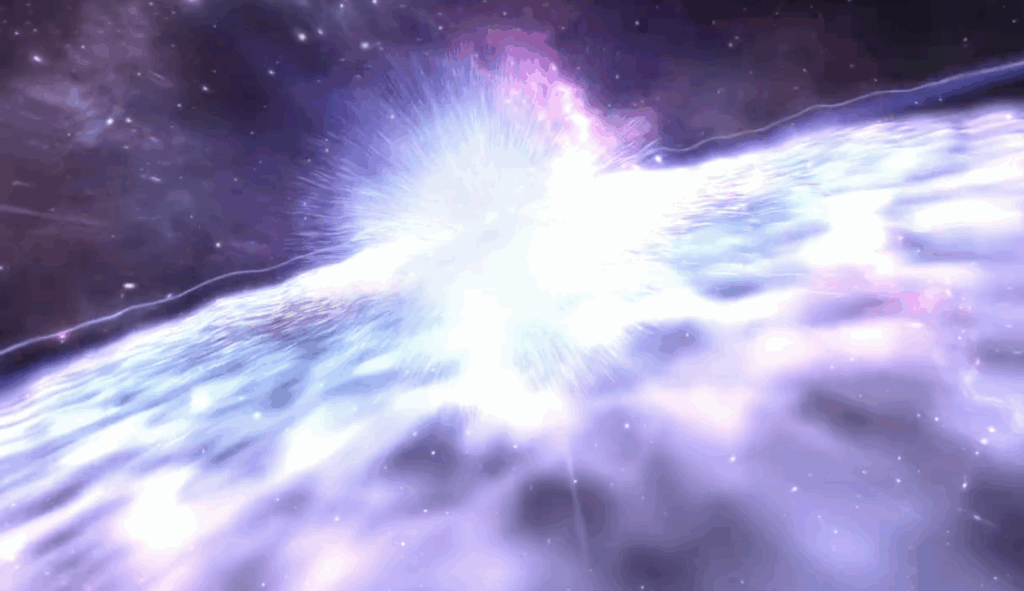
The smallest stars will last the longest. Red dwarfs can remain active for extraordinary lengths of time, far exceeding the lifespans of massive stars, but even these long lived stars will eventually fade.
Massive stars will end their lives much earlier, often through spectacular explosions that can leave neutron stars or black holes behind. Supernovae also distribute heavy elements into space, but the supply of material available to create new generations of stars will eventually decline.
Once star formation effectively stops, the Universe will become progressively darker. Instead of bright stars filling the sky, the cosmos will increasingly be dominated by stellar remnants.
10 Quintillion Years from Today: The Degenerate Era
By this unimaginably distant point, the familiar night sky would be almost completely gone. White dwarfs, brown dwarfs, neutron stars, and black holes would make up much of what remains of the large scale cosmic structure.
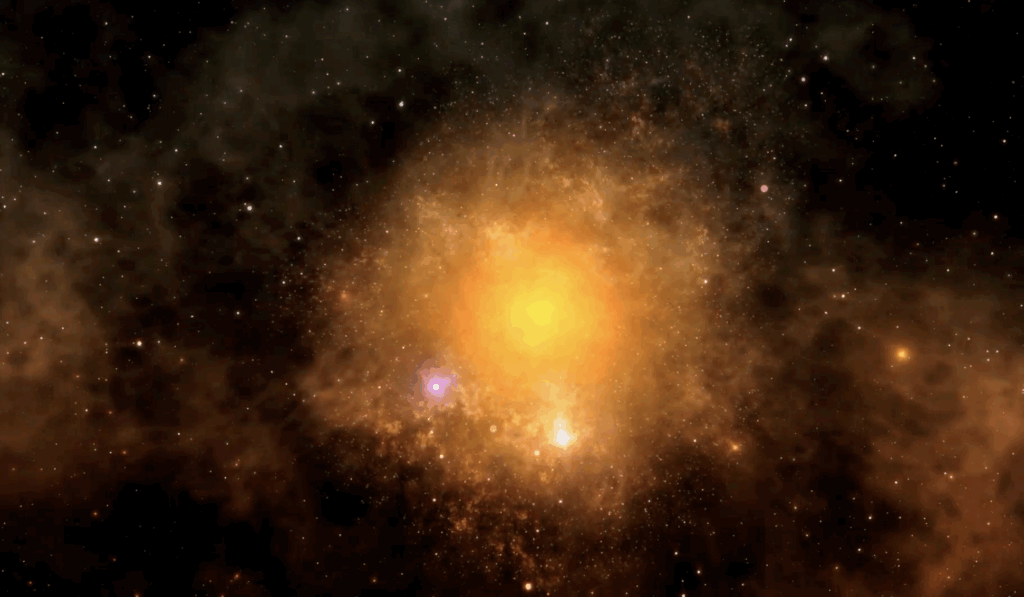
Occasional interactions between stellar remnants could produce unusual events, but such occurrences would become increasingly rare as the Universe expands and objects become separated by enormous distances.
If some form of humanity remained, survival would be extraordinarily difficult. Any civilization would need to obtain energy from an environment containing fewer and fewer useful sources of power.
Speculative ideas about digital consciousness or forms of existence that require less energy could become relevant in such a distant future, although there is no evidence that humans could actually achieve such a state.
10 Decillion Years from Today: Matter Itself May Change
The future could become even stranger if protons are not completely stable. Some theories of particle physics predict that protons may eventually decay, although proton decay has never been observed and remains hypothetical.
If proton decay does occur, ordinary matter would gradually be dismantled. Atoms and the structures built from them would eventually disappear, leaving behind increasingly sparse particles and radiation.
White dwarfs and neutron stars would also fade as the Universe continued expanding and cooling. The once crowded cosmos would become an increasingly empty environment with fewer sources of usable energy.
10 Duodecillion Years from Today: The Black Hole Era
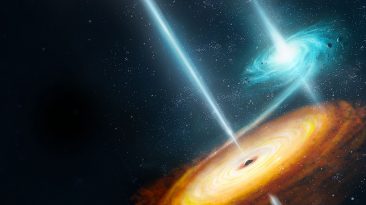
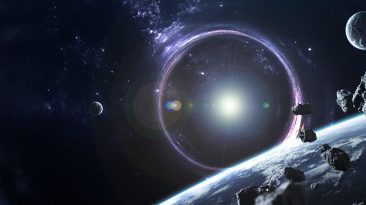
Eventually, black holes could become the most significant remaining objects in the Universe. With stars gone and ordinary matter increasingly dispersed, these enormous gravitational structures could remain long after almost everything else has vanished.
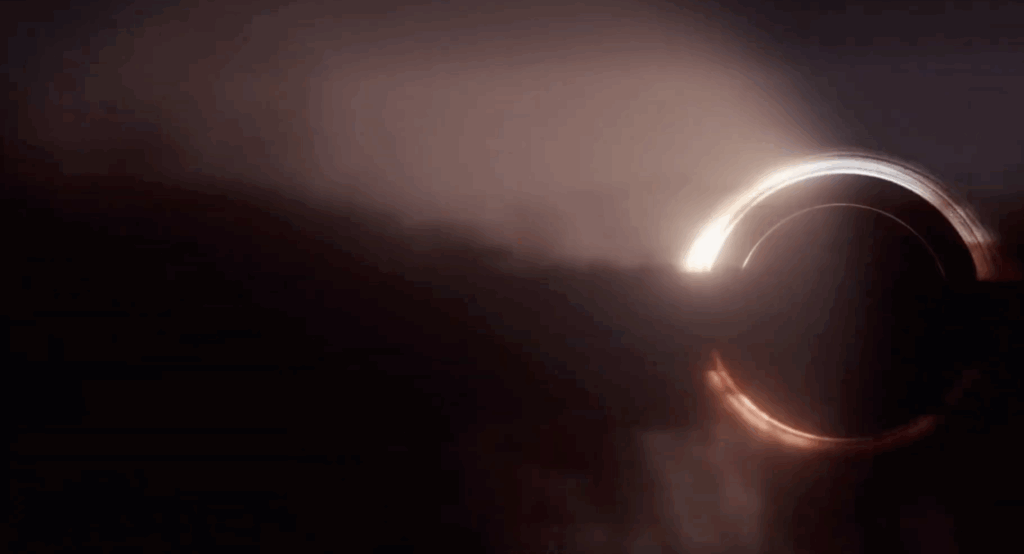
Even black holes are not expected to last forever. According to Stephen Hawking’s theory, they can slowly lose energy through a process known as Hawking radiation.
The evaporation of a massive black hole could take an almost incomprehensible amount of time. Eventually, however, even the largest black holes could disappear, releasing their remaining energy into an increasingly cold and empty cosmos.
What began with a living planet filled with oceans, forests, and billions of people could ultimately end in something almost completely different. Stars would be gone, galaxies would be transformed, and perhaps even matter itself would no longer exist in the form we recognize.
The distant future of the Universe is still filled with unanswered questions, particularly concerning dark energy, the stability of matter, and what happens at the most extreme limits of physics. But one thing is certain: on cosmic timescales, nothing remains unchanged forever.