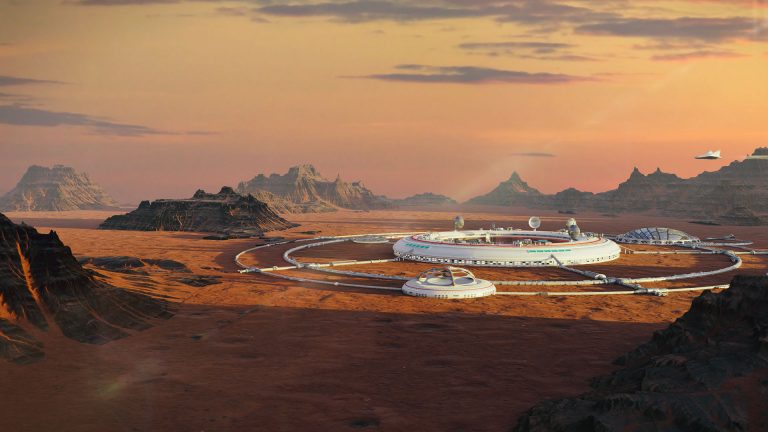
The next step in space exploration isn’t generations away. It’s happening right now. And our destination? That mysterious, desolate world next door, Mars.
Imagine starting life over on that tiny red dot over 265 million km (16.5 million mi) away. What would happen if we built a city on Mars?
According to the Bordeaux Institut National Polytechnique, you would need at least 110 settlers to start this adventure. The SpaceX plan starts with two spaceships carrying 100 people each. With this handful of explorers, your city would have just enough people to build more habitats and research stations without putting your resources in danger.
If you run out of food at this stage, that’s the end of this experiment.
The biggest challenge this city faces is becoming sustainable without relying on regular shipments from Earth, which will only come every few years. Supply runs would only launch when Earth and Mars align, which happens every two years to cut down on travel time between our worlds.
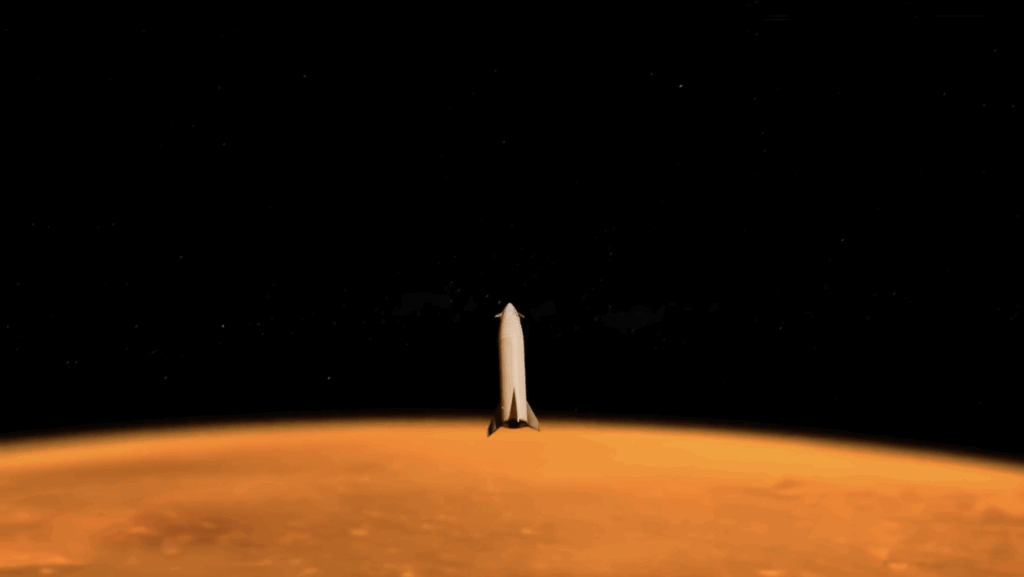
Well, before you worry about eating, you’ll need to set up protection from the harsh conditions on Mars. With an atmosphere made of 95% carbon dioxide, the air on Mars is toxic. And don’t forget the intense radiation on the surface. With more exposure to radiation and no breathable air, you won’t survive without a controlled environment.
Thankfully, with the help of those rocks under your feet, you have all the protection you need. Just 5 m (16 ft) of the surface materials on Mars, called regolith, provides the same amount of shielding from radiation as Earth’s atmosphere.
Costing as little as $4,000 per home, some companies on Earth have constructed 3D-printed houses around 75 m2 (800 ft2), and all built within a day.
Even with this technology, Elon Musk claims it could take up to 10 years to establish a settlement.
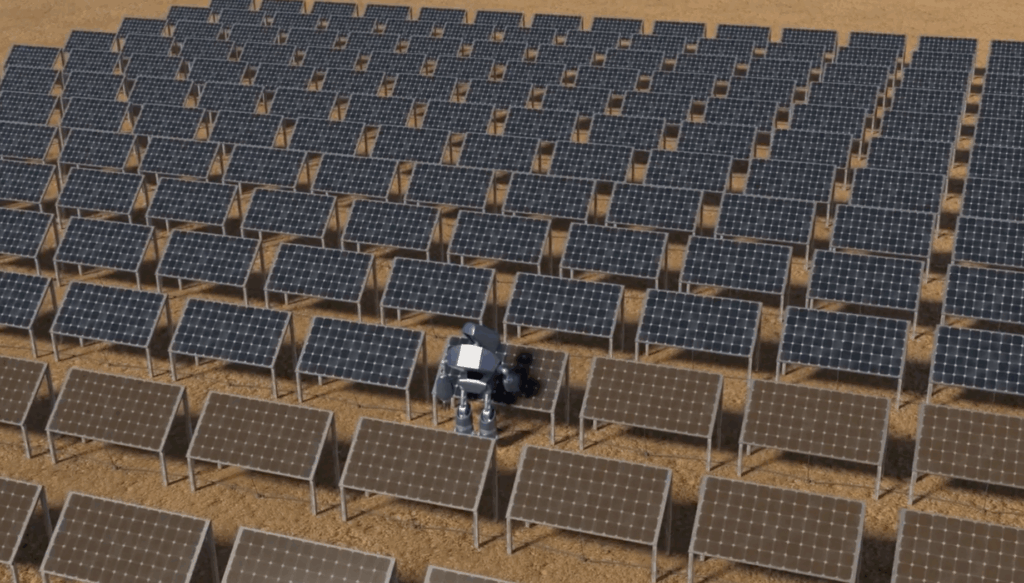
Since this world isn’t being drilled or fracked, the power grid on Mars can be made sustainable right from the start. We would set up solar arrays for electricity and use natural gases like methane for engines. Our footprint on Mars could start low and stay that way, no matter how many people live there.
And now you better figure out a way to feed all these people.
To keep your body healthy, you’ll need to provide more protein. You’ll have to serve the equivalent of 110 cooked chicken breasts and 660 carrots every day. If one of these domes contained an indoor farm, you could raise the chickens you need to feed your city. And you would have the most nutrient-rich manure available.
Scientists still debate whether liquid water exists below the ice caps on Mars. But if it does exist, that freshwater source could be filtered for the settlers to use for irrigation.
With supplies transported every two years, having spring water available on Mars would change how the city would operate. It would create a government infrastructure to distribute and oversee the water supply and employ scientists to manage the filtration needs.
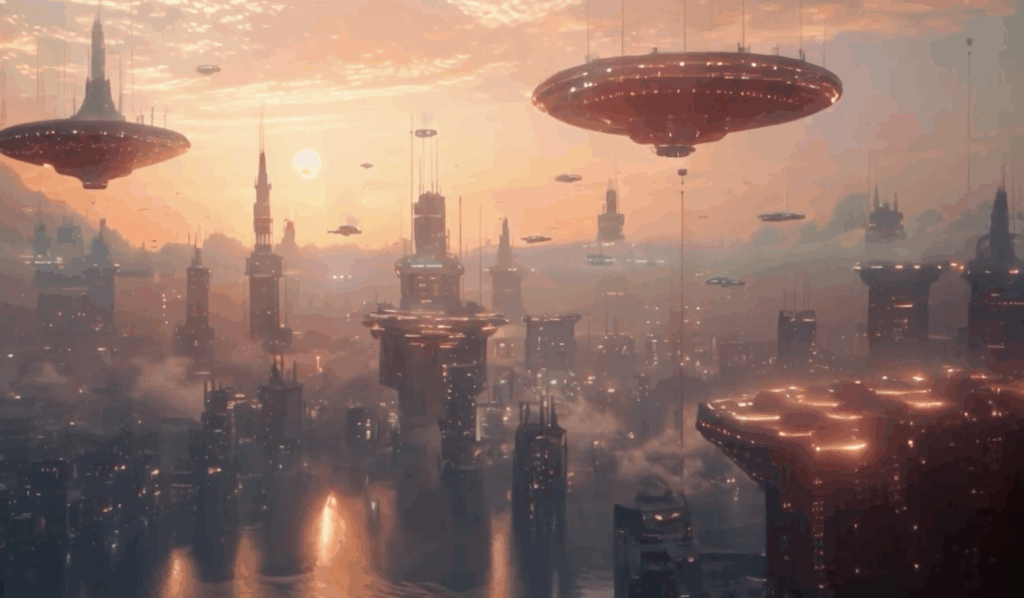
Now the city has an infrastructure in place and jobs to fill. So how would you value your time in terms of cash? How could you pay for products or services?
Well, you might have to use a cryptocurrency known as MarsCoin.
While MarsCoin would only be available to Martians, this money would help build the government, increase trade, and create a standard of living.
With society on Mars still new, maybe you could trade your services or learn to barter goods instead of relying on this cash system.
If we do things right, life on Mars might be the model for future civilizations, free from the constraints of the culture built on Earth.