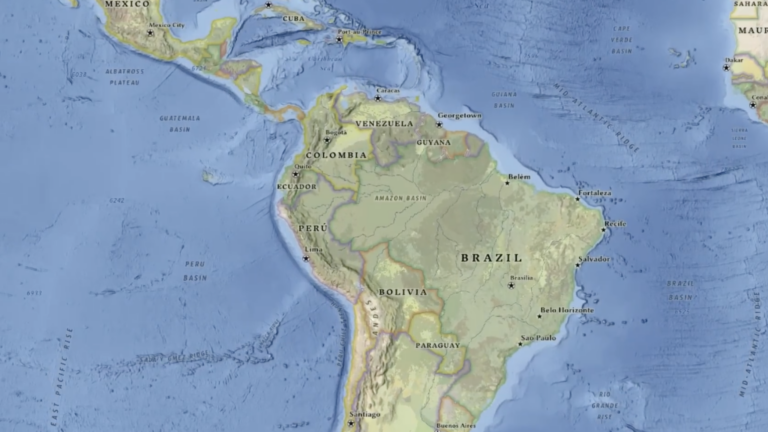
Latin America is divided among more than 20 independent countries and territories, each with its own government, economy, culture, and history. Yet for centuries, thinkers and political leaders have imagined what could happen if the region overcame those divisions and acted as a single power.
Few figures are more closely associated with that idea than Simón Bolívar. Known as The Liberator, Bolívar believed that the nations of Latin America could become stronger by standing together rather than remaining vulnerable to outside powers.
Now imagine that his vision suddenly became reality. Mexico, Central America, South America, and parts of the Caribbean merged into one enormous nation overnight, creating a political and economic giant directly beside the United States.

The first thing that would become obvious would be the sheer size of this new country. Its territory would extend from Mexico’s northern frontier all the way to Tierra del Fuego at the southern end of South America, connecting an extraordinary range of landscapes and climates under one government.
Depending on which territories were included, the new superstate could cover more than 20 million square kilometers. That would make it larger than the United States and Canada combined, while giving it access to some of the most strategically important environments on the planet.
Its geography alone would provide enormous advantages. The Amazon would give the country an ecological resource unlike anything possessed by most nations, while the Andes would provide access to valuable minerals, energy resources, and strategic highlands.
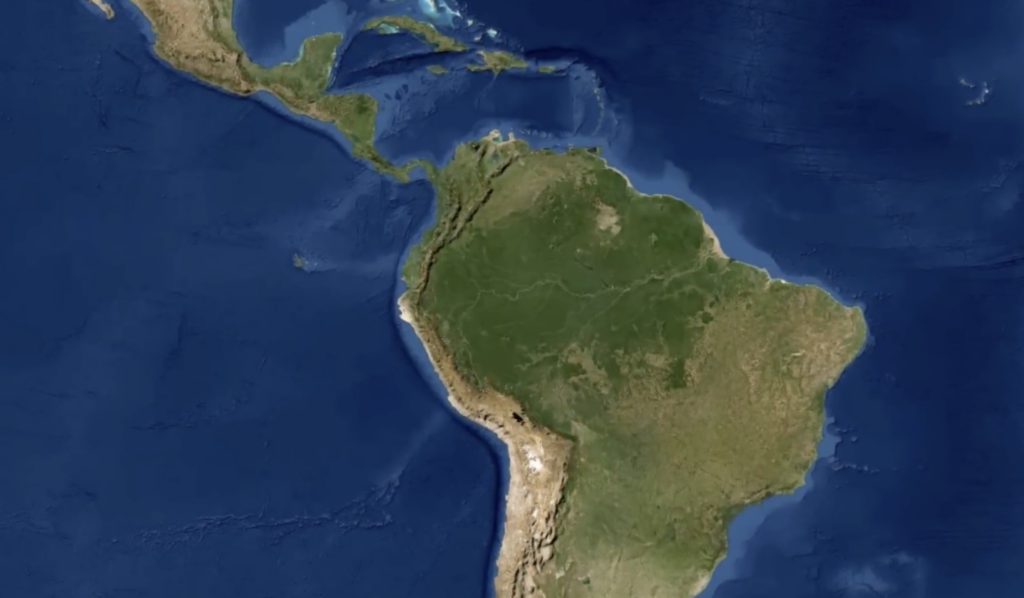
Its coastlines would be just as important. A unified nation would have enormous access to both the Pacific and Atlantic Oceans, along with the Caribbean, giving it countless opportunities to build ports and dominate major shipping routes.
Meanwhile, enormous agricultural regions could produce food on a scale capable of supplying both the new population and international markets. Combined with its forests, freshwater, minerals, oil, and other natural resources, the country would immediately become one of the world’s most resource rich powers.
The economic consequences would be enormous. Instead of having dozens of separate markets with different regulations, currencies, borders, and trade policies, the new nation could eventually establish one integrated economic system covering almost the entire region.
Spanish and Portuguese would likely remain the dominant languages, while governments would have to create common institutions capable of managing an extraordinarily diverse population. A unified market could make it easier for workers, businesses, goods, and investment to move across the continent.
The combined economic strength could eventually place the new country in direct competition with the world’s largest economies. Brazil’s industrial capacity, Mexico’s manufacturing sector, Venezuela’s oil reserves, and the agricultural strength of countries throughout the region could become parts of one enormous economic machine.
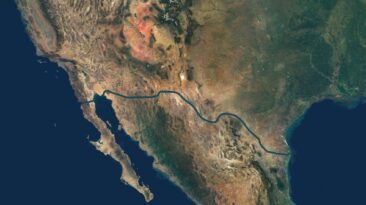
For the United States, the emergence of this superstate would represent one of the biggest geopolitical changes in the Western Hemisphere. Instead of dealing with dozens of governments to its south, Washington would suddenly have one enormous neighbor stretching across the continent.
At first, the relationship could become highly beneficial for both sides. The United States and the new Latin American nation could build deeply connected supply chains, expand trade, and create one of the largest economic partnerships in the world.
But cooperation would not be guaranteed. A unified Latin America would have its own enormous population, natural resources, industrial base, and strategic position, giving it enough influence to challenge the United States in international affairs.
If the two powers remained friendly, the Western Hemisphere could become one of the world’s most powerful economic blocs. But if their interests began to collide, the sudden appearance of such a massive unified nation could fundamentally alter the balance of global power.