
For decades, science fiction has shown humanity’s first contact with aliens as a dangerous moment. Movies often portray extraterrestrial visitors as invaders arriving to conquer Earth. But outside of Hollywood, scientists have been asking a much more complicated question: should we really be trying to tell the universe that we exist?
The truth is, we do not even know if intelligent alien life exists. But if advanced civilizations are out there and they are capable of detecting our signals, there are only a few possibilities. They may have never noticed us, they may be avoiding contact, or they could already know about humanity and simply be waiting.
The biggest question is whether they would come in peace.
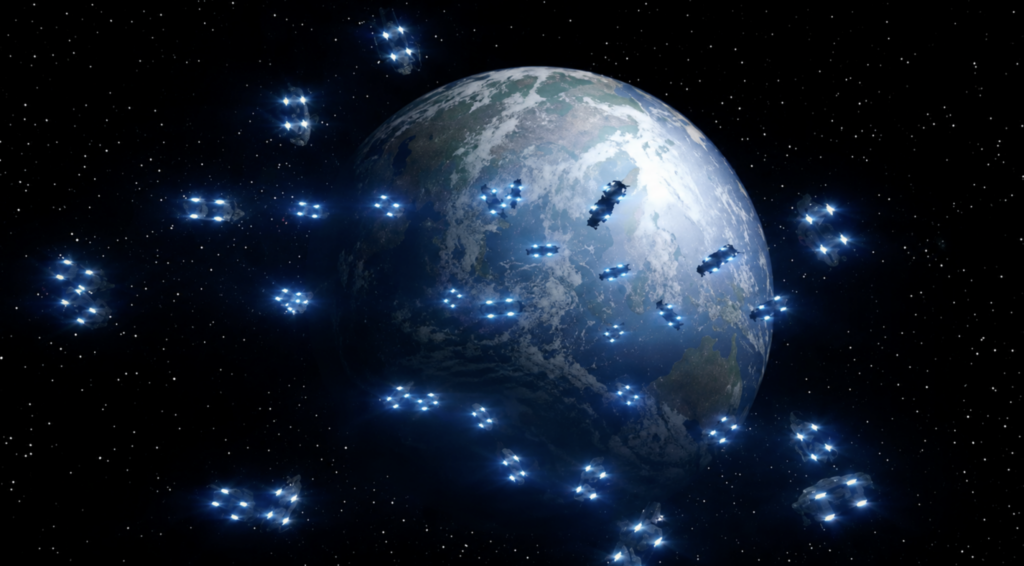
Humans have been searching for signs of extraterrestrial life for decades. In 1960, astronomer Frank Drake conducted one of the first attempts to detect alien civilizations by using radio telescopes to scan nearby star systems for possible signals. The search found nothing, but it marked the beginning of modern efforts to communicate with the cosmos.
In 1977, humanity went a step further by sending messages beyond our Solar System. NASA launched the Voyager probes, which carried recordings of Earth, images of humans, information about our planet, and a map showing our location in the galaxy. The spacecraft eventually entered interstellar space, carrying a message that could potentially survive for millions of years.
However, no response has ever arrived.
Humanity has even tried sending intentional messages toward possible alien civilizations. In 2008, a Doritos advertisement was transmitted toward a distant star system, becoming the first commercial message sent toward potential extraterrestrial life. Like every other attempt, it was followed by silence.
But does that mean nobody is listening?

The Milky Way contains hundreds of billions of stars and possibly hundreds of billions of planets. To estimate how many intelligent civilizations could exist, scientists often use the Drake Equation. This formula considers factors such as the number of stars, the number of planets capable of supporting life, and the likelihood of civilizations developing advanced technology.
The problem is that many of these factors remain unknown. Scientists cannot accurately predict how common intelligent life might be or how long advanced civilizations survive.
Distance also creates a huge challenge. The Milky Way is between 150,000 and 200,000 light years across. Even traveling at the speed of light, a message sent across the galaxy would take thousands of years to arrive. If we sent a signal to a civilization 100 light years away, they would not receive it until a century had passed on Earth.
Because of this, any message we send into space would need to represent humanity as a whole. It would need to communicate our intentions clearly and remain meaningful for generations.
But what happens if aliens receive our message?
For an alien civilization to detect and understand our signals, they would likely need technology at least as advanced as ours. However, their reaction could be impossible to predict.
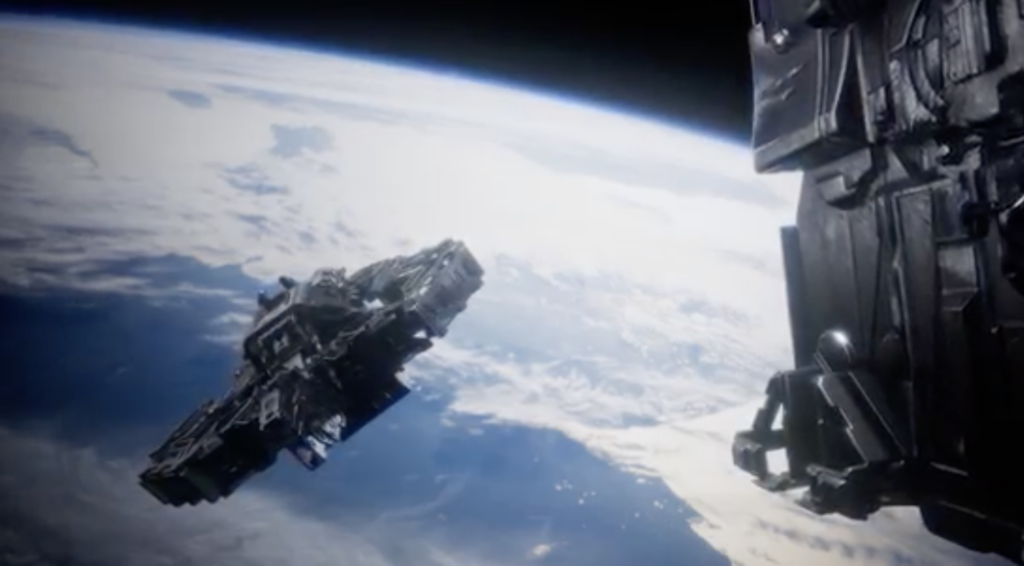
Some scientists have proposed the Dark Forest theory, which suggests that advanced civilizations might stay hidden because revealing their location could make them vulnerable to hostile species. In this scenario, silence is a survival strategy.
Another possibility is that alien civilizations could be observing us without making contact. They may be waiting to see how humanity develops before deciding whether to interact.
The most frightening possibility is that an advanced alien civilization could receive our message and decide to visit Earth with harmful intentions. If a species had the ability to travel across interstellar distances, it would likely possess technology far beyond anything humans currently have. A conflict would not be a fair battle, and humanity might not have enough time to organize a defense.
However, assuming aliens would be hostile may also be a mistake. An advanced civilization could see humanity as a potential partner rather than a threat. They might share knowledge, help solve global problems, or create the first relationship between two worlds.

For now, humanity continues sending signals into space while waiting for an answer that may never come. Whether we are alone in the universe or simply surrounded by civilizations too far away to reach remains one of the greatest mysteries of all time.
The question is not only whether aliens are out there. It is whether we truly understand the consequences of letting them know we are here.